Monetary Policy Board Goes Back-to-Back, Raises Benchmark Rate to 3.00% [Update]
- Input
- 2026-08-27 10:04:08
- Updated
- 2026-08-27 10:04:08
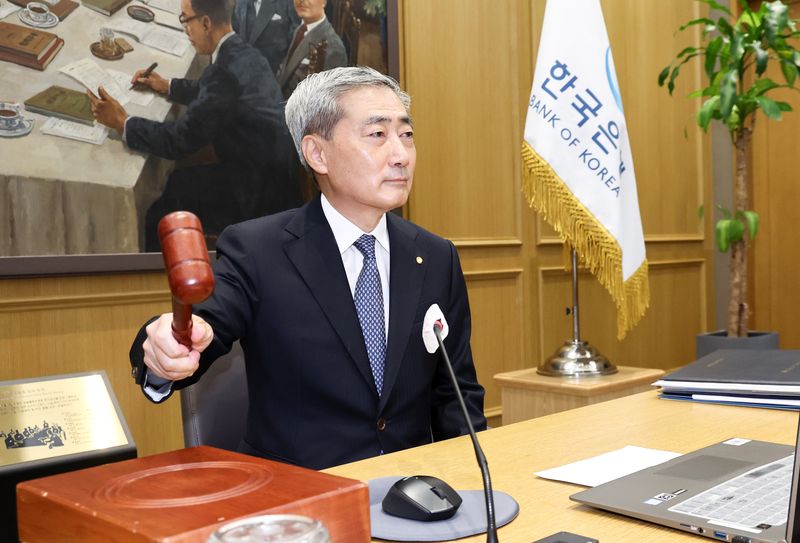
At its meeting on monetary policy direction on the 27th, the Monetary Policy Board of the Bank of Korea set the benchmark rate at 3.00% a year. After cutting it to 2.50% in May last year, the board kept it unchanged for eight consecutive meetings through last May before reversing course in July, 14 months later. The hike itself was the first in three years and six months since January 2023, when the rate was raised from 3.50% to 3.75%.
With this increase, the benchmark rate has returned to the 3.00% range, the first time since January last year.
The tightening in July had effectively been expected. It began with Governor Hyun Song Shin saying at a May press briefing after the Monetary Policy Board meeting that "wherever you look — inflation, growth, exchange rates or real estate — the path ahead is relatively clear." He repeated that stance at the BOK International Conference in June, at the bank's founding anniversary ceremony, and in a July 9 report to the National Assembly.
This time, however, another tightening move was not so clear. After the July meeting, Governor Hyun did not make any notable remarks, and views in the market were divided. Those arguing for a back-to-back hike in August said that accumulated high inflation remained the board's main concern and that waiting until October could mean missing the right timing. They also pointed to growth supported by semiconductor exports.
On the other hand, some argued that the won–dollar exchange rate had already fallen to the 1,300 won range and that inflation and housing prices were not in such an urgent state as to require consecutive tightening. Concerns were also raised that the burden on household debt borrowers could increase.
Still, the board appears to have given more weight to the first view this time. The macroeconomic and financial environment is also creating conditions for tightening. As the Arab-Israeli conflict eased, international oil prices became somewhat more stable, but inflation expectations remain elevated. Consumer prices rose 2.8% in July, a slight slowdown, but the BOK believes the inflationary pressure that has built up so far has not been resolved.
The exchange rate has also moved down into the 1,300 won range, but there is still room for it to rebound. If exporters' demand to convert foreign currency into won is exhausted, or if the Fed unexpectedly raises its benchmark rate, the exchange rate could move higher.
The economy is easing the burden of tightening by raising its growth outlook. The forecast for economic growth this year, released on the day, stood at 3.3%. That is up by 1.5 percentage points from the November forecast of 1.8%, by 1.3 points from the February forecast of 2.0%, and by 0.7 points from the May forecast of 2.6%.
[email protected] Kim Tae-il Reporter