Trump Says Iran's Supreme Leader Is Not Dead, No Timeline for Ceasefire Talks
- Input
- 2026-08-27 07:24:22
- Updated
- 2026-08-27 07:24:22
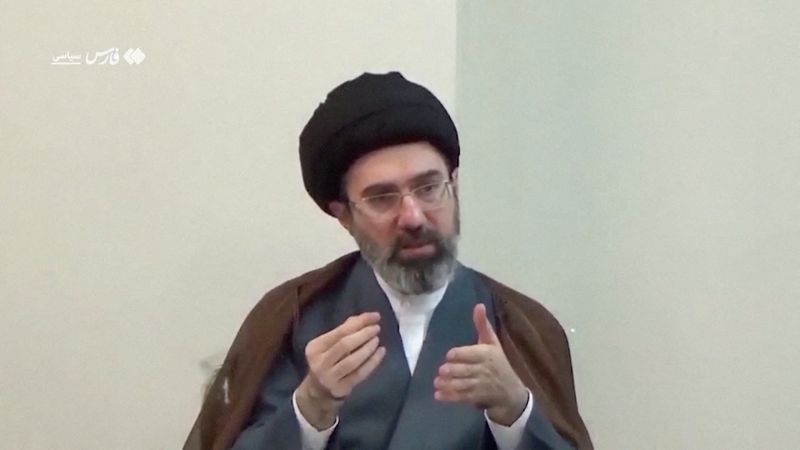
[Financial News] U.S. President Donald Trump said that Ayatollah Seyyed Mojtaba Khamenei, Iran's Supreme Leader, who had not appeared in public since the outbreak of the war with Iran in February, is not dead. At the same time, Trump said he would not rush ceasefire talks with Iran.
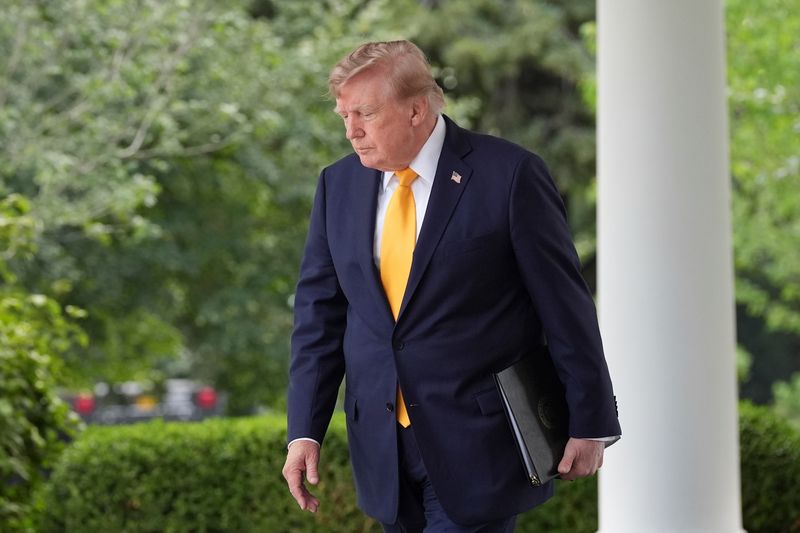
Trump made the remarks during a phone interview with Glenn Beck, a conservative U.S. online broadcaster, on the 26th local time. He said he did not think Mojtaba was "dead" and claimed that "he suffered very serious injuries." Trump explained that Mojtaba had been badly wounded on the entire left side of his body, including his left arm and leg, but was not believed to have died.
He also pointed out that if Mojtaba had in fact died, Iranian authorities may have been pretending that he was still alive. Trump claimed that Iranian officials were still consulting Mojtaba on important matters and staging scenes in which they sought his final approval. Targeting Iran's ceasefire negotiating team, Trump said, "They are not the most honorable group," and added, "Anything is possible."
He also said that when it comes to the possibility of the United States defeating Iran, "our financial capabilities are almost unbelievable," and claimed that "this kind of power is leading to a very big victory."
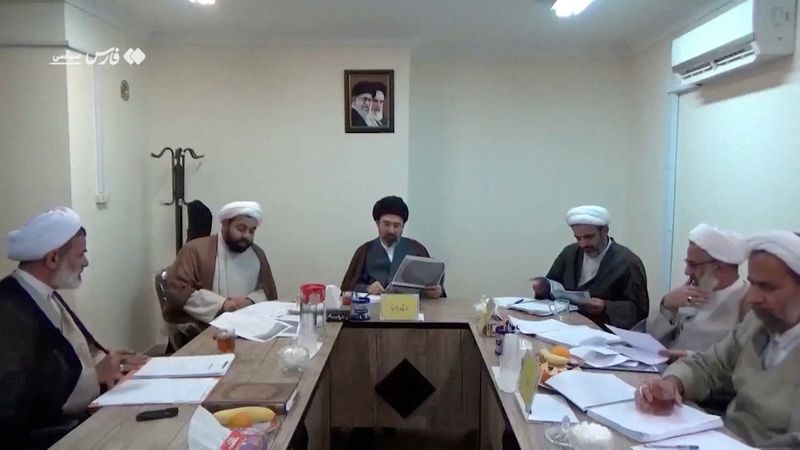
Mojtaba, the second son of former Supreme Leader Ali Khamenei, has not appeared in public since his father died in the war on Feb. 28. Even after taking office as the new Supreme Leader in March, he has only released written messages. Iranian authorities released photos of Mojtaba last month and this month, but the exact dates they were taken have not been confirmed.
Trump also commented on ceasefire negotiations to end the war with Iran in a separate interview on the 26th. In an interview with Al Jazeera, the Qatar-based pan-Arab broadcaster, he was asked how much time Iran could be given to return to talks. Trump replied, "There is no timeline," adding, "I am not in a hurry and have set no deadline." He said, "We are winning by a very large margin," and claimed that "Iran is suffering from severe inflation and its economy is collapsing."
He continued, "The Iranian regime is treating its people very unfairly and killing many protesters," stressing that "it does not matter how long it takes." When asked whether he believed economic pressure was more effective than military strikes, Trump replied, "I think both are effective."
Earlier, foreign media reported that anti-government protesters in Iran could stage an internal uprising and overthrow the government after the war began. But in his interview with Glenn Beck on the 26th, Trump said, "People are surprised that the Iranian people are not fighting back, but they are facing a very serious threat."
He explained, "Snipers are stationed on rooftops, and when people go out to protest, they are shot at." He added, "Even if 100,000 or 200,000 people gather, anyone would leave the scene after seeing five, six, or 10 people fall." Trump claimed, "It is very difficult to protest when there are people who are shooting and trying to kill you," and said, "That is why protests do not happen in Iran."
[email protected] Park Jong-won Reporter