[Editorial] Birthrate Is Rising, but Population Policy Remains Too Quiet
- Input
- 2026-08-26 18:29:42
- Updated
- 2026-08-26 18:29:42
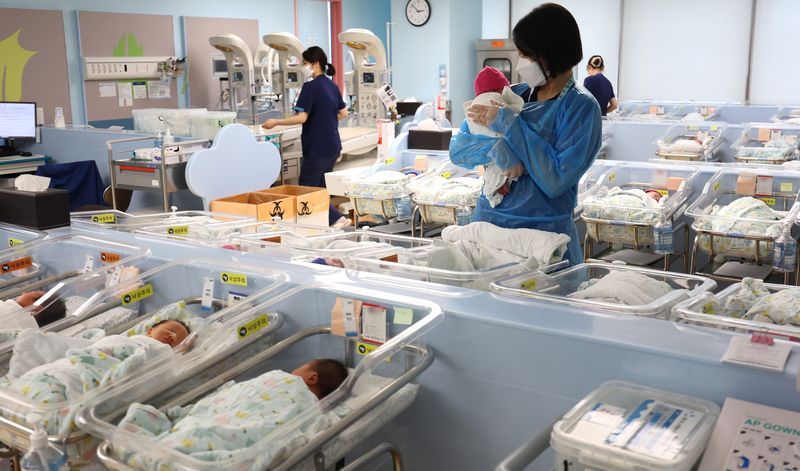
After reaching 0.81 in 2021, the total fertility rate fell back into the 0.7 range, so this is a recovery after four years. The number of births last year also rose to 254,300, up 16,000, or 6.7 percent, from the previous year. That was the highest level since 2021. Even more encouraging, births in June, in the second quarter, and in the first half of this year all hit seven-year highs.
In particular, the number of births in June reached 23,111, up 3,115, or 15.6 percent, from the same month last year. Monthly births have increased for 24 consecutive months. If this trend continues, the annual total fertility rate this year could return to the 0.9 range for the first time in seven years. The main driver of the increase in births is likely the end of the COVID-19 pandemic.
It may also be a kind of base effect, as people who had delayed marriage during the COVID-19 outbreak got married and had children once the pandemic eased. The Ministry of Data and Statistics also interpreted the trend as being influenced by a recent shift in social attitudes toward marriage and childbirth in a more positive direction. Whatever the reason, the fact that births have been rising over the past few years is encouraging.
However, it is too early to conclude that low-birthrate policies are working simply because the number of births has recently increased. It is still difficult to say that the birthrate is rising in a sustained trend. We need to see whether the increase continues for several more years. Many social problems that stand in the way of marriage and childbirth remain unresolved.
A rise in marriages is a prerequisite for a higher birthrate. For people to get married, youth employment must be stable, but the reality is heading toward one of the worst situations on record. Recent data from the Ministry of Data and Statistics show that the share of unmarried people in their 30s and 40s, the age groups most likely to have children, is steadily rising. The unmarried rate for people in their 30s is 54.7 percent, more than half, and the rate for those in their 40s is also as high as 21.9 percent. Given this reality, the total fertility rate and the number of births may recover for a while, but they are likely to stagnate again.
The government’s approach to the low birthrate problem seems to have become strangely lax of late. When the total fertility rate plunged into the 0.7 range, the Yoon Suk Yeol administration announced flashy measures, including plans to create a dedicated population agency and new posts, but that was the end of it. Even under the Lee Jae-myung administration, low birthrate and population issues appear to have been pushed aside and remain quiet.
It may not be because the birthrate is recovering, but low birthrates and population decline are not issues that can be treated as a passing fad. They are among the nation’s top policy priorities. There must be no retreat from low-birthrate policies, and no cuts to related budgets. As the saying goes, a rising horse needs a whip. When the birthrate improves, the government should be even more proactive in building momentum and pushing related policies forward.
The economically active population is a key factor in potential growth. The total population must increase for the economically active population to grow. It makes no sense to talk about raising potential growth while ignoring the population issue. Even though the total fertility rate has recovered to the 0.8 range, South Korea’s birthrate remains among the lowest in the world. This is no time to pop champagne in celebration. The government must tighten the reins even further.