Nine out of 10 middle and high schools in Jeju to collect smartphones at the school gate
- Input
- 2026-08-26 15:50:36
- Updated
- 2026-08-26 15:50:36
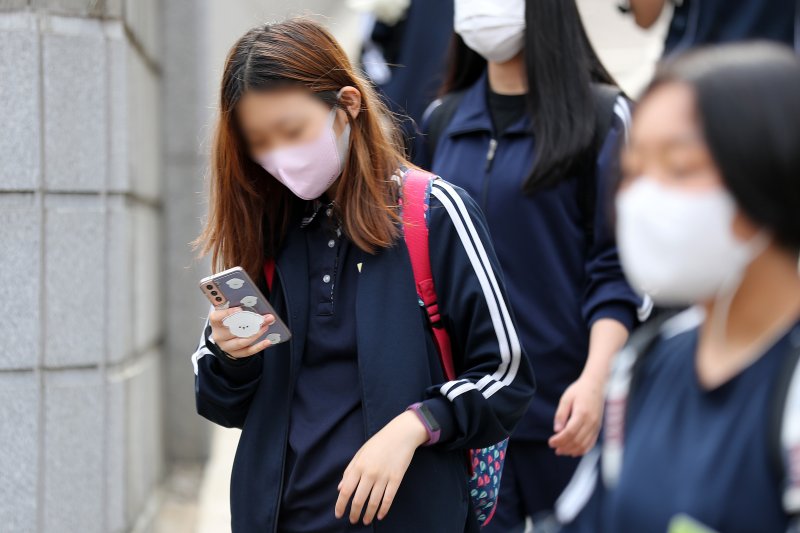
[Financial News Jeju = Reporter Jung Yong-bok] More than 9 out of 10 middle and high schools in Jeju have decided not only to restrict smartphone use during class, but also to collect phones in bulk when students arrive at school. As schools choose standards stricter than the law’s basic ban on use during class, balancing students’ right to learn with education on self-regulation of smart devices has emerged as a new challenge on campus.
According to the Jeju Special Self-Governing Provincial Office of Education on the 26th, schools across the province will fully apply their own rules on smart device use starting Sept. 1.
The approach varies widely by school level. Among the province’s 45 middle schools, 43, or 95%, will collect smartphones in bulk at the school gate to restrict use. One other school will allow students to carry phones but not use them during the school day, while another will restrict use only during class.
High schools show a similar pattern. Of 30 schools, 28, or 93%, chose bulk collection. The remaining two will allow students to carry phones but ban use during the school day.
Elementary schools are different. Out of 113 schools, 23, or 20%, will collect smartphones at the school gate. Another 84 will let students carry devices but prohibit use during the school day, including class, breaks and lunch. The remaining six will restrict use only during class.
Among the three special schools, one will collect devices in bulk, while two will limit use during class.
The reason schools can set different rules is that the law establishes a common principle banning smart device use during class, while allowing schools to define the specific standards and methods for possession and use in their own regulations.
Article 20-5 of the revised Elementary and Secondary Education Act stipulates that students may not use mobile phones and other smart devices during class. However, students with disabilities or those who need special education may use assistive devices, and devices may also be used for educational purposes or in emergencies with the approval of the principal and teachers.
If necessary to protect students’ right to learn and teachers’ educational activities, principals and teachers may also restrict the use and even possession of smart devices on campus. Specific standards and methods for such restrictions are set out in each school’s rules.
Although the law took effect on March 1, the Jeju education office decided to allow a preparation period for schools and begin full implementation of school-specific standards on Sept. 1.
The Jeju Special Self-Governing Provincial Office of Education has instructed all schools in the province to reflect their smart device restriction standards in student conduct rules by Aug. 31. Each school set its own standards after gathering opinions from students, parents and staff, while taking into account students’ developmental stages and school conditions.
This is not a system that completely bans students from bringing smartphones to school. The law directly prohibits only use during class, while schools may also restrict use during the school day or collect phones in bulk at the school gate depending on local conditions.
The education office also plans to strengthen education that helps students manage their own screen time, along with restrictions on smart devices. The goal is to go beyond rules and collection alone, and instead build habits for proper smart device use and digital citizenship. The restrictions are aimed at helping students focus on class and respect one another’s right to learn.
[email protected] Jung Yong-bok Reporter