Supreme Court upholds acquittal of judge in bribery case tied to LH bid-rigging probe
- Input
- 2026-08-26 15:06:30
- Updated
- 2026-08-26 15:06:30
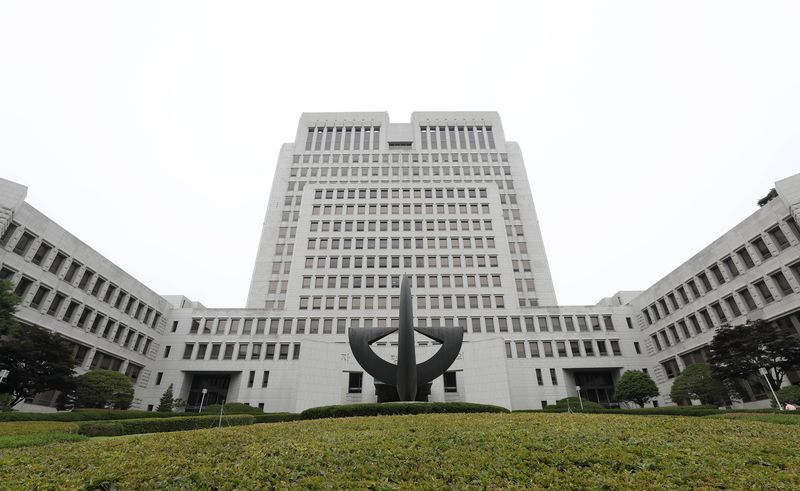
[Financial News] Judges indicted on charges of taking kickbacks and manipulating evaluation scores in a bid for supervision services ordered by Korea Land and Housing Corporation (LH) have had their acquittals finalized by the Supreme Court of Korea. Prosecutors were undermined by their use of materials obtained through a search-and-seizure warrant issued for a bid-rigging investigation in a separate bribery case.
The Supreme Court Third Division, led by Justice Lee Heung-gu, said on the 26th that it had upheld the lower court ruling acquitting former LH technical evaluation committee member A, who was charged with bribery under the Act on the Aggravated Punishment of Specific Crimes, and B, who was accused of accepting bribes.
Investigators found that A, after being selected in 2020 as a judge for a bid on apartment construction management services ordered by LH, received 30 million won from an executive at the consortium's lead company in exchange for a request to award first-place scores. He was later accused of taking an additional 40 million won from the head of a rival company and, contrary to the original request, giving the rival company the top score. B was also indicted without detention in July 2024 along with A on charges of giving 20 million won in January of that year to a company that received first-place scores, while a competitor was ranked third.
The first trial found most of the charges guilty in December that year and sentenced A to three years in prison, a fine of 70 million won, and forfeiture of 40 million won. B was sentenced to two years in prison, a fine of 20 million won, and forfeiture of 20 million won. The trial court stressed the need for strict punishment, saying that because the project involved apartment construction for an unspecified number of residents, poor workmanship could pose a serious threat to public safety.
The ruling was overturned on appeal. The appellate court did not recognize the admissibility of the bid evaluation documents and audio recordings presented by prosecutors. The materials had emerged while prosecutors were executing a warrant obtained in the course of investigating the so-called 'LH bid-rigging' case for alleged violations of the MRFTA.
The court said the materials could not be regarded as evidence proving unfair collusion or as data needed to grasp the full facts of the case. It added that prosecutors should have stopped searching as soon as the materials were discovered and obtained a separate search-and-seizure warrant, but instead immediately used them in an investigation into a different offense, fundamentally undermining the principle of warrant-based procedure and due process. As a result, the written statements prepared by prosecutors based on those materials, as well as witness testimony in court, also lost evidentiary value.
Prosecutors appealed, but the Supreme Court found no legal error in the lower court's reasoning and rejected the appeal.
[email protected] Lee Hwan-ju Reporter