Concerns Grow Over 10 Trillion Won in Special Tax for Rural Development Being Folded Into Future Fund; Minister Song Mi-ryeong Says She Will Protect the Purpose Tax
- Input
- 2026-08-26 15:07:42
- Updated
- 2026-08-26 15:07:42
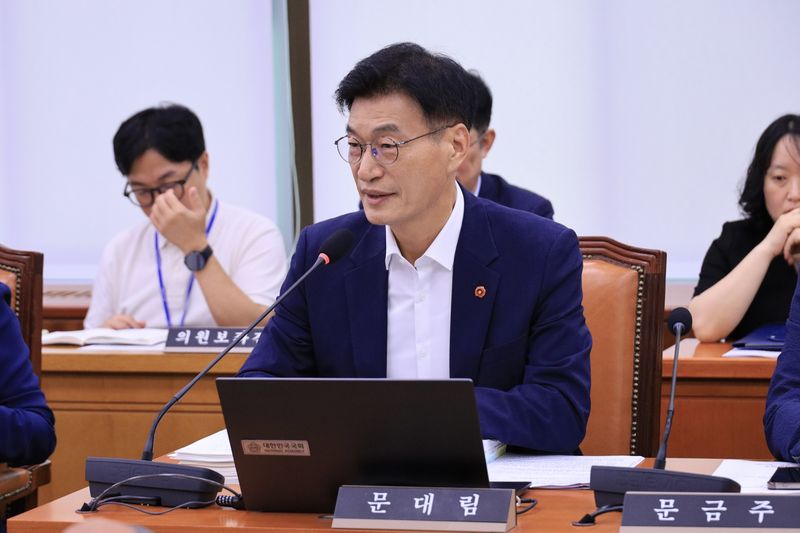
[Financial News, Jeju = Reporter Jung Yong-bok] As the government pushes ahead with the creation of the Future Response Fund, lawmakers have raised concerns that the Special Tax for Rural Development, which was designed to support rural areas, could lose its original purpose. Minister of Agriculture, Food and Rural Affairs Song Mi-ryeong promised to actively consult with fiscal authorities so the tax is fully used for agriculture and rural communities.
According to the National Assembly's Special Committee on Agriculture, Food, Rural Affairs, Oceans and Fisheries on the 26th, Rep. Moon Dae-rim of the Democratic Party of Korea, who represents Jeju A, focused his questions on the relationship between the Future Response Fund and the Special Tax for Rural Development during the plenary audit session held that day.
The Special Tax for Rural Development is a purpose tax collected to secure funding for strengthening agricultural and fisheries competitiveness, expanding rural infrastructure, and supporting regional development in rural areas. In other words, the tax is earmarked for specific uses from the moment it is collected.
The controversy intensified after revenue from the tax rose sharply in recent months. On the 24th, Minister of Planning and Budget Park Hong-geun told the National Assembly's Special Committee on Budget and Accounts that about 10 trillion won in additional funds had been secured from the Special Tax for Rural Development as securities trading increased, and said the government was reviewing ways to use the money for rural development and agricultural growth.
Park also said that the Future Response Fund's spending items include related projects such as improving living conditions in rural areas.
At the committee meeting, Rep. Moon argued that if the funds are absorbed into the Future Response Fund, the original purpose of the Special Tax for Rural Development could be weakened.
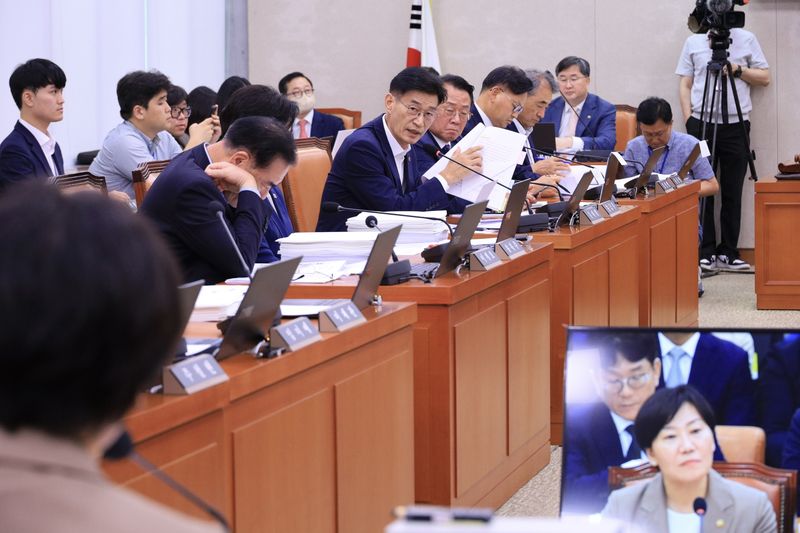
The government announced a draft bill on the "Act on the Establishment and Operation of the Future Response Fund" on the 24th. The Future Response Fund is a new fund intended to reduce fluctuations in tax revenue caused by changes in the economy, improve fiscal stability, and invest in future-oriented sectors. The public notice period runs through the 28th.
Moon argued that "there is no separate account for agriculture and rural communities in the draft bill, and because funds could be moved around, institutional safeguards are needed to prevent the Special Tax for Rural Development from flowing into other areas."
At this stage, the transfer of the tax increase into the Future Response Fund has not been finalized. Moon said his questions were aimed at clearly protecting the tax's intended use during the legislative and budget-setting process.
He also stressed that "including projects that support rural communities in the Future Response Fund is a separate issue from preserving the purpose of the Special Tax for Rural Development," and urged MAFRA to take a more active role in consultations with fiscal authorities.
He also called for a swift response, noting that the public notice period lasts only five days. Moon said, "We should not stop at consultations. We need a dedicated response system to protect the Special Tax for Rural Development."
Minister Song Mi-ryeong said, "I will take responsibility," and added, "Since the Special Tax for Rural Development is a purpose tax, I will actively consult with fiscal authorities."

Along with the Special Tax for Rural Development issue, the barrier to enrolling in crop disaster insurance for Jeju carrot farmers also came under scrutiny. At present, carrots can only be covered if the emergence rate, meaning the share of planted seeds that sprout above the ground, is at least 80%.
Moon said the system is problematic because farms where seeds failed to sprout properly due to natural disasters such as heat waves, drought, and heavy rain are excluded from insurance coverage because they do not meet the emergence-rate threshold.
In Jeju, carrot planting is concentrated from late July to mid-August, the height of summer, making crops highly vulnerable to heat and drought. Carrot disaster insurance used a 50% emergence-rate threshold in 2024, but the standard was raised to 80% starting last year.
This year as well, heavy rain followed heat waves and drought in Jeju's main carrot-growing areas, leaving some fields where seeds failed to germinate. According to NongHyup Property & Casualty Insurance's Jeju branch, the insured area for carrot disaster insurance stood at 762 hectares as of the 24th, about half of the 1,579 hectares recorded during the same period last year.
Moon said, "It is contradictory to exclude farms from insurance coverage simply because they failed to meet the emergence-rate threshold after natural disasters prevented germination," and added, "The eligibility rules should be revised to reflect regional planting schedules and growing conditions."
Minister Song said, "We are aware of farmers' concerns about the 80% emergence-rate standard for carrots," and explained that "measures such as extending the enrollment period have been taken." She also said the government would hear farmers' views again.
Moon also urged NongHyup Property & Casualty Insurance, which operates crop disaster insurance, to prioritize actual farm losses over operational convenience and loss ratios, and to actively relay field-level problems to MAFRA.
[email protected] Jung Yong-bok Reporter