[Exclusive] Former U.S. diplomat says tariffs could rise to 25% or higher if U.S. investment is delayed further
- Input
- 2026-08-26 15:38:09
- Updated
- 2026-08-26 15:38:09
In a written interview with Financial News on the 26th, Jeremy Chan, an analyst at Eurasia Group and a former U.S. diplomat, said, "Even if the Korean side explains that implementation is being delayed because of the handling of the Special Act on U.S. Investment or domestic political and institutional circumstances, it carries little persuasive weight with the current U.S. administration." He added, "If it is taken as a continued delay in announcing the investment plan, the natural next step would be to restore tariffs to the level before the November agreement last year."
Chan also said it is difficult to rule out the possibility that tariffs could exceed 25%. However, he noted that in that case, Washington may first turn to other trade pressure tools, as the $350 billion U.S. investment framework itself could be undermined.
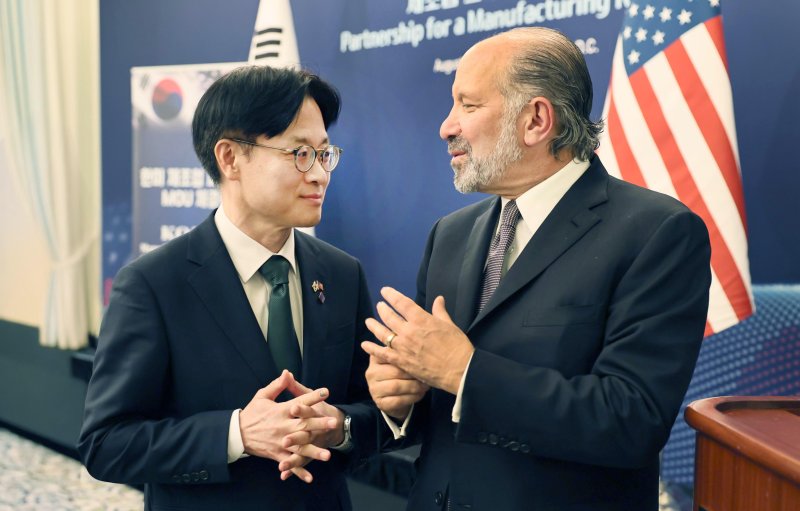
One reason the U.S. side is pressing the issue is Japan, which has already announced first- and second-round U.S. investment projects and is now negotiating follow-up business. After recent talks in the United States with Howard Lutnick, U.S. Secretary of Commerce, Kim Jung-kwan said South Korea aims to announce its first U.S. investment project in September.
MOTIE told this paper, "The U.S. government has expressed its position since the beginning of the year that discussions on investment projects should be accelerated." It added, "We plan to build consensus with the U.S. side on the goal of announcing strategic investment projects in September and move discussions forward more quickly." However, it declined to comment on questions about the likelihood of tariff hikes and possible countermeasures.
The slow pace of U.S. investment implementation has been attributed to the time required to establish a domestic decision-making system, including delays in passing the Special Act on U.S. Investment. Meeting the law's requirement of "commercial rationality" is also not easy. The key standard is whether total expected revenue returned to Korea over the projected life of each project can fully cover principal and interest.
Even after a U.S. investment project is selected, securing participating companies is not easy. To carry out a project in the United States, firms must assess not only raw material sourcing, design and technology acquisition, and the deployment of specialists, but also local regulations and permitting conditions.
"Companies would have to send people there for a long time and hire additional staff, so they cannot go in based on just one project," said an official in the investment banking sector. "From a company’s perspective, there is a lot to consider, including the regulations in the state where the project is located, whether local residents oppose it, and even the political leanings of the area."
[email protected] Song Ji-won Reporter