Kim So-young faces first-instance sentencing today in Gangbuk Motel killings case; key issue is whether murder charges apply
- Input
- 2026-08-27 08:00:00
- Updated
- 2026-08-27 08:00:00
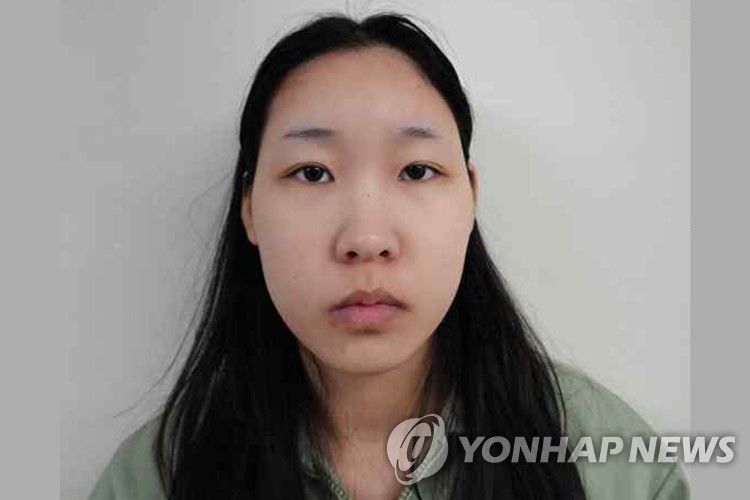
According to legal sources on the 27th, the 14th Criminal Division of the Seoul Northern District Court, presided over by Judge Oh Byung-hee, will hold Kim's first-instance sentencing hearing this afternoon on charges including murder, aggravated assault, and violations of the Narcotics Control Act. At the closing hearing on the 18th, prosecutors sought the maximum penalty of death and requested a 30-year electronic monitoring bracelet order, but the defense has completely denied any intent to kill.
The biggest issue in this trial is whether murder charges can be applied to Kim. To do so, prosecutors must prove that she knew the lethal dose of the drugs and that she had what is known as dolus eventualis regarding the deaths. Under the Criminal Act, dolus eventualis is established only when a person foresees, even if uncertainly, the possibility that their actions could cause another person's death and nonetheless accepts that outcome. Because the defendant's inner acceptance of death must be proven, the legal standard is difficult and requires strict scrutiny.
Prosecutors are focusing on the fact that Kim repeatedly administered benzodiazepine drugs, which can cause fatal respiratory suppression, to multiple male victims over several months even though she knew the risks. In particular, they view the fact that she caused a second death using the same method while under investigation for the first death as decisive evidence that she accepted the risk of death. The defense, however, points to her early 20s and lack of medical knowledge, arguing that she only intended to make the men lose consciousness and did not foresee death, while flatly denying the murder charge.
Although a courtroom battle is expected, legal circles largely believe that Kim is likely to be found to have had intent to kill. A former judge-turned-lawyer said, "Proving dolus eventualis is a very difficult legal task because it requires proving the defendant's inner state," but added, "The fact that she caused additional deaths with the same method while being investigated by law enforcement for the first death is powerful evidence that she knew death was possible and accepted that risk."
The motive cited by the defense has also come under scrutiny. Kim's side argues that she handed out the drug-laced drinks as a defensive measure to avoid unwanted physical contact from the men, and says her responsibility should be reduced because the act should be recognized as self-defense or self-help under the Criminal Act. The victims' families, however, strongly reject this, calling it a vile secondary attack that falsely portrays the victims as sex offenders.
Experts also agree that the act of carefully preparing and administering the drugs in advance does not meet the legal requirements for self-defense. A lawyer specializing in criminal law said, "For self-defense or self-help to be established, there must be an ongoing unlawful infringement and proportionality in the means of defense," adding, "If a deadly drug was prepared in advance and administered to defenseless victims, while also leading to financial gain, it is nearly impossible to have that treated as a lawful defensive act."
Legal observers say that even if the court sides with prosecutors and recognizes murder, the current judicial environment in South Korea, where executions have been suspended, makes it more likely that the court will impose a heavy sentence such as life imprisonment or a term near the statutory maximum rather than fully accepting the prosecution's request. One legal source said, "Given the many aggravating factors, including repeated crimes against unspecified victims, the use of harmful drugs, and reoffending during the investigation, it appears difficult to avoid a severe sentence."
[email protected] Seo Ji-yoon Reporter