"K-drone ecosystem needs to be revitalized...technology-focused support is urgently needed"
- Input
- 2026-08-26 16:16:30
- Updated
- 2026-08-26 16:16:30
Hwang In-seong, head of the technology coordination team at the Unmanned System Project Group at the Ministry of Science and ICT and a senior researcher at the Korea Aerospace Research Institute (KARI), stressed the need for an ecosystem covering both drone components and finished products in South Korea's drone industry on the 26th.
He pointed out the reality, saying, "Because South Korea does not have a large market for unmanned system-related parts such as motors and flight computers, development is difficult, and mass production is even harder."
He added that overseas markets, including the United States, are expanding, while drone businesses in defense and public sectors are also spreading domestically, raising the growth potential of the component market. He said that building a drone parts ecosystem through policies that strengthen technological competitiveness rather than focusing on price would make the sector highly promising.
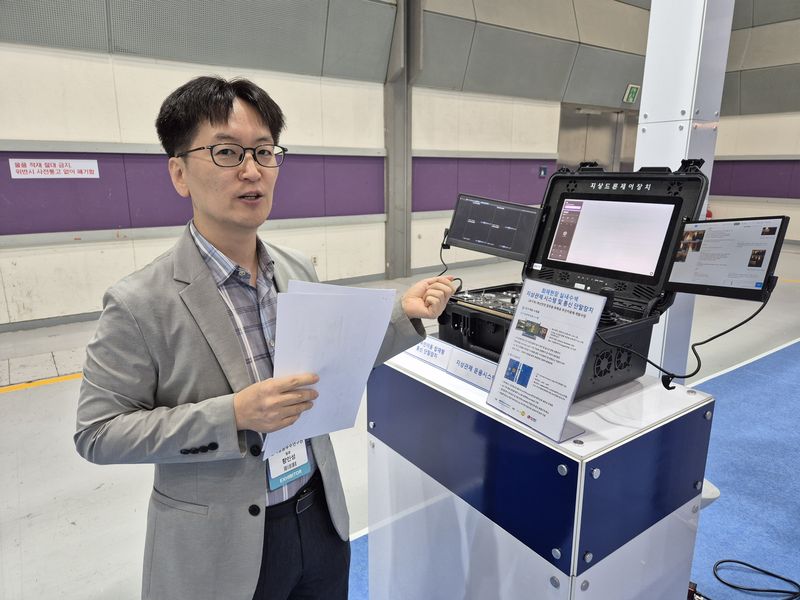
Hwang argued that when drones are introduced in the public sector, the current structure allows low-price bidders to dominate public markets through the lowest-bid system. He said K-drone ecosystem building should begin in the public sector, with an emphasis on technology rather than price. To compete with early movers such as China that already have price competitiveness, he added, a technology-centered ecosystem is essential.
He also emphasized the need to establish a standard certification system for technology. "The drone industry still does not have a clearly established certification or testing and evaluation system," he said, adding that official certification standards recognized globally are urgently needed to target the world market.
Hwang said, "Drones are a representative Physical AI product," and explained that they need to be equipped with various sensors and integrated with AI technology that enables autonomous flight, while using compact, integrated processors capable of handling xPU, Neural Processing Unit (NPU), memory, and more at the same time. He said this is the same technology already being applied to smartphones in South Korea, so it can be used in drones as well.
He also said that technologies to neutralize illegal drones will need to be developed in the long term. "Recently, there have been many illegal drone operations near wildfire areas and airports. These are unreported drones used for personal filming, and they can be dangerous," he said. "Technology to track and neutralize such illegal, unregistered drones with lasers and other methods also needs to be developed."
Hwang said this because the use of unmanned systems such as drones will become even more diverse in the future.
He explained that in defense, the concept is evolving from expensive platforms to large-scale operations of low-cost, expendable autonomous unmanned systems. In disaster safety, drones will assess wide-area situations and relay communications, while ground robots will enter collapsed structures to assist in rescue and measure hazardous gases.
He also predicted that drones and autonomous agricultural machinery will be combined with AI to handle pest control and disease detection, while autonomous tractors on land will carry out farming tasks such as weeding, spraying, and harvesting.
[email protected] Yeon Ji-an Reporter