Japan to rebuild up to 14 nuclear reactors, cutting reliance on the Strait of Hormuz
- Input
- 2026-08-26 16:32:41
- Updated
- 2026-08-26 16:32:41
[Financial News, Tokyo = Seo Hye-jin, correspondent] The Japanese government plans to rebuild up to 14 nuclear power plants by the 2050s and support the construction of oil pipelines that bypass the Strait of Hormuz. The goal is to reduce the vulnerability of a supply chain that has relied on the Middle East for more than 90% of its crude oil imports, while speeding up the shift to decarbonization centered on nuclear power and renewable energy. To support this effort, the Ministry of Economy, Trade and Industry of Japan (METI) has requested 1.9838 trillion yen, or about 172.382 trillion won, for energy and Green Transformation (GX)-related spending in fiscal 2027.
According to reports from the Yomiuri Shimbun and NHK on the 26th, the Japanese government is expected to finalize and announce the 'Comprehensive Package to Strengthen the Energy Supply and Demand Structure (POWER GX)' at a GX Implementation Council meeting attended by Prime Minister Sanae Takaichi.
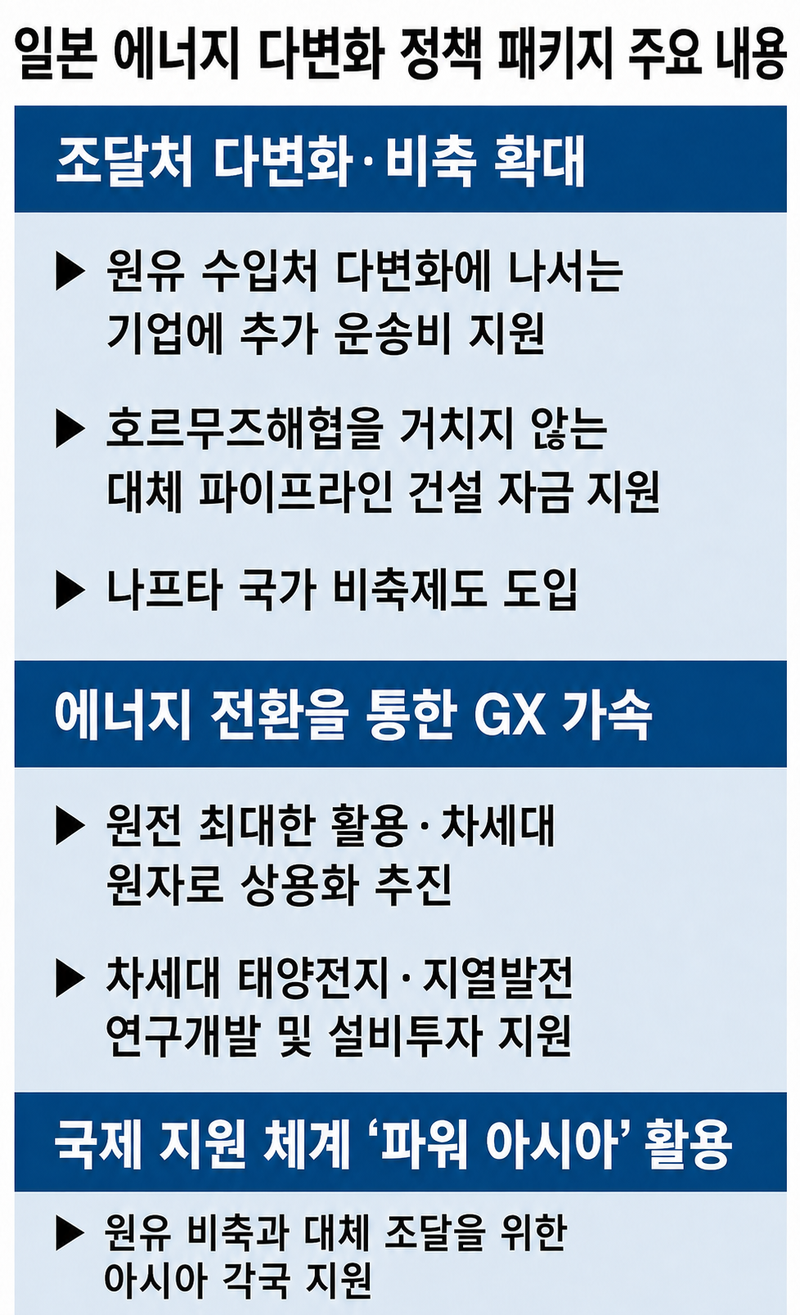
The package is built around three pillars: diversifying fossil fuel procurement and reducing supply risks; accelerating GX through nuclear power and domestically produced renewable energy; and strengthening cooperation among Asian countries through 'POWER Asia,' a Japan-led energy partnership framework.
First, the government will subsidize higher transportation costs for companies that shift their crude oil and naphtha procurement routes away from the Strait of Hormuz. It will also provide funding through the Japan Organization for Metals and Energy Security (JOGMEC) for the construction of alternative pipelines that bypass the strait.
It will also reinforce the supply chain for naphtha, which is currently excluded from the national stockpiling system. The government plans to introduce a new system under which crude oil used to produce naphtha will be separately stockpiled by the state. Naphtha is a key raw material for petrochemical products, but it has not been included in Japan's national stockpile, leaving it vulnerable to supply shocks from the Middle East.
Japan moved to restructure its energy supply chain after the Strait of Hormuz was effectively blocked following U.S. and Israeli attacks on Iran, disrupting the supply of naphtha and other petroleum products. Before the military conflict, more than 90% of Japan's crude oil imports came through the Strait of Hormuz. Emergency measures have eased the bottlenecks, but officials concluded that the procurement structure itself must change to prepare for similar crises in the future.
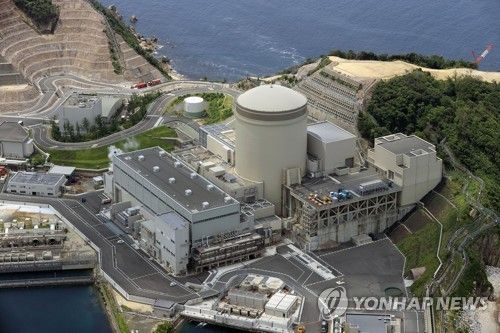
The government will also accelerate the expansion of nuclear power to reduce dependence on fossil fuels. While prioritizing the safe use of existing reactors, it plans to rebuild up to five reactors in the 2040s and up to 14 in the 2050s. It will also strengthen research and development for next-generation reactors and Small Modular Reactors (SMRs).
Investment will also increase in domestic renewable energy industries, including thin and flexible next-generation perovskite solar cells and geothermal power. The government plans to expand supplies of alternative energy sources such as hydrogen and ammonia, and to meet surging electricity demand from data centers by using high-efficiency semiconductors.
Energy security cooperation with Asian countries will also be strengthened. Using 'POWER Asia,' a Japan-led financing framework, the government plans to expand cooperation on stockpiling crude oil and other energy resources and improve the region's ability to respond to supply disruptions.
Of the 1.9838 trillion yen requested by METI, 15 billion yen, or about 1.304 trillion won, will be allocated to new projects that encourage diversification of crude oil import sources. The ministry also plans to invest related funds in large-scale power grid upgrades.
The Japanese government plans to submit the related bills to an extraordinary session of the Diet as early as this fall and to concentrate funding on key projects in the year-end budget allocation.
[email protected] Seo Hye-jin Reporter