Iran and Oman Reach Temporary Transit Agreement for the Strait of Hormuz, Say Only the Iranian Route Must Be Used
- Input
- 2026-08-26 15:54:07
- Updated
- 2026-08-26 15:54:07
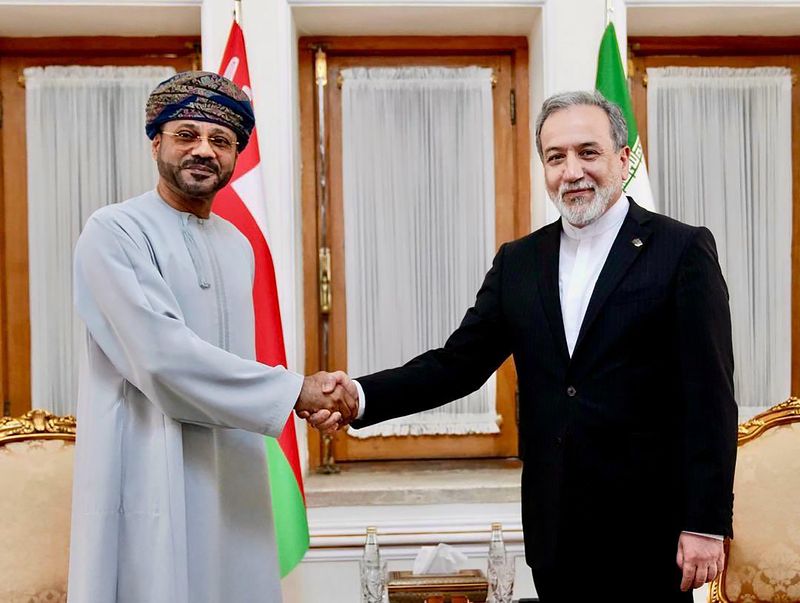
[Financial News] Iran, which remains deadlocked with the United States in ceasefire talks, has first agreed with neighboring Sultanate of Oman on a basic framework for negotiations over transit through the Strait of Hormuz. Tehran also made clear that, although detailed discussions have not yet begun, it cannot give up control of the strait.
According to Al Jazeera, the Qatar-based pan-Arab broadcaster, Iran's Ministry of Foreign Affairs issued a joint statement with Oman on the 25th and said the two foreign ministers had discussed the Strait of Hormuz issue in Tehran. During the meeting, the two sides agreed to work toward opening a temporary transit route through the Strait of Hormuz, carrying out joint mine-clearing operations in the strait, and holding working-level talks to establish a permanent maritime corridor and a long-term management system. Iran's semi-official Tasnim News Agency reported that the two sides plan to hold additional talks within the next 30 to 60 days to negotiate a new permanent route.
Foreign media outlets described the agreement as a basic framework for detailed negotiations. Iran, however, continued to repeat its position on the key issues. Kazem Gharibabadi, deputy foreign minister for legal and international affairs at Iran's Ministry of Foreign Affairs, said in an interview with state television on the 25th that "a fundamental change is needed in the movement of ships in and out, in line with the new situation." He stressed that the agreement with Oman "does not mean opening the Strait of Hormuz. It means closing the southern route, which was opened by the United States."
Gharibabadi said future transit through the Strait of Hormuz would work as follows: "The route entering the Persian Gulf will use the Iranian-side route, and the route leaving will use Omani territorial waters, though part of it will pass through Iranian territorial waters." He added, "Both entry and exit will include sections that pass through Iranian territorial waters," and explained that "it is not like a one-lane road on top of the strait and another on the bottom, but more like a highway with lanes for both directions."
Ships carrying about 20 to 25 percent of global maritime oil cargoes used the central route through the Strait of Hormuz before the war with Iran began in February, but after Iran laid numerous mines following the outbreak of hostilities, they shifted closer to the coast. Iran later told the United States in negotiations that ships should travel through the northern route along the Iranian coast, which it controls, while Washington set up a new route along the southern coast of Oman to guide vessels. Despite a memorandum of understanding reached in June, the United States and Iran later clashed over the route issue and exchanged long-range strikes last month.
On the 25th, Tasnim News Agency reported that the Iranian government had once again conveyed its position to Pakistan's Chief of Staff of the Republic of Korea Army Asim Munir, who had mediated the ceasefire. In a meeting the previous day with Munir, who is said to communicate directly with U.S. President Donald Trump, the Iranian side asked Trump to return to the memorandum of understanding and recognize Iran's control over the Strait of Hormuz.
Meanwhile, Russia's state-run RIA Novosti reported on the 25th, citing Iranian and Pakistani officials, that the United States and Iran had "agreed to a ceasefire" and that "this includes freedom of navigation in the Strait of Hormuz." It added that the two sides were expected to formally announce the ceasefire within the next few days. However, U.S. and Iranian officials did not respond to the report.
[email protected] Park Jong-won Reporter