Small officetels to qualify for first-time buyer status; selling and then buying a home will bring another acquisition tax cut [2026 local tax reform]
- Input
- 2026-08-26 15:48:42
- Updated
- 2026-08-26 15:48:42
[Financial News] People who buy a residential officetel for the first time will soon be eligible for the first-time home acquisition tax reduction. If they later sell a small officetel or non-apartment home that meets the required floor-area standards and then buy an apartment or other home, they will receive the tax break once more.
The special property tax rate for one-home owners with officially announced property prices of 900 million won or less, which is set to expire at the end of this year, will be extended for another three years. By contrast, the period for temporary two-home owners in Area Subject to Adjustment to dispose of their existing home will be shortened from three years to two.
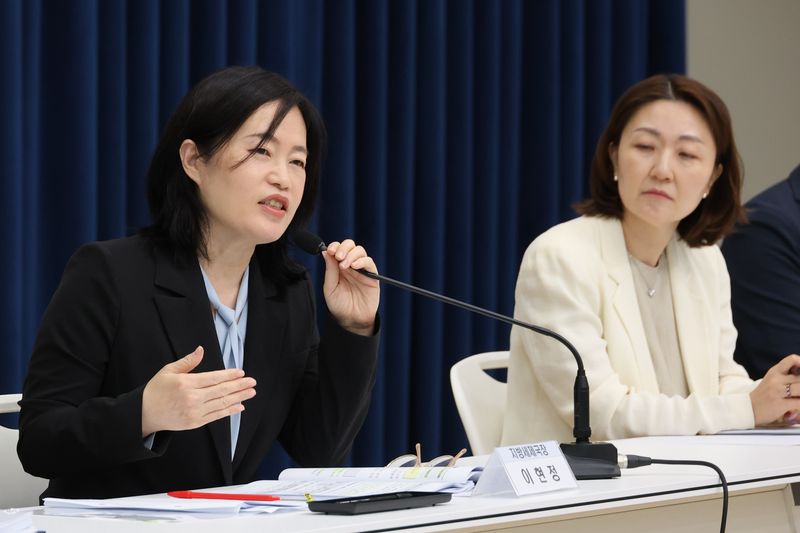
The Ministry of the Interior and Safety (MOIS) announced the plan on the 26th after a meeting of the Local Tax Development Committee. The reform aims to expand tax support for young people, one-home owners, housing supply and local investment, while scaling back some long-standing tax breaks and tightening taxation on multiple-home owners and luxury assets. The ministry estimated that the redesign of local tax spending will increase revenue by 54.7 billion won.
First, residential officetels will be newly included in the scope of the first-time home acquisition tax reduction. Until now, even if they were used as residences, officetels were classified as business facilities in the building register and were excluded from the benefit.
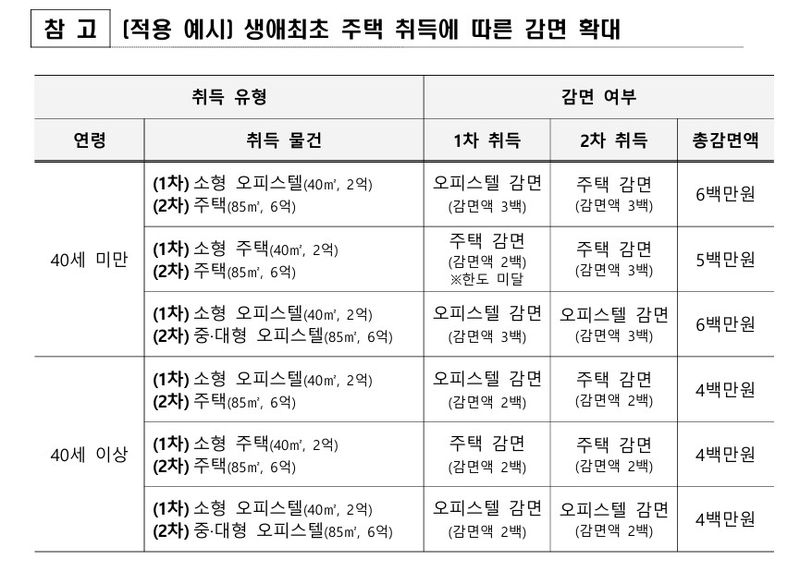
An additional tax break will be offered to people who move from a small officetel or non-apartment home to a conventional home such as an apartment. The rule applies when a person owns and then sells an officetel or non-apartment home with a floor area of 40 square meters or less and an officially assessed value of 200 million won or less, or 400 million won or less in the Seoul metropolitan area, before buying another home. Apartments are excluded.
For example, a person under 40 who buys a qualifying officetel for the first time can receive a reduction of up to 3 million won. If that person later sells it and buys another home before turning 40, an additional reduction of up to 3 million won will apply. The total benefit can reach 6 million won. A MOIS official explained, "The system itself has no age limit, but the higher cap of 3 million won applies only if the buyer is under 40 at the time of acquisition." The new rule will not be applied retroactively to officetels already owned before the law takes effect.
For one-home owners with officially announced property prices of 900 million won or less, a special tax rate that is 0.05 percentage points lower than the standard property tax rate of 0.1% to 0.4% will apply through 2029. As of 2025, 10.2 million of the country's 10.75 million one-home households fall into this category. The government estimated the tax relief effect this year at 56.6 billion won.
The rules for temporary two-home ownership will be tightened. If both the existing home and the newly purchased home are in an Area Subject to Adjustment, the deadline for selling the existing home will be shortened from three years to two. The change will apply to homes acquired on or after Oct. 1. For purchase contracts signed and down payments made before Aug. 26, the previous three-year rule will remain in effect.
The local education tax on tobacco consumption tax, which is set to sunset at the end of this year, will be converted into a "local housing welfare tax" worth 1.5 trillion won a year and used to fund public housing supply. There will be no change in the tax burden on consumers.
The acquisition tax reduction cap for electric vehicles will be cut from 1.4 million won to 700,000 won. The acquisition tax reduction rate for real estate used to build rental housing will rise from the current 15% to 70% in 2027 and 50% in 2028. Acquisition tax for major renovations that convert nonresidential facilities into housing will be exempt through 2027.
Tax breaks will be expanded across social economy organizations, while reshoring companies and firms investing in Opportunity Development Zones will also receive benefits. Corporate tax reductions in Depopulation Regions will be applied at a higher rate than in the Seoul metropolitan area. MOIS plans to announce the revision to the local tax-related laws on the 27th and submit it to the National Assembly at the end of October.
[email protected] Lee Bo-mi Reporter