Despite tariffs and China’s offensive, Hyundai Motor raises its 2030 profitability target
- Input
- 2026-08-26 14:22:16
- Updated
- 2026-08-26 14:22:16
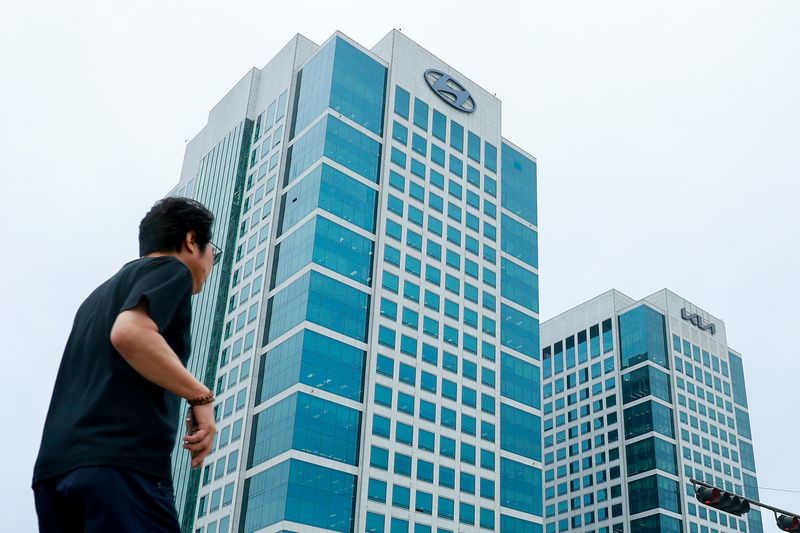
On the 26th, Hyundai Motor held its '2026 CEO Investor Day' at Conrad Seoul in Yeongdeungpo District, Seoul, and presented its mid- to long-term strategy and financial plan to investors, analysts, and credit rating agency officials. CEO José Muñoz, AVP Division Head and 42dot CEO Minwoo Park, Vice President Kim Chang-hwan, who oversees electrification energy solutions, and CFO Lee Seung-jo attended the event.
Hyundai Motor said it will maintain its existing mid- to long-term goals of selling 5.55 million vehicles globally by 2030 and reaching a 60% xEV sales mix. The company said the market remains unstable, but it believes its core competitiveness in the finished-vehicle business is solid. In fact, first-half hybrid vehicle sales rose 18% year on year to 363,000 units, while revenue reached a record 95.2 trillion won.
CEO José Muñoz said, "Hyundai Motor's fundamentals are stronger than ever," adding, "We will launch more models, offer customers more powertrain choices, and aggressively expand into new segments and new markets."
He added, "Based on strategic partnerships, we will advance future technologies and transform ourselves into a physical AI company that produces and deploys robots and robotaxis."
■ 100 new models by 2030: tailored strategies by region
Hyundai Motor plans to launch more than 100 new vehicles worldwide by 2030, including facelifts and derivative trims. Of those, at least 18 will be all-new models in segments where the company has not previously sold vehicles. To support that plan, global production capacity will also expand by 1.27 million units by 2030. The increase will come from North America with 500,000 units, India with 320,000, South Korea with 200,000, and CKD production with 250,000.The company has also refined its localization strategy by region. In North America, it will launch 10 new HEV models by 2030, starting with the Genesis GV80 Hybrid, and raise the HEV sales mix to 50%. It will also introduce the Hyundai Santa Fe EREV in the United States in the first half of next year. In Europe, Hyundai Motor has set an EV sales target of 420,000 units for 2030, nearly four times last year's 116,000 units. The Europe-exclusive Hyundai Ioniq 3 will be officially launched next month.
In India, the company aims to raise the SUV sales mix to 80% by 2030, increase local parts sourcing to more than 90%, and expand exports to 30%. In South Korea, the company will serve as a manufacturing innovation hub. The new EV-dedicated plant in Ulsan will operate as a software-defined factory equipped with AI-based quality control, while Ulsan Plant 1 and Plant 4 will begin reconstruction next year. In China, Hyundai Motor plans to raise sales volume, including outside China, to 500,000 units by 2030 based on its localization strategy.
■ Genesis sets a new benchmark for luxury EVs with the GV90
Marking its 10th anniversary, Genesis has begun its leap into a "new decade" from 2026 to 2035. The flagship EV GV90, unveiled recently in San Francisco, pursues innovation through a design inspired by the moon jar, the world's first independent coach doors called the "Neolun Arch Gate," and a "roof airbag" designed with rollover accidents in mind. The Genesis GV80 Hybrid improved combined fuel efficiency by about 25% compared with an internal combustion model, and the EREV SUV due out early next year is expected to travel more than 1,000 kilometers on a single charge and tank.Genesis will expand into Spain in the fourth quarter of this year and into five European countries, including Austria, Denmark, Poland, and Portugal, next year. It also plans to expand into India and ASEAN in the future, with a goal of selling 350,000 vehicles in more than 40 countries worldwide by 2030.
■ Robotaxis and humanoids: a broad expansion into future businesses
In future businesses, collaboration with global technology companies stands out. In the fourth quarter, Hyundai Motor will supply Waymo LLC with robotaxis based on the Hyundai Ioniq 5, produced at the Georgia Metaplant (HMGMA) in the United States, and it will also expand its autonomous-driving foundry business. Motional, in which Hyundai Motor holds a stake, will commercialize the Ioniq 5 robotaxi by the end of this year and expand into Europe and the Asia-Pacific region.Development of manufacturing AI robotics with Boston Dynamics is also accelerating. The company opened the Robot Metaplant Application Center (RMAC) in the United States in June and will expand the site to 10 times its current size by year-end. Hyundai Motor plans to deploy the industrial humanoid robot Atlas at HMGMA starting in 2028.
■ Advancing SDV and autonomous driving through a data flywheel
To improve Software-Defined Vehicle (SDV) technology, Hyundai Motor is building a "data flywheel" system in which data collection, analysis, AI improvement, and OTA deployment reinforce one another. Starting with the facelifted Grandeur, the infotainment system Pleos Connect and the generative AI agent Gleo AI are being applied. In autonomous driving, standardization work is under way to integrate data from Hyundai Motor Company, Kia Corporation, 42dot, and Motional based on the NVIDIA ecosystem.The roadmap has also become more concrete. By year-end, the company will deploy the autonomous-driving AI Atria AI in Gwangju Metropolitan City to collect data on unexpected situations. In 2028, through cooperation with NVIDIA, it will apply Level 2+ autonomous driving to its first mass-produced SDV model. After that, the goal is to build a full lineup from Level 2+ to Level 4. Starting in 2029, when autonomous-driving data is expected to surge, Hyundai Motor will operate a new AI data center in Saemangeum with 100 megawatts of power and more than 50,000 GPUs.
■ Batteries: balancing performance, cost, and safety
In batteries, Hyundai Motor introduced its in-house high-performance cell. Compared with existing high-nickel batteries, the new cell delivers more than twice the output and cuts charging time by 40%. It will be used in the EREV due out in the first half of next year. The EV volume model scheduled for release next year will use a cost-efficient mid-nickel NCM battery, which offers about 30% more energy capacity than an LFP battery of the same size. The cloud-based Battery Management System (BMS) is expected to improve battery life by an average of 20% by 2028.For safety, the company has newly developed battery thermal propagation prevention (TRP) technology. It blocks high-temperature heat from spreading to adjacent cells and also includes a structure that vents high-heat gas, going beyond previous methods that only delayed thermal propagation. The technology was first applied to the Genesis GV90. It combines real-time anomaly detection by the cloud BMS as a first line of defense with structural blocking by TRP as a second line of defense. Hyundai Motor said it verified the safety of the TRP technology for NCM batteries through more than 200 repeated tests.
■ Operating margin target raised to 9%; all treasury shares to be canceled
Even in a difficult business environment marked by geopolitical tensions in the Middle East, intensifying competition from China, and U.S. tariffs, Hyundai Motor kept its full-year earnings guidance unchanged, with an operating margin of 6.3% to 7.3%. By contrast, it raised its 2030 operating margin target to above 9%, from the previous 8% to 9% range. The move reflects the expansion of hybrid models and a companywide cost-cutting roadmap, and total operating profit is expected to rise 11% from the previous plan. The company also plans to cut its cost of sales ratio by 3 percentage points from the original plan by 2030.As part of its shareholder return policy, Hyundai Motor will maintain a total payout ratio of at least 35%, keep the minimum dividend at 10,000 won or more, and cancel all treasury shares it currently holds. To improve communication with the market, the English name for the total shareholder return metric will be changed from TSR to TPR, or Total Payout Ratio. On the day of the announcement, Hyundai Motor disclosed that it would cancel all treasury shares except those held for employee compensation, worth about 800 billion won based on the previous day's closing price.
[email protected] Kim Dong-chan Reporter