Although He Judged Martial Law to Be Wrong, He Took No Action... Lee Chang-heum Faces Scrutiny as Jeju Vice Governor Nominee
- Input
- 2026-08-26 14:13:10
- Updated
- 2026-08-26 14:13:10
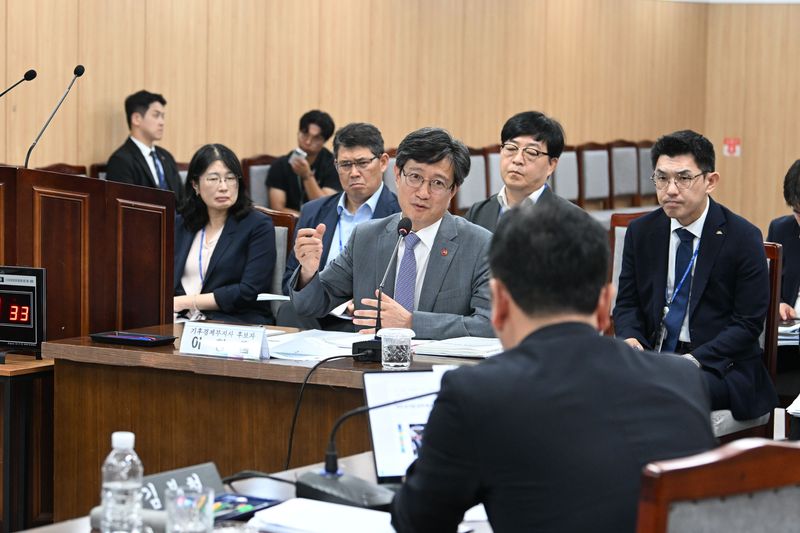
[Financial News, Jeju = Reporter Jeong Yong-bok] Lee Chang-heum, former senior secretary for climate and environment at the Presidential Office and the first nominee for vice governor for climate economy in Jeju's 9th popularly elected administration, was closely questioned at his confirmation hearing about why he worked at the Presidential Office under the Yoon Suk Yeol administration and what he did during the Dec. 3 emergency martial law declaration. He said he believed the martial law declaration did not meet constitutional requirements, but acknowledged that he did not take any specific action, such as expressing opposition.
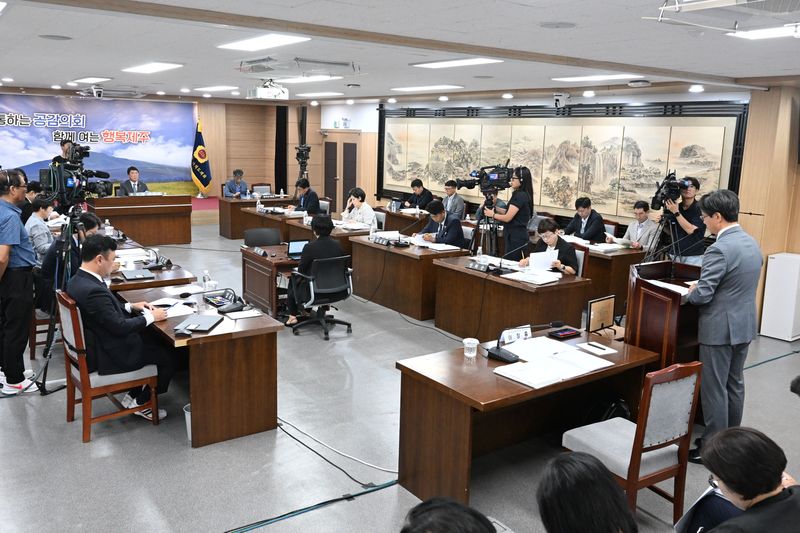
The Special Committee for Personnel Hearings of the Jeju Special Self-Governing Provincial Council held a confirmation hearing for Lee Chang-heum, nominee for vice governor for climate economy, at the Jeju council on the 26th. The committee examined his policy execution ability, morality, and capacity to respond to major pending issues.
The main political issue at the hearing was his previous service as senior secretary for climate and environment at the Presidential Office under the Yoon Suk Yeol administration.
Jeju provincial council member Kang Seoung-euy raised the differences in climate and environmental policy between the Moon Jae-in and Yoon Suk Yeol administrations and asked why Lee, then a senior official at the Ministry of Climate, Energy and Environment, moved to the Presidential Office.
Lee explained, "I worked at the Ministry of Climate, Energy and Environment for about 30 years, and the Presidential Office at the time requested someone who could oversee environmental affairs." He added that two of the three senior-level bureau directors at the ministry headquarters had come from the Ministry of Land, Infrastructure and Transport, and that he was the only one in charge of environmental affairs.
He said, "In that process, I was never asked for my opinion, nor did I say I wanted to go," explaining that he moved to the Presidential Office through the civil service personnel process.
He also expressed regret over the rollback of policies such as disposable cup regulations under the Yoon Suk Yeol administration. Lee said, in effect, that as a public servant he tried to explain and persuade others about policy, but that there were limits on major issues decided politically.
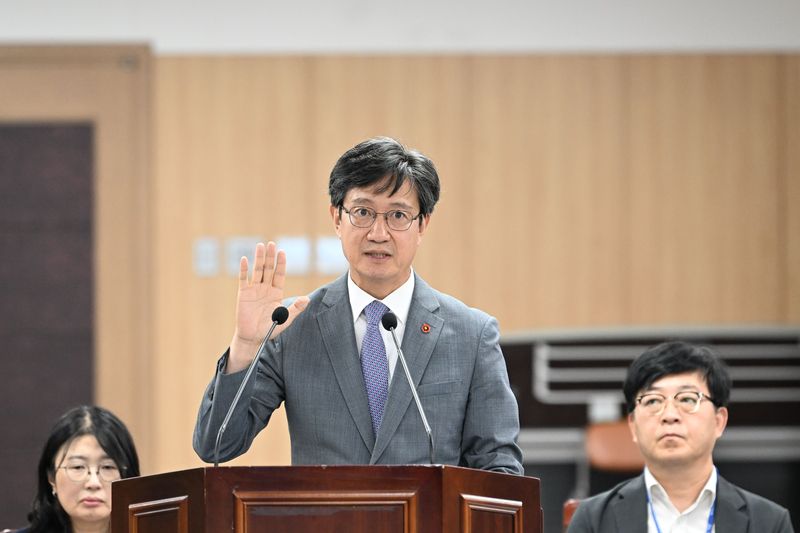
What he judged and did at the Presidential Office during the Dec. 3 emergency martial law declaration also came under the spotlight. Jeju provincial council member Kim Bong-hyun asked whether Lee had received any related reports or instructions before the declaration, when he first learned of it, and whether he later conveyed any opposition.
Lee said there were "absolutely none" reports or instructions before the declaration. He explained that after finishing dinner with National Assembly officials, he heard a helicopter while at his lodging, turned on the TV, and learned that martial law had been declared.
When asked whether he believed the martial law declaration met constitutional requirements, he answered, "No, it did not."
However, when asked what specific action he took after deciding it was wrong, he said, "I took no action." He added that he was in an organization responsible for policy work at the Presidential Office and that there were no internal instructions related to martial law.
When asked whether he would speak frankly in the future if he believed the governor's judgment was wrong, he said he would actively convey his views. Lee responded that he would use every possible means to present his opinion for the sake of residents.
On policy, he put forward a vision of linking the climate and energy transition to regional growth and resident income from an economic perspective.
In his opening remarks, Lee said, "We must connect the energy transition and carbon reduction to new industries and growth engines, as well as jobs and residents' income."
He also promised to create a structure in which the benefits of renewable energy produced in Jeju would return to local communities and residents. His plan is to expand distributed energy and resources that can flexibly balance electricity demand and supply, so that clean energy leads to corporate investment and jobs.
He also identified future industries such as artificial intelligence, space, and biotechnology as key areas for the vice governor for climate economy. He said he would build an innovation ecosystem that connects research, talent, startups, and companies by using a joint campus involving the four major science and technology institutes and Jeju.
A key point of the hearing was that the success of the 9th popularly elected administration's reorganization, which converted the former vice governor for political affairs into a vice governor for climate economy, depends on the nominee's ability to carry out policy. The vice governor for climate economy is expected to connect future industries with climate, energy, and environmental policy to create new growth engines for the regional economy.
On the Jeju Second Airport, one of the province's biggest sources of conflict, he said, "I will not reach a conclusion based solely on the claims of either side."
Lee said he would objectively verify and disclose the disputed issues, listen to both supporters and opponents, and then reach a fair conclusion through deliberation and dialogue to find "a solution that residents can accept and that benefits Jeju."
Regarding the Chuja offshore wind power project, he said it should be pursued based on the Jeju Special Act. His plan is to use the act to secure public value and local benefits, while working with the central government to resolve the issue of linking it to the national power grid.
Lee is from Namwon-eup, Seogwipo-si, passed the 40th Higher Civil Service Examination, and entered public service in 1997. He served as director of the Environmental Industry and Economy Division at the Ministry of Climate, Energy and Environment, head of the Wonju Regional Environment Office, policy planning director, and head of the Climate and Carbon Policy Bureau. He was the first person from Jeju to rise to a senior-level post at the ministry. Under the Yoon Suk Yeol administration, he served as senior secretary for climate and environment at the Presidential Office from June 2024 to June 2025.
The Special Committee for Personnel Hearings of the Jeju Special Self-Governing Provincial Council consists of nine members, including Chair Im Jeong-eun. After comprehensively reviewing the nominee's expertise, policy execution ability, morality, responsibility, and attitude toward public service, the committee will adopt a hearing report.
[email protected] Jeong Yong-bok Reporter