Prolonged High Water Temperatures Trigger Widespread Collapse of Jeju Soft Corals in Seogwipo's Munseom and Bamseom
- Input
- 2026-08-26 13:54:27
- Updated
- 2026-08-26 13:54:27
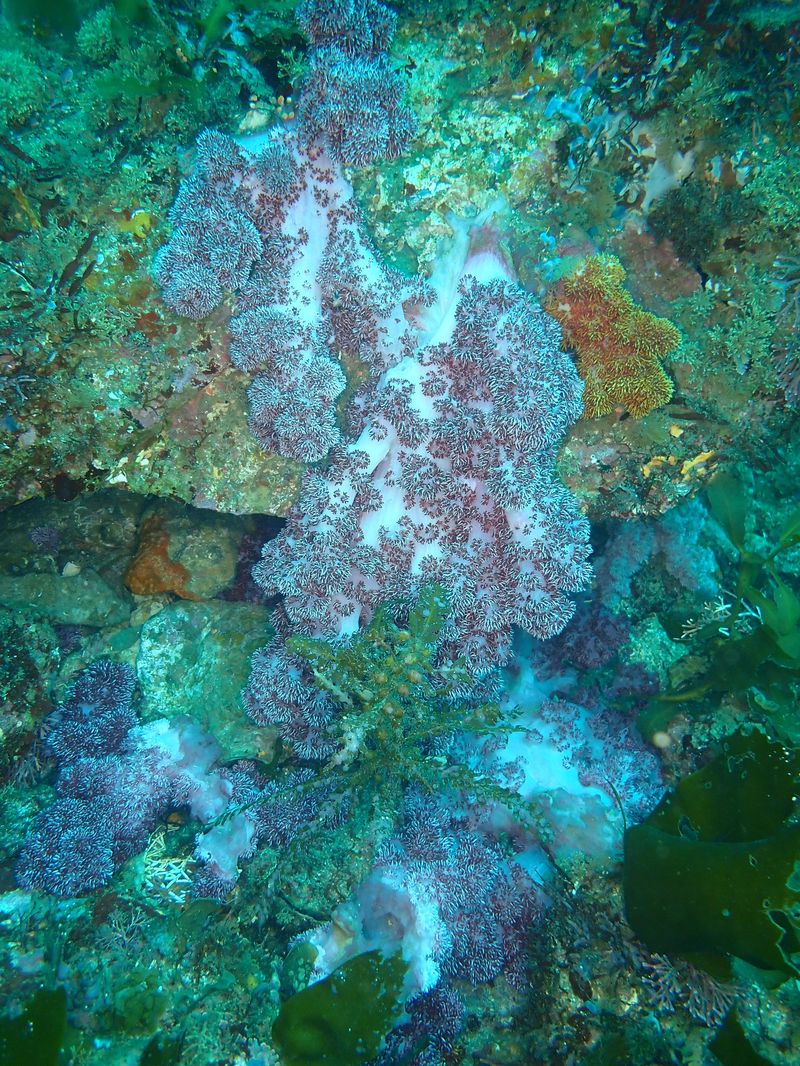
[Financial News Jeju = Reporter J. Yongbok] Soft corals in the waters off Seogwipo City, Jeju Province, which were healthy just a month ago, are now rapidly showing abnormal signs around Munseom Island and Bamseom. They are losing their shape, sagging, or falling to the seafloor. In some survey sites, the collapse was found in more than half of the area, prompting calls for a detailed national-level investigation.
According to Marine Citizen Science Center Paran on the 26th, a series of 15 underwater surveys conducted over seven days from late July around Munseom Island and Bamseom in Seogwipo City found large-scale collapse in several types of soft corals. The surveys involved 57 citizen scientists, including activists and coral exploration team members.
The term "collapse" refers to a condition in which soft corals, which do not have a rigid skeleton, can no longer maintain their shape and begin to sag, contract, and then break down. Soft corals keep their form using internal water pressure, but when environmental stress intensifies, their bodies can droop or their bases, which attach them to rocks, can weaken and detach.
The change became clear within a month. When Paran surveyed Bamseom on July 23 and Munseom on July 28, there were few obvious abnormalities except for collapse in some Dendronephthya putteri colonies on Munseom.
But the situation changed when the group returned to Bamseom on the 18th and 20th, and to Munseom on the 21st and 22nd.
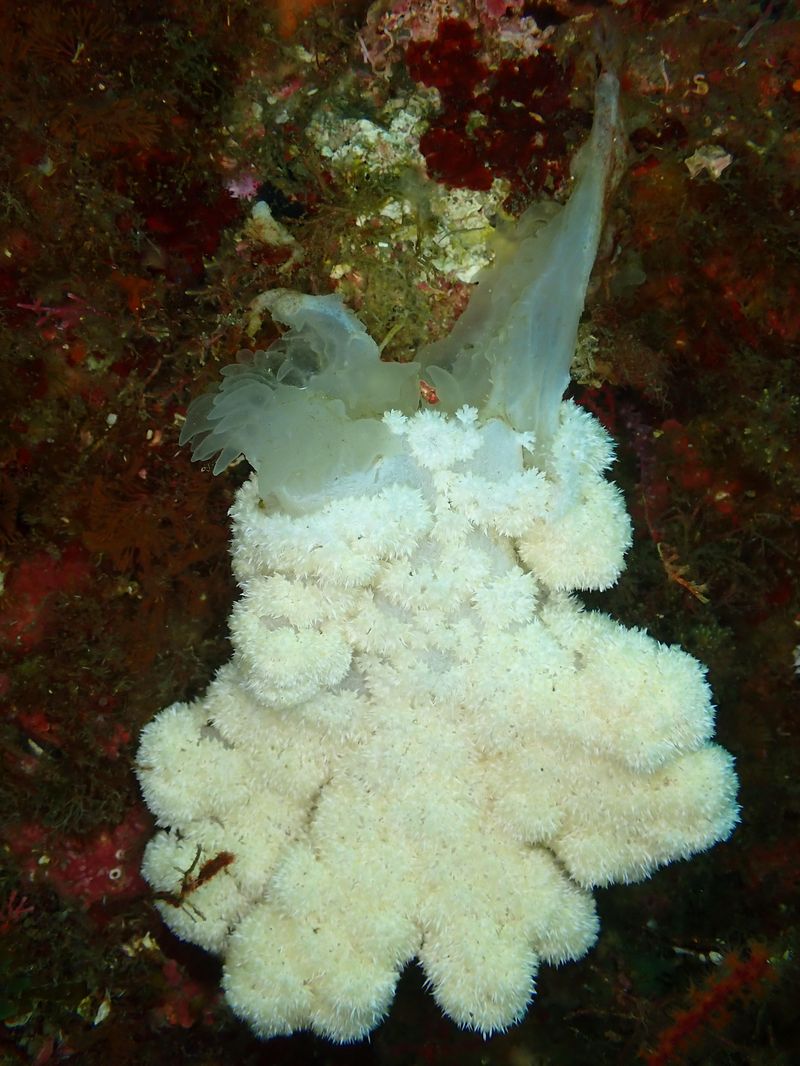
In Bamseom's Flower Garden, collapse was confirmed in more than 50% of the survey area for Dendronephthya putteri, Dendronephthya putteri, and Scleronephthya gracillimum. Nearly all of the Dendronephthya putteri colonies observed there a month earlier were found hanging limp or detached from the seafloor. Scleronephthya gracillimum was also found flattened and attached to the bottom.
Several soft coral species also showed abnormalities on the underwater vertical wall at a depth of 15 to 25 meters off Saekkiseom, Bamseom. Around 17 meters deep, a group of soft coral species not previously recorded in Korea had collapsed, and damage was also found among Dendronephthya species.
Paran explained, "We also confirmed the collapse of Dendronephthya and white Dendronephthya for the first time in Jeju Province."
Munseom showed a similar pattern. In the survey area at depths of 10 to 25 meters around the Meeting Plaza, more than half of the area showed Dendronephthya putteri, Dendronephthya, Scleronephthya gracillimum, and Dendronephthya putteri sagging or falling off the rocks as their bases weakened.
Among them, Dendronephthya, Dendronephthya putteri, and white Dendronephthya are marine protected species designated by the Ministry of Oceans and Fisheries and are also listed by the Ministry of Environment as Endangered Wildlife Class II. The Munseom and Bamseom area is included in Natural Monument No. 421, the Munseom and Bamseom Natural Reserve, and No. 442, the Jeju Coastal Soft Coral Community.
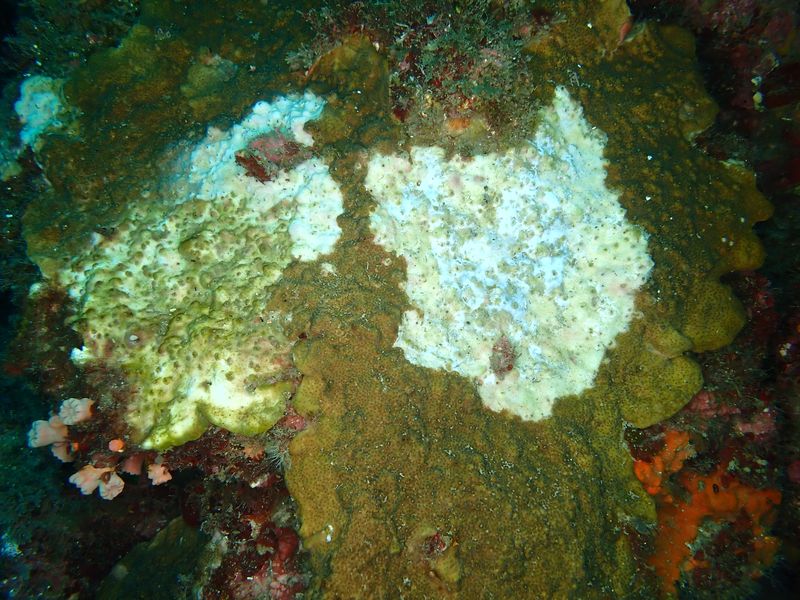
Soft corals are not the only organisms showing signs of stress. In waters 7 to 10 meters deep off the main island of Bamseom, many light maple stony corals were also observed turning white in a bleaching event. Coral bleaching occurs when environmental stress, such as high water temperatures, causes the symbiotic algae living with the coral to leave, stripping the coral of its color.
The cause has not yet been determined. In a study published this year in the international journal Scientific Reports, researchers at KIOST reported that the collapse of Jeju soft corals in 2024 occurred alongside prolonged high water temperatures and low salinity. The study suggested that the combination of high temperature and low salinity may have placed physiological stress on the soft corals.
High water temperatures have also persisted for a long period along Jeju's coast this year. NIFS issued a high-water-temperature advisory on July 21 for eight sea areas, including waters off Jeju Province, and MOF raised the high-water-temperature crisis alert to the "Serious I" level on July 30.
However, there is still not enough evidence to explain the Munseom and Bamseom abnormalities solely by high water temperatures. Other factors, such as low-salinity water, fine sediment, and infection, may also be at work. Scientific research is needed to examine changes in water temperature and salinity, as well as the condition of coral tissue.
Paran assessed that "this year's collapse is appearing across a wider area and in a greater variety of soft coral species than in 2024." It urged the Korea Heritage Service, MOF, and Jeju Special Self-Governing Province to expand the survey area to key sites in the Jeju coastal soft coral community and establish a joint investigation system to identify the cause.
This survey was limited to some sites in Munseom and Bamseom, so it cannot determine the full extent of the damage along Jeju's coast. A detailed investigation by the relevant authorities is urgently needed to identify the exact spread and cause.
[email protected] J. Yongbok Reporter