Joseon Neo-Confucian scholar's Daljeon Jesa in Pohang designated a national heritage site
- Input
- 2026-08-26 14:12:16
- Updated
- 2026-08-26 14:12:16
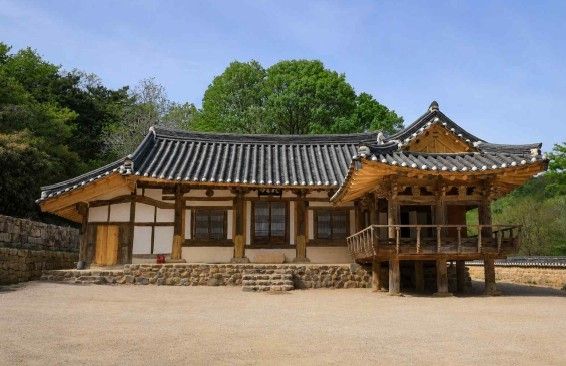
[Financial News] The 'Pohang Yeoju Lee Clan Daljeon Jesa,' which offers a clear look at how Confucian ritual halls developed and changed during the Joseon Dynasty, has been designated a national heritage site. A jesa is a ritual building constructed near an ancestor's grave or shrine.
The Korea Heritage Service said on the 26th that it had designated the 'Pohang Yeoju Lee Clan Daljeon Jesa' in Pohang, North Gyeongsang Province, as a National Folklore Cultural Heritage site.
Daljeon Jesa was built to manage the graves of Lee Eon-jeok (1491-1553), a pioneer of Neo-Confucianism in the Joseon Dynasty, and his family, and to hold ancestral rites. It began as a small hermitage where monks guarded the burial grounds and lived there. Later, in 1754, Okseongnu Pavilion, Yangik-sil, and Gosa were added, giving it its current form as a jesa. Yangik-sil was used to prepare for ancestral rites, while Gosa served as a warehouse for ritual grain.
The site shows how, from the mid-17th century onward, Confucian ritual halls evolved beyond serving as family spaces for ancestral rites and came to play a central role in scholarship and culture amid the expansion of patrilineal order, stronger clan solidarity, and the growth of same-clan villages.
Architecturally, the graves, the stele monument built in 1586, the jesa hall, and the land attached to the graves are arranged in an organic way, showing a typical late-Joseon layout for such spaces. It also features the T-shaped arrangement characteristic of ritual halls in the northern part of North Gyeongsang Province.
In addition, architectural elements from the time when the hermitage was first established remain relatively intact, including a structure that housed a Buddha statue in a monk's quarters, the ikgong bracket system, and the wooden ceiling finished with boards in the main inner quarters. The site is regarded as an important source for understanding construction techniques of the period.
The Korea Heritage Service explained, "Traditional grave rites and ceremonies are still being passed down by the Yeoju Lee Clan to this day through Daljeon Jesa," and added, "It is highly valuable as a National Folklore Cultural Heritage site because it comprehensively shows the changes in Joseon-era grave ritual culture and the characteristics of jesa architecture in the Yeongnam region."
[email protected] Yuseon Jun Reporter