Concerns Grow Over Police 'Self-Investigation' in October After Sergeant Bu's False Closure of Missing Person Case
- Input
- 2026-08-27 14:49:50
- Updated
- 2026-08-27 14:49:50
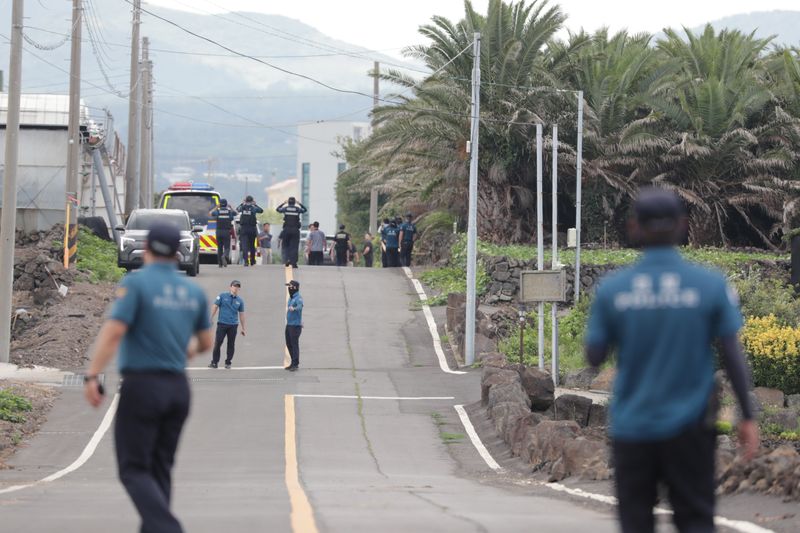
According to legal circles on the 27th, the Jeju Provincial Police Agency is the first body investigating the case of Sergeant Bu, who was arrested on the 25th. It is the superior agency overseeing the Jeju Western Police Station, where Bu worked, meaning investigators within the same organization are examining a colleague's job-related crime. The Jeju Provincial Police Agency also filed the arrest warrant. One prosecution official said, "This is a structure in which police officers punish corrupt police officers," adding, "Because police officers are not an independent institution like prosecutors, concerns that they may protect their own are not unfounded."
The prosecution is the outside check on this structure. The legal basis for prosecutors to directly investigate police crimes is Article 4, Paragraph 1, Item 1(b) of the Prosecutors' Office Act, which designates "crimes committed by police officers" as grounds for prosecutors to open an investigation without setting any rank limit. The Jeju District Prosecutors' Office is also involved in this case by forming a dedicated investigation team under that provision. But as prosecutors' role in reviewing police investigations is reduced from October, concerns are growing that the system of checks and balances will weaken.■ The law exists, but there is no officeOn July 31, the National Assembly passed a revision to the Criminal Procedure Act of the Republic of Korea, fully abolishing prosecutors' direct investigation powers and supplementary investigation powers. The law will take effect on Oct. 2, when the prosecution is split into the Public Prosecution Office and the Serious Crimes Investigation Agency. If the same case occurs two months later, it will be structurally impossible for prosecutors to investigate the police.
The plan is for the Serious Crimes Investigation Agency to fill that gap. Article 2, Item 2(a) of the Serious Crimes Investigation Agency Act includes crimes committed by police officers while in office under the category of "serious crimes," giving the agency primary investigative authority. On paper, this covers all job-related crimes by police officers regardless of rank.
The problem is where the agency will be placed. According to the agency structure approved by the State Council of South Korea on the 18th, the Serious Crimes Investigation Agency will consist of a headquarters and six regional offices in Seoul, Suwon, Daejeon, Daegu, Busan, and Gwangju, with a total staffing level of 2,874. Since no regional office will be established in Jeju Province, cases from Jeju will be handled by the Gwangju Regional Serious Crimes Investigation Agency.
However, even after Oct. 2, the police will still be the first to investigate corruption involving police officers. The revised Criminal Procedure Act centralizes investigative authority in judicial police officers and does not exempt crimes related to a police officer's own duties. When the police become aware of such a case, they must notify the head of the Serious Crimes Investigation Agency. If the agency chief requests a transfer, the police must comply unless there is a valid reason not to. In other words, if the agency does not make the request, the police continue the investigation themselves. The Public Prosecution Office can only request supplementary investigation and cannot conduct a direct investigation.
In the end, the structure requires an organization to report its own wrongdoing, while the power to take it outside the organization rests with the Gwangju Regional Serious Crimes Investigation Agency across the sea. Right now, the Jeju District Prosecutors' Office reviews the case from the warrant stage, but that entire process will disappear in two months.
One senior prosecution official said, "In the past, prosecutors had investigative command authority and could inspect police detention cells and internal case records without notice, which allowed them to uncover attempts to bury cases or rights violations by the police. But now that is no longer possible," adding, "It will get worse after October, when prosecutors lose their own investigative powers."■ The CIO wants broader authority, while legal experts want specializationThere is another investigative body, the CIO, but Sergeant Bu's case is not within its jurisdiction. Under the CIO Act, the agency may investigate police officers only from superintendent general rank and above, so a sergeant, five ranks lower, falls outside its reach.
Meanwhile, the CIO submitted a revision proposal to the National Assembly last week seeking to expand its investigative scope from police officers of superintendent general rank and above to those of superintendent rank and above. Some legal experts are also calling for the CIO's mandate to be narrowed to public officials involved in criminal justice procedures, effectively specializing it as an agency that investigates investigative agencies.
One former prosecutor-turned-lawyer said, "If we focus on the CIO's original role of checking power, we can consider making it an agency that checks the state's investigative authority," adding, "Given the CIO's size and the changing criminal justice system, its presence would grow if it establishes itself as a body that checks investigative power."
Still, the two proposals point in opposite directions, but they share one limitation: neither reaches Sergeant Bu. A superintendent is the head of a local police station. The same prosecution official said, "Tasks that citizens directly encounter, such as receiving and closing missing-person reports, are handled by investigators at the sergeant or senior police officer level. Yet both the expansion camp and the narrowing camp are only talking about raising rank thresholds or changing the nature of the agency. As the prosecution is split into the Public Prosecution Office and the Serious Crimes Investigation Agency to strengthen police power, we also need safeguards against the abuse of police investigative authority that can directly harm citizens."
[email protected] Kim Dong-gyu Reporter