Mediator says there has been "significant progress" as the United States delays strikes and Iran sets conditions
- Input
- 2026-08-26 15:57:08
- Updated
- 2026-08-26 15:57:08
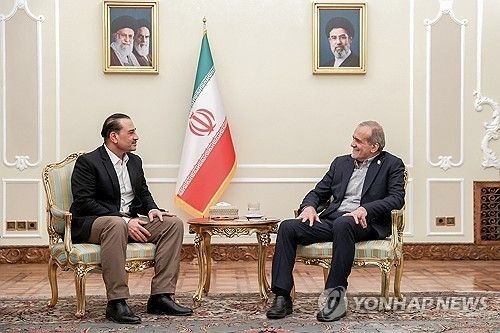
According to British media reports on the 25th local time, Asim Munir, chief of the Pakistan Army, and Syed Mohsin Raza Naqvi, the interior minister, visited Tehran the previous day and met with Iran's leadership. Munir, who is seen as Pakistan's de facto power broker, met with President Masoud Pezeshkian, Mohsen Rezaee, secretary of the Supreme National Security Council (SNSC), Mohammad Bagher Ghalibaf, speaker of parliament, Abbas Araghchi, foreign minister, and Eskandar Momeni, interior minister.
The Pakistani military said the two sides held broad discussions on ways to prevent further escalation, reopen the Strait of Hormuz, and bring the conflict to an early end. After the talks, Naqvi said, "The Iranian president openly shared the government's perspective and concerns, and we discussed the issues very constructively." He added, "There was significant progress, and the talks ended in a very positive atmosphere."
The visit came as the standoff between the United States and Iran continued. Before traveling to Tehran, Munir spoke with U.S. President Donald Trump, and Washington reportedly asked Pakistan to use its influence to bring Iran back to the negotiating table.

According to Iran's state-run Press TV, Gharibabadi described the arrangement reached with Oman as a "temporary" measure until a "permanent route" is established through further negotiations over the next 30 to 60 days. He added that the Strait of Hormuz would remain closed unless Iran's conditions were met, including the complete lifting of the illegal economic blockade, an end to aggression on all fronts including Lebanon, and a clear explanation regarding the blockade on Yemen.
On the same day, Axios reported that Secretary of State Marco Rubio recently told several allies that "the United States will not launch an attack on Iran for now." Rubio reportedly said Washington is instead focusing on other pressure tools, including the large-scale economic sanctions announced the previous day.
One U.S. official, however, noted that "after the midterm elections, new military operations could come back onto the table."
[email protected] Hong Chaewan Reporter