Tax Break for First-Time Buyers of Small Officetels Expanded... Sell and Buy an Apartment, Get Another Break [2027 Local Taxes]
- Input
- 2026-08-26 12:00:00
- Updated
- 2026-08-26 12:00:00
Going forward, buyers who purchase a small officetel as their first home and later sell it to move into an apartment will be able to receive the first-time home acquisition tax break once more. Young adults under 40 who meet the requirements can receive up to 3 million won in acquisition tax relief each time they buy an officetel and then a home, for a total of up to 6 million won. The local education tax levied on tobacco consumption, which is set to sunset at the end of this year, will be converted into a 'local housing welfare tax,' while the acquisition tax relief cap for electric vehicles will be cut in half, from 1.4 million won to 700,000 won.
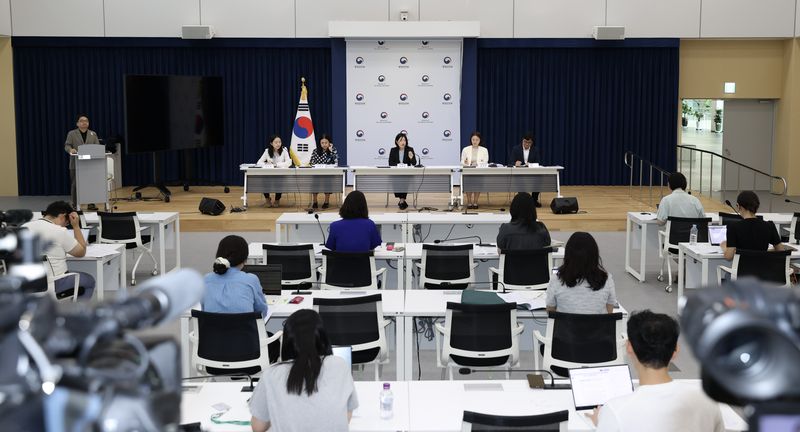
On the 26th, MOIS held a Local Tax Development Committee meeting and announced the '2026 local tax reform plan.' The committee is made up of experts in local finance and taxation and reviews changes to local tax systems and related laws. The reform plan was drawn up after joint system-improvement discussions with local governments and a consolidated review of local tax exemptions.
Officetels also qualify as first homes... Sell a small one and get another break
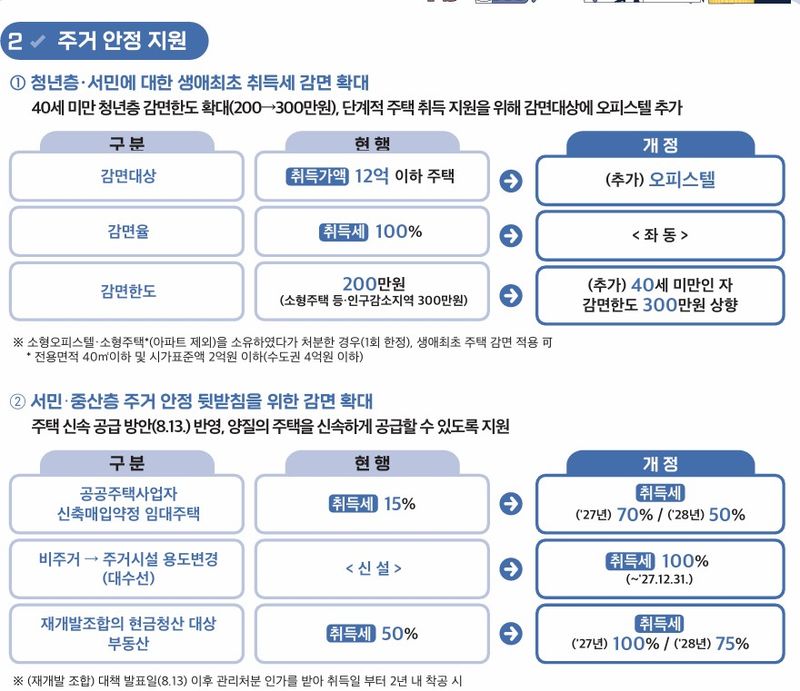
Residential officetels will be included in the first-time acquisition tax relief program. At present, buyers who purchase a home worth 1.2 billion won or less for the first time are fully exempt from acquisition tax, up to a maximum benefit of 2 million won. For those under 40, the cap will also be raised from 2 million won to 3 million won.
If a person owns a small officetel or small house, disposes of it, and then buys a home such as an apartment, they can receive the first-time acquisition tax break once again. Eligible properties are officetels and homes with an exclusive floor area of 40 square meters or less and a publicly assessed value of 200 million won or less, or 400 million won or less in the Capital Region. However, apartments among small homes are excluded.
As a result, a buyer under 40 who first acquires an eligible officetel and receives up to 3 million won in tax relief, then sells it and buys a home, can receive up to another 3 million won in relief. The rule allowing one additional round of relief after disposing of a small officetel or small home will apply regardless of age.
The property tax special rate for one-home owners with homes valued at 900 million won or less will also be extended through the end of 2029. The current rate, which is 0.05 percentage points lower than the standard 0.1% to 0.4% rate, will be maintained for three more years.
Tax relief for electric vehicles will be reduced. The full exemption from acquisition tax will remain, but the maximum benefit will be cut in half, from the current 1.4 million won to 700,000 won.
Tobacco local education tax to be used for housing welfare
The local education tax levied on tobacco consumption, which is set to sunset at the end of this year, will be converted into a local housing welfare tax. Currently, 43.99% of the tobacco consumption tax is collected as local education tax, and the same share will be turned into a local housing welfare tax to fund public housing supply and housing welfare programs by local governments. The annual scale is about 1.5 trillion won. According to MOIS, the tax is paid by tobacco manufacturers and importers, so there will be no additional tax burden.
The local education tax on tobacco consumption was extended for two years, from 2025 to 2026, under the Local Tax Act revision passed at the end of 2024, on the premise that it would be permanently abolished starting in 2027. The government plans to end the education tax at the end of this year as scheduled and replace it with a local housing welfare tax that will be used for housing-related purposes.
For temporary two-home owners in Area Subject to Adjustment, the period for disposing of the previous home to avoid the heavier acquisition tax will be shortened from three years to two. This applies when both the previous home and the new home are in an Area Subject to Adjustment. The new rule will apply to homes acquired after Oct. 1, while the existing three-year rule will remain in place for cases where a sales contract was signed and a deposit paid before Aug. 26.
Tax support for unsold apartments completed in Non-metropolitan areas will also be extended. When a first-time buyer acquires a completed unsold apartment in a local area with an exclusive floor area of 85 square meters or less and a purchase price of 600 million won or less, acquisition tax will be reduced by up to 50%. The exclusion from heavier acquisition tax will continue through the end of 2027, and the exclusion from the home-count calculation will continue through the end of 2028.
Expanded tax support for the social solidarity economy and local companies
Local tax relief for social solidarity economy enterprises will also be expanded. The relief will apply not only to social enterprises, but also to social cooperatives, village enterprises, self-support enterprises, social venture firms and consumer co-operatives. The base relief rate will be 55% each for acquisition tax and property tax, and additional relief will be granted to newly established firms, firms with weak tax capacity, and firms located in Non-metropolitan areas or population-declining regions, bringing the maximum exemption to 100%. For small cooperatives, the threefold heavier registration and license tax that applied when increasing capital in large cities will be abolished, and the minimum tax payment will also be cut by 50%.
Region-specific differentiated tax breaks to attract companies to local areas will also be expanded. For venture business cluster facilities and new technology startup cluster zones, the relief scale will increase in the order of the Capital Region, Non-metropolitan areas, and population-declining regions. Population-declining regions will receive 10 to 15 percentage points more relief than the Capital Region for acquisition tax and property tax, while the relief rate in the Capital Region will be lowered.
Companies returning to South Korea from overseas will also be eligible for local tax relief even if they do not fully shut down their overseas operations, as 'partial return' cases in which they scale down or maintain those operations. Companies investing in opportunity development zones will see the scope of relief expanded to include factories and industrial buildings, allowing support for data center workloads and other facilities.
MOIS will announce the draft revisions to the Framework Act on Local Taxes, the Local Tax Collection Act, the Local Tax Act and the Act on Restriction on Special Cases Concerning Local Taxation through legislative notice from the 27th to Sept. 23. The ministry plans to submit the bills to the National Assembly at the end of October after review by MOLEG and approval by the State Council of South Korea.
[email protected] Lee Bo-mi Reporter