Japan Moves to Protect New Crop Varieties After Losing Shine Muscat to South Korea and China
- Input
- 2026-08-26 09:50:36
- Updated
- 2026-08-26 09:50:36
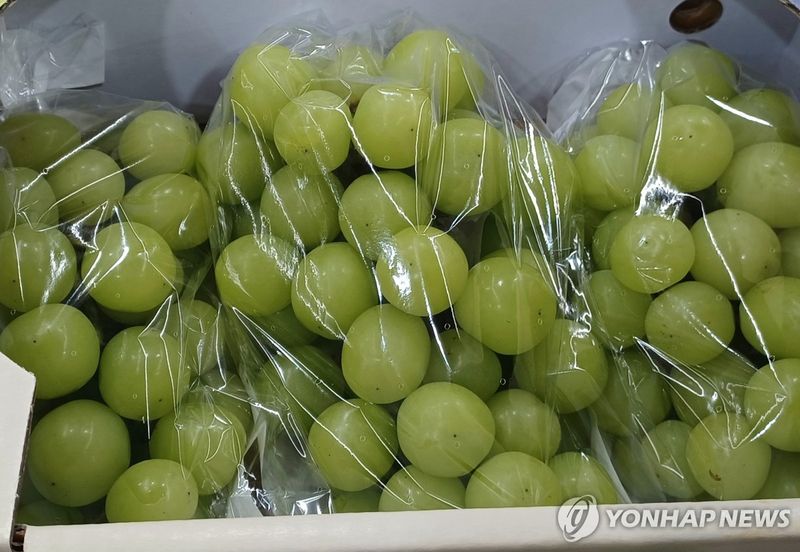
[Financial News, Tokyo = Seo Hye-jin, correspondent] Japan has introduced a system that centrally manages everything from cultivation permits to monitoring illegal distribution and filing lawsuits in an effort to prevent new crop varieties developed in the country from leaking overseas, Nihon Keizai Shimbun reported on the 26th. The move comes as the number of Japanese varieties suspected of being taken abroad without permission in China and South Korea has increased 1.5 times over the past five years. Japan has also revised its seedling law to block exports before a variety is officially registered. The goal is to prevent situations like Shine Muscat, which is widely grown overseas without royalty payments.
Japan's Ministry of Agriculture, Forestry and Fisheries (MAFF) certified J-PLANTS, founded by the National Federation of Agricultural Cooperative Associations (ZEN-NOH) and others, as the country's first management body for breeders' rights in July.
Breeders' rights are intellectual property rights granted to people who develop new varieties of fruits, flowers and other crops. In Japan, the rights take effect once a variety is registered with MAFF. Anyone who propagates seedlings or sells harvested products without the rights holder's permission may be punished.
■Japan says 54 Japanese varieties are suspected of being grown without permission in South Korea and China
J-PLANTS signs agency contracts with breeders and grants cultivation licenses to operators in Japan and abroad. It returns the royalties collected through licensing agreements to the breeders. The organization also works with local operators to monitor unauthorized cultivation and distribution, and if infringement is confirmed, it handles lawsuits in cooperation with lawyers specializing in intellectual property.
This model allows a specialized institution to handle overseas cultivation permits, royalty collection, monitoring of illegal distribution and legal action, all of which breeders previously had to manage on their own. J-PLANTS will first support overseas business for about 10 varieties, including grapes and persimmons that have already completed registration abroad.
Matsuda Atsuro, president of J-PLANTS and vice dean of Niigata University of Food and Agriculture, said, "We want to share the excellence of Japanese agriculture with the world."
Japan established the specialized management body because the overseas leakage of new varieties has continued to grow. A survey by MAFF last year found that 54 varieties developed in Japan were being sold in South Korea and China under the same or similar names. The number of varieties suspected of being taken abroad without permission rose to 1.5 times the level of five years earlier, when there were 36.
Ehime Prefecture's premium citrus variety Beni Princess was among them. Known for its jelly-like texture and rich sweetness, it was developed over about 20 years and registered as a variety in 2022. But before full-scale sales began, suspicions emerged that seedlings were being distributed in China.
Tokihiro Nakamura, governor of Ehime Prefecture, said, "It is the finest variety, completed after more than 10 years of effort," adding, "It is truly frustrating."
Earlier, Ehime Prefecture restricted the cultivation areas for its own varieties, including Beni Madonna, Kanpei and Himekoharu, after they began circulating in China and South Korea. It also refused farm inspections by overseas stakeholders. Even so, it appears unable to prevent the overseas leakage of Beni Princess seedlings.
Ryusuke Nagano, president of OC Farm, which provided the test farm for the variety's development, said, "This happened just as sales were about to begin in earnest," and warned that "it could even dampen producers' motivation."
■Losses from Shine Muscat royalties alone reach 174 billion yen a year
Even when breeders' rights are infringed overseas, it is not easy for developers to respond directly. Many new variety developers are individuals or small businesses, and they often lack the staff and funds needed to investigate local distribution networks and pursue legal procedures.
The National Agriculture and Food Research Organization received 49 consultations on breeders' rights infringement in 2024, but only six were related to overseas cases. Mutsumi Aono, chief of Ehime Prefecture's agricultural and horticultural division, said, "There are limits to what local governments can do because there is a shortage of people who know local conditions and laws well."
A representative example is Shine Muscat, developed in Japan. The cultivated area for Shine Muscat in South Korea and China now far exceeds that in Japan. The Nikkei reported that the royalties Japan has failed to collect are estimated at at least 20 billion yen, or about 17.4 billion won, a year.
The Japanese government has also decided to address the problem of varieties leaking overseas before they are officially registered. Under the revised Seed and Seedling Law passed in July, authorities will be able to stop exports even before registration and order the disposal of seedlings and agricultural products intended for export.
Toshikatsu Mino, a commissioner for export promotion at MAFF, said, "The overseas leakage of new varieties is still continuing," adding, "We will strengthen preventive measures at the national level."
■Beyond blocking leaks, Japan seeks official cultivation overseas
Overseas, there are many cases in which a third-party organization manages breeders' rights while also running overseas business for the variety. Zespri International Limited, famous for its New Zealand kiwi brand, is a leading example.
Zespri grows kiwifruit under contracts with producers in five Northern Hemisphere countries, including Japan and France. In Japan, cultivation began in 2001, and about 2,500 tons are now shipped annually, mainly from Kyushu.
Asai Farm in Mie Prefecture improved its soil and stabilized production with Zespri's support. Vice President Yohei Asai said, "Being able to share cultivation know-how and data is a tremendous help." Zespri also said contract production overseas has helped it "supply products to markets around the world," adding that it contributes to brand value.
Norishige Hayakawa, specially appointed professor at the Graduate School of Business Design, said, "Seedlings can be easily taken out by hiding them in a suitcase or similar item," stressing that "it is important not only to prevent leaks but also to take an offensive approach by actively using rights." He added that partnering with major overseas operators could also help deter unauthorized cultivation.
[email protected] Seo Hye-jin Reporter