A domestically developed satellite navigation receiver installed on Chollian Satellite 5
- Input
- 2026-08-26 11:00:00
- Updated
- 2026-08-26 11:00:00
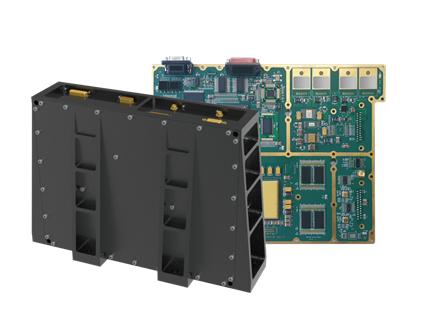
[Financial News] A GNSS receiver for geostationary satellites, developed with domestic technology, will be installed on Chollian Satellite 5, South Korea's third weather satellite.
According to KASA and the Korean Meteorological Administration on the 26th, the GNSS receiver is a device that receives signals from the Global Navigation Satellite System (GNSS) and calculates the onboard satellite's position, speed and time information in real time.
The receiver was developed by a domestic company through industry-academia-research collaboration, supported by KASA's Space Pioneer Project. It completed three years of research from 2021 to 2023, followed by one year of ground testing in 2024, and finished development that same year. Based on this, it is expected to be further modified for Chollian Satellite 5.
The Space Pioneer Project is a program to localize 16 core space technologies. A total of 211.5 billion won was invested in three launch vehicles, seven satellite buses and six satellite payloads.
With this GNSS receiver development, the country has secured advanced technology capable of stably receiving and processing weak GNSS signals transmitted from satellites on the opposite side of the Earth, determining a satellite's current position and reducing geostationary orbit positioning errors to as little as 20 meters.
Because it has no actual space operation history, the expectation is that once it is installed on Chollian Satellite 5, scheduled for launch in 2031, and gains space heritage, the technology will be commercialized and become competitive in the global market.
KASA and the Korean Meteorological Administration decided to install the GNSS receiver after closely reviewing its practical applicability through several technical meetings with the lead research institute for the Chollian Satellite 5 project and the company developing the receiver. They expect this to further strengthen the self-reliance and reliability of domestic space components.
KASA plans to begin with this GNSS receiver application and fully complete the localization of the 16 core technologies promoted under the Space Pioneer Project, while actively supporting their transition into actual system-level projects. The Korean Meteorological Administration also expects to link the results of national R&D projects to the Chollian Satellite 5 program, expand the localization rate of satellite components, secure space heritage in the future, raise the status of South Korea's weather satellites, and contribute to building a private space industry ecosystem.
Lee Mi-sun, commissioner of the Korean Meteorological Administration, said, "Chollian Satellite 5 will contribute to space component certification and the revitalization of the domestic geostationary satellite business market by carrying domestically produced components developed through national R&D projects."
Oh Tae-seok, administrator of KASA, said, "The decision to install a GNSS receiver developed by a domestic company on Chollian Satellite 5 is a meaningful achievement that shows space technologies secured through national R&D projects are not remaining at the development stage, but are being applied to actual national space missions." He added, "We will provide comprehensive support, including ground testing, space verification and system integration, so that excellent space technologies developed by domestic companies can enter both the local and overseas markets."
[email protected] Yeon Ji-an Reporter