"If Early Treatment Is Missed, Complications Can Follow"... If Shingles Appears Around the Eyes [Woo Soo-han's Excellent Skin Note]
- Input
- 2026-08-26 12:00:00
- Updated
- 2026-08-26 12:00:00
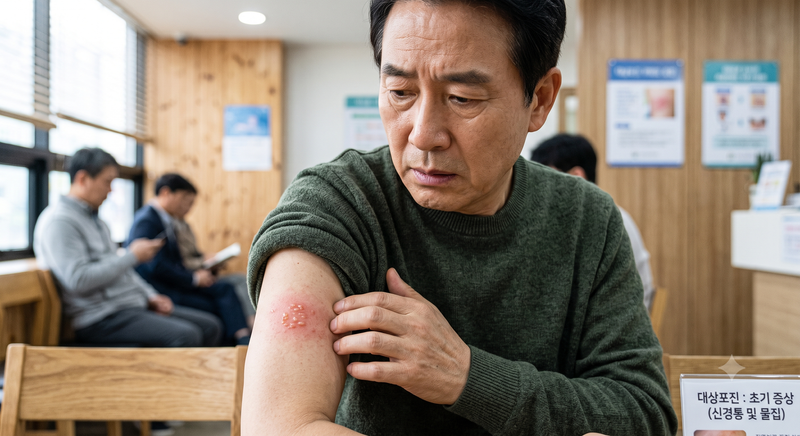
[Financial News] Shingles is often thought of as a skin condition, but in essence it is a disease in which a dormant virus reactivates and affects both the nerves and the skin. Most importantly, people should not delay treatment because they assume shingles only begins once blisters appear.
Even if nothing is visible on the skin, shingles should be suspected if a person develops burning pain, stabbing pain, or abnormal sensations on one side of the body that they have never experienced before, followed by a rash or blisters in the same area. Early treatment is especially important. If a characteristic rash or blisters appear on one side of the body along with pain, it is better to seek medical care as soon as possible for an accurate diagnosis and treatment rather than waiting and enduring the symptoms.
Shingles around the face and eyes requires extra caution
Shingles can develop not only on the torso but also on the face. Extra caution is needed if blisters or pain appear on the forehead, around the eyes, or near the nose. If the infection affects the branch of the trigeminal nerve that connects to the eye, inflammation can spread to the cornea or even inside the eye, and in some cases it can lead to complications that affect vision.
If severe ear pain, facial paralysis, hearing problems, or dizziness occur along with shingles around the ear, possible involvement of cranial nerves, including the facial nerve, should be considered. Therefore, if skin lesions suspected to be shingles appear around the eyes or ears, or if symptoms such as blurred vision or facial paralysis accompany them, it is important to seek medical attention even more quickly than with ordinary skin shingles.
Do not pop the blisters; keep them clean
When shingles develops, it is best to avoid intentionally popping the blisters or touching them repeatedly with your hands. Because the skin barrier is already damaged, a secondary bacterial infection can occur. The affected area should be kept clean and should not be irritated excessively. It is also advisable to avoid massaging the skin forcefully or applying hot compresses, as these can worsen the pain.
In addition, the blisters of a shingles patient may contain the varicella-zoster virus. If someone without immunity to chickenpox is exposed to the virus in the blisters, they can become infected with chickenpox. For that reason, the affected area should be well covered while blisters are present, and special care should be taken to avoid contact with pregnant women, newborns, and immunocompromised individuals who do not have immunity to chickenpox.
The disappearance of the rash does not mean treatment is over
For many patients, the most difficult part of shingles is often the pain that lasts longer than the skin lesions. Even if the blisters crust over and the skin begins to heal, there is no need to simply endure the pain as if it were only because the wound has not fully healed. It may be postherpetic neuralgia. In particular, older patients or those who had severe pain and a widespread rash during the shingles outbreak should continue to monitor changes in pain even after the skin lesions improve. If the pain makes it difficult to sleep or interferes with daily life, appropriate treatment for neuralgia may be needed.

[email protected] Kim Hyun-sun Reporter