"The term 'compact sedan' has become awkward"... The All-New Hyundai Elantra erases its class with ride comfort [Outstanding Mobility]
- Input
- 2026-08-26 08:53:06
- Updated
- 2026-08-26 08:53:06
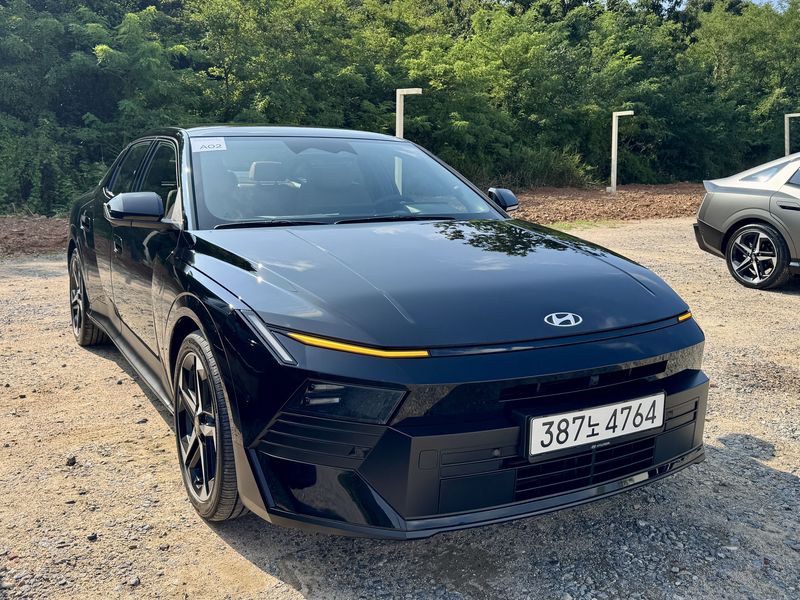
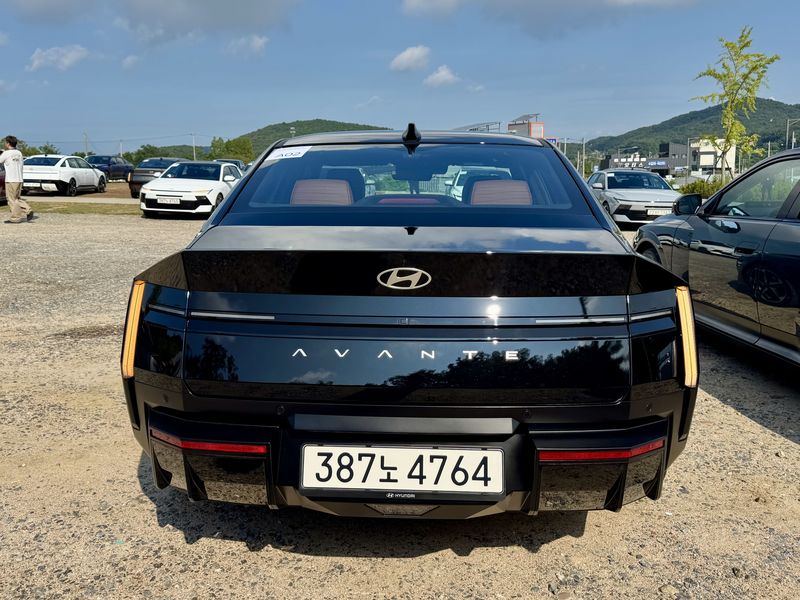
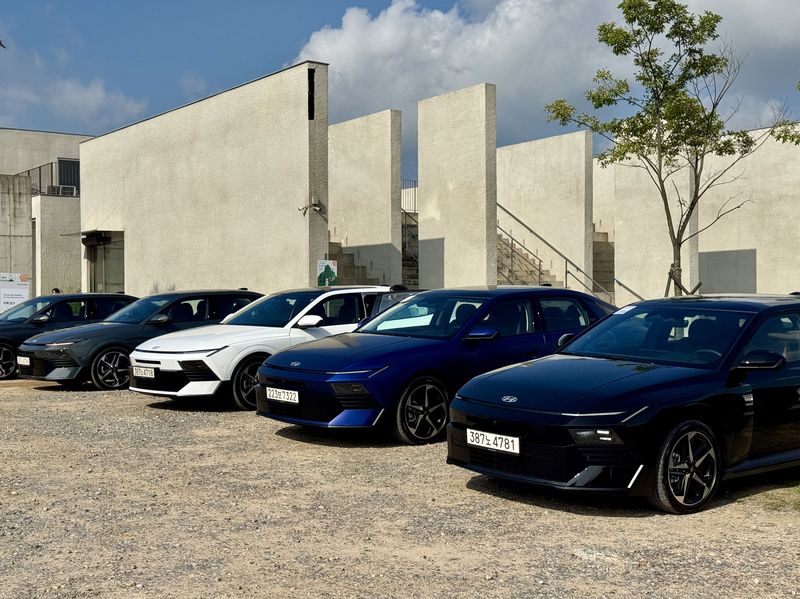
The All-New Hyundai Elantra was driven round-trip from Goyang, Gyeonggi Province, through Gimpo and on to Yeongjongdo Island in Incheon. The test route covered both city streets and highways. The test vehicle was the 2.0 gasoline model.
Since its first generation in 1990, the Elantra has been known as Korea's "people's first car" in the compact sedan segment. But after driving this eighth-generation model, the impression left behind was that the label no longer quite fits. Its larger body, along with ride comfort and quietness that rival a higher class, has blurred the line of what a compact sedan is supposed to be.
The first thing that stands out is its larger size. The All-New Hyundai Elantra is 55 mm longer than the previous generation, while the width and wheelbase have each increased by 30 mm. Those numbers may not sound dramatic, but the difference is more noticeable once you sit in the driver's seat or the rear seat. Thanks to the longer wheelbase, rear legroom is generous, and even adults in the back do not feel cramped. The trunk offers 479 liters of space, among the best in the class, and the wider opening makes loading and unloading bulky items easier. It feels less like a compact sedan and more like a car from the next class up.
The design has also become more confident to match the larger body. If the previous generation looked sleek and sharp, the eighth-generation model feels more muscular. Strong volume has been added to the fenders and quarter panels, giving the whole body a more powerful stance. The line starting from the front H-edge daytime running lights stretches into the long hood, creating a solid impression. The front and rear corners are cut diagonally, and the lamps are placed inward, making the overhangs look shorter and adding a sense of motion to an otherwise static sedan.
The real changes become clear once it is driven. The refined feel over speed bumps comes from a newly revised suspension. The front suspension uses frequency-responsive valves. By changing damping characteristics according to vibration frequency, it firmly controls large body movements while softly filtering out small, fine vibrations. It is a mechanical solution to the old damper dilemma: set it soft and the car wallows, set it firm and it becomes harsh.
A hydraulic rebound stopper was also added to reduce the secondary shock that occurs when the shock absorber extends rapidly after a large impact. That is why the car does not float upward or continue to shake after passing a speed bump, but instead settles immediately. At the rear, hydro bushings that absorb road impacts help keep the body from swaying side to side even on rough stretches. Ride-comfort technology once associated only with higher-end sedans has now made its way into a compact car.
Quietness has improved as well. Even at 100 km/h on the highway, wind noise and road noise entering the cabin were noticeably reduced. Double-laminated soundproof glass was fitted to the windshield and front doors, a dual-layer floor carpet was installed, and sound-absorbing material was added to the tires. The quiet cabin, combined with the stability created by the larger body, made driving less tiring.
Efficiency was also respectable. Even though both the body size and engine displacement increased, fuel economy losses were kept in check by reducing the drag coefficient to 0.26 through features such as optimized corner shaping, aero wheels, and an active air flap. Real-world fuel economy in mixed city and highway driving came in at around 15 km per liter, a satisfying result considering the class and size.
Convenience and safety features were also greatly expanded for this generation. For the first time in a Hyundai Motor Company model, Navigation Smart Cruise Control 2 (NSCC 2) was included, allowing the car to slow down and resume speed automatically not only on highways but also in speed-enforcement zones and intersections on ordinary roads.
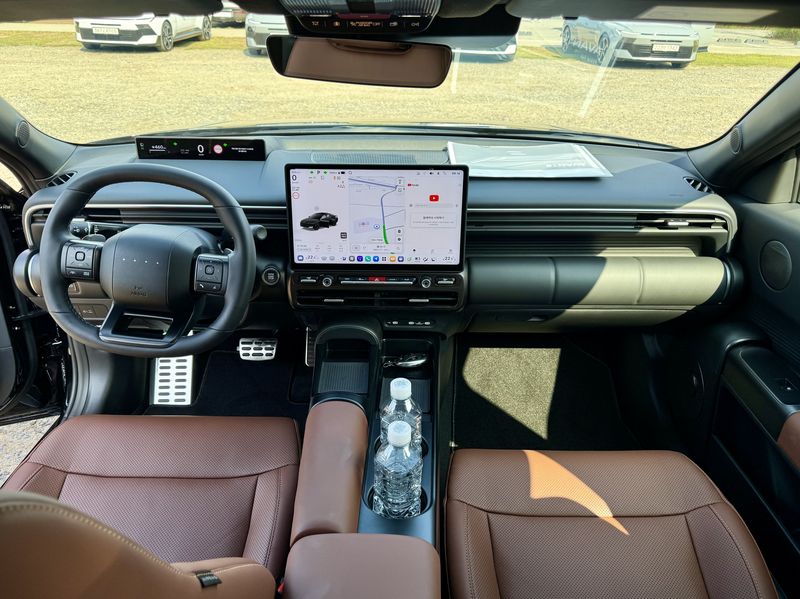
It also includes safety and parking features usually found in higher-end models, such as emergency braking in P when the electronic shift lever is engaged, pedal misapplication safety assist, and memory reverse assist. Large 14.6-inch and 12.9-inch displays, the next-generation Pleos Connect infotainment system, and the generative AI assistant Gleo further elevate the digital experience in the compact sedan segment.
There are still some clear drawbacks, however. Gleo, the AI agent, does not always understand voice commands on the first try and may require repeated prompts before responding, leaving room for improvement. The center display also splits driving information and navigation left and right, so drivers have to shift their gaze sideways to check directions, which can be distracting on unfamiliar roads.
Above all, there is the price. With improved product appeal comes a higher price tag. The gasoline model starts at 23.98 million won, while the top trim reaches 36.99 million won. Those figures are far removed from the long-held image of a "first car for young professionals."
The All-New Hyundai Elantra is a car that is gradually erasing the compact sedan category on its own. Its larger body, along with ride comfort and quietness that challenge higher-end sedans, sits at the center of that change. The higher price is clearly a burden, but after driving a car that glides over speed bumps and stays quiet at high speed, the reason for that price becomes easier to understand. For those looking for a sensible first car in the compact segment, and even for those wondering whether they really need to move up to a midsize sedan, the Elantra now carries a different kind of weight.
[email protected] Kim Dong-chan Reporter