Daegu Metropolitan City Accelerates Regulatory Reform with Bold Overhaul of Unreasonable Rules
- Input
- 2026-08-26 14:38:15
- Updated
- 2026-08-26 14:38:15
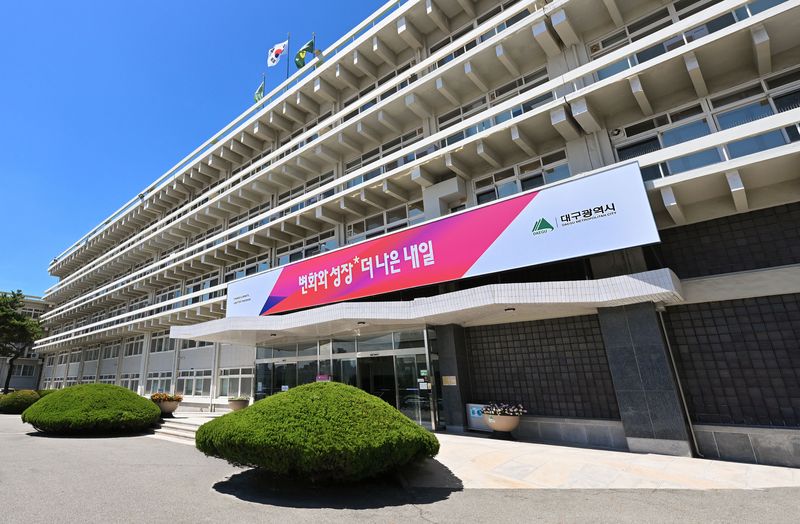
[Financial News, Daegu = Reporter Kim Jang-wook] Daegu Metropolitan City is accelerating regulatory reform by forming a Regulatory Coordination Team to boldly overhaul unreasonable regulations.
On the 26th, Daegu Metropolitan City held a kickoff meeting for the Regulatory Coordination Team at the Sangyeok Government Complex and launched a full-scale standing response system for field-oriented regulatory reform that citizens and businesses can actually feel.
The Regulatory Coordination Team is a newly created body designed to quickly consult and adjust complex regulatory issues and business grievances that have remained unresolved for a long time due to interdepartmental disagreements or matters involving multiple departments.
Led by the vice mayor for administrative affairs, the team consists of 13 coordinators, including bureau and office heads. A Regulatory Advisory Group made up of about 20 private-sector experts will support legal and professional reviews.
Kim Jeong-gi, head of the Regulatory Coordination Team and vice mayor for administrative affairs, said, "The Regulatory Coordination Team will become a one-stop channel that breaks down departmental barriers and quickly finds solutions," adding, "We will boldly reform unreasonable regulations that stand in the way of daily life and business activity, and we will do so with speed."
At the kickoff meeting, the city shared the team’s operating direction and also coordinated two pending issues in the public construction and building sectors that had been difficult to resolve through interdepartmental consultation.
The first issue, establishing a standard for calculating additional costs for nighttime asphalt concrete deliveries, was addressed after Daegu Metropolitan City asked the Public Procurement Service (PPS) to improve the system and helped bring about a revision in March this year, making payment of additional costs for nighttime construction mandatory. Through the meeting, the city expects to establish appropriate compensation standards so that companies carrying out nighttime construction will receive fair payment.
The second issue, improving low-value negotiated contracts in the work of implementing design intent in public architecture, concerns ensuring fair compensation for designers who participate in the construction process after a design competition.
At the meeting, the city plans to use calculation standards that take workload into account so that designers receive appropriate compensation and public buildings faithfully reflect the original design intent.
The city also reported previous cases of regulatory improvement. A company in the Daegu 3rd Industrial Complex had been seeking to expand its factory, but the plan was blocked because its business category fell under the restricted industries in the management master plan. In connection with this, the recently held 2nd Emergency Economic Countermeasures Meeting discussed a full overhaul of the industries allowed to move into aging industrial complexes. As a result, the city is moving forward with a management master plan revision after research and other procedures, with the change scheduled for January 2027, opening the door to further regulatory improvement.
Going forward, the city will operate the Regulatory Coordination Team as a standing response system and hold meetings whenever issues arise. In particular, for projects rejected by central government ministries or long-unresolved matters, the city plans to work with the Regulatory Advisory Group to actively respond to revisions of central government laws and regulations. It also plans to push ahead with amendments to local ordinances related to the exemption system for proactive administration, in order to provide institutional support for regulatory innovation by public officials.
Earlier, the city integrated the previously separate channels for receiving regulatory issues and business grievances into a single window in order to improve citizen- and business-centered administration and work efficiency. To that end, Daegu Metropolitan City launched the Daegu Metropolitan City Regulatory & Business Grievance 119 Integrated Support Center at the Sangyeok Government Complex on July 13.
[email protected] Kim Jang-wook Reporter