"Don't Fight the Market"... The Bond Market Has Sent a Bill to the U.S., Japan and South Korea [Worth Reading]
- Input
- 2026-08-27 06:05:13
- Updated
- 2026-08-27 06:05:13
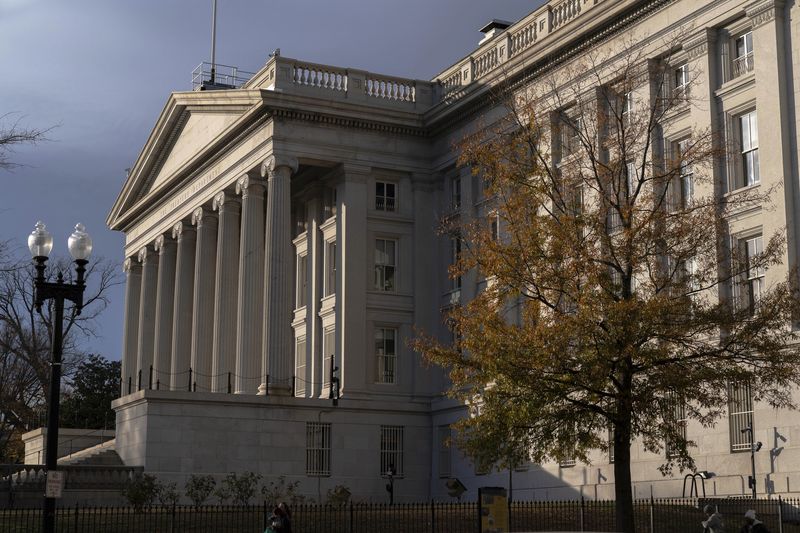
[Financial News] "Let the bond market speak."That was the warning Wall Street legend Stanley Druckenmiller delivered to the United States government. As long-term U.S. Treasury yields surged, the Treasury Department expanded its buybacks of longer-dated bonds. Druckenmiller said the market's warning signals should not be artificially muted.
There is a reason his warning should not be dismissed. Rising long-term yields are no longer just a U.S. issue. Japan's long-term government bond yields have jumped to their highest levels in decades, and South Korea's 10-year and 30-year Treasury Bond yields have also climbed sharply. The same is true in Germany, France and the United Kingdom.
Each country faces different circumstances, but the market is asking a similar question: who will buy the growing pile of government debt, and at what yield? Some analysts say the cost of government debt, long obscured by quantitative easing (QE) and zero rates, is being repriced by the market. In that sense, the bond market has begun demanding fiscal credibility from governments around the world.
"Price control, not liquidity"... a direct shot at Bessent

In an op-ed published in The Wall Street Journal on the 24th (local time) under the title "Let the Bond Market Speak," Druckenmiller criticized the U.S. Treasury Department's expanded buyback program for long-term government bonds.
On the 19th, the U.S. Department of the Treasury raised the cap on buybacks of 10- to 30-year government bonds from as much as $2 billion per operation to at least $4 billion. The move came just after the yield on the 30-year U.S. Treasury bond surged above 5.31%, its highest level since 2007.
Yields fell immediately after the announcement, but the effect did not last long. Druckenmiller argued that the recent rise in yields was not a malfunction in market function. Instead, it reflected the market's pricing of U.S. economic and fiscal conditions. In a market where government bonds are trading normally, buying long-dated bonds to support prices is closer to de facto price control than liquidity management.
The criticism drew even more attention because of Druckenmiller's ties to U.S. Treasury Secretary Scott Bessent. The two worked together at Soros Fund Management and bet against the British government's defense of the pound in 1992. Now, 34 years later, the former mentor is warning Bessent, who once challenged official price defenses, not to fight the market.
A $40 trillion debt burden... "5.5% is the market's bill"
The root cause Druckenmiller pointed to is U.S. fiscal policy.
With inflation still above the Federal Reserve's target and employment remaining solid, the U.S. fiscal deficit is running at about 6% of GDP. National debt has topped $40 trillion, and net interest payments are expected to exceed $1.1 trillion this year.
If government bond supply keeps rising and the central bank is no longer buying on a massive scale as it did in the past, private investors must absorb the issuance. In return for lending money over a long period, investors demand higher yields, which pushes up long-term rates and term premiums.
Druckenmiller argued that if the market demands a 5.5% yield to buy 30-year government bonds, that should not be suppressed. Instead, it should be accepted as the market's "bill" to the U.S. fiscal system.
Lowering yields through bond purchases may ease interest costs in the short term, but it also weakens pressure for fiscal reform. In the end, he said, sustainably lower long-term rates will require reducing the fiscal deficit itself, not buying more bonds.
Not just a U.S. problem... global debt nears 100% of GDP
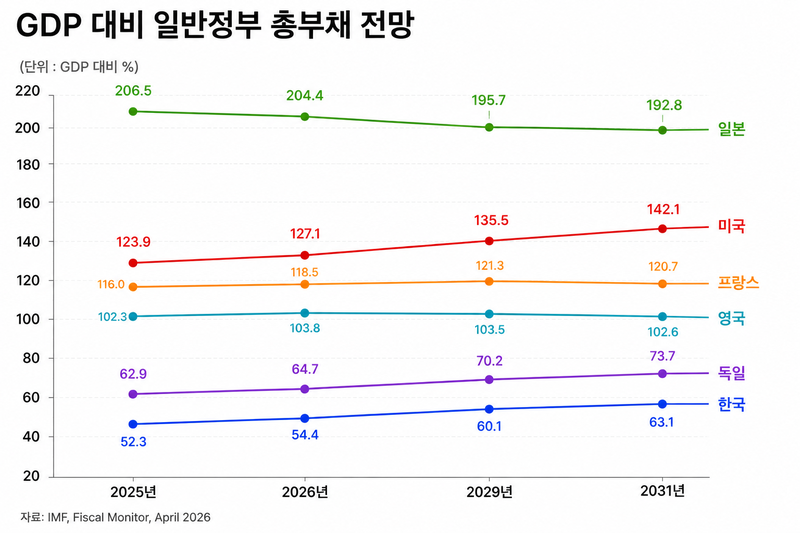
For countries where national debt is rising, including the United States, Druckenmiller's warning is not easy to dismiss as someone else's problem. The more debt a country has, the more painful higher rates become for its fiscal position. A vicious cycle can emerge: larger deficits lead to more bond issuance, which pushes up yields, which raises interest costs, which then widens deficits further.
In fact, the International Monetary Fund (IMF) projected in its fiscal report in April that global public debt would rise from about 94% of GDP in 2025 to 100% by 2029.
The biggest difference from the past is the buyer base for government bonds. After the 2008 Global Financial Crisis (GFC) and the COVID-19 pandemic, central banks bought massive amounts of government bonds through QE. But as central banks shrink their balance sheets, governments must once again rely on private investors who are more sensitive to price and risk.
The Bank for International Settlements (BIS) has also said that high public debt and fiscal pressure are now facing a less favorable financial environment than in the past. In other words, higher rates and slower growth are weakening governments' ability to carry debt.
The clearest shift is taking place in Japan, a "zero-rate country." Thanks to massive bond purchases by the Bank of Japan (BOJ) and abundant domestic demand, Japan has maintained ultra-low rates despite its huge government debt. That formula is now starting to crack.
Japan's 10-year government bond yield has recently approached the 3% level. At a 20-year bond auction on the 20th, the average winning yield rose to 3.698%. The move reflected rising inflation, the BOJ's policy normalization and growing caution about fiscal policy.
South Korea's long-term yields rise differently from those in the U.S. and Japan... the return of the "bond vigilantes"
South Korea is also not immune to the global rise in long-term yields. On the 21st, the 10-year Treasury Bond yield rose to 4.376% and the 30-year yield to 4.703%.
Still, some say it is too much to interpret this immediately as a warning about fiscal risk, as in the U.S. or Japan. That is because domestic long-term yields reflect a mix of factors, including monetary policy expectations, overseas rates such as those in the U.S., Treasury Bond issuance volume and investor supply-demand conditions.
In particular, the "term premium" that investors demand for bearing uncertainty in long-dated bonds, such as rate, inflation and supply-demand risks, is becoming more important. Whatever the cause, the fact that the market is demanding more compensation for holding long-term bonds is in line with the global trend.
What matters most is the shift running through long-term yields in the U.S., Japan and South Korea. Pricing power over interest rates is moving back from central banks to the market.
During the era of zero rates and QE, a huge buyer in the form of central banks kept governments' funding costs low. Now that central banks are stepping back, investors are pricing government debt, inflation and fiscal sustainability before demanding yields.
In the past, Wall Street called investors who sold government bonds to push up yields in protest against reckless fiscal policy "bond vigilantes." They appear to be regaining influence after seemingly disappearing during the era of massive central bank bond buying. The age when governments could borrow endlessly at low cost is ending.
That is why Druckenmiller's warning to the United States government, "Let the bond market speak," is not just about the U.S. The one word written on the bill the global bond market is now sending to governments is, in the end, simple.
"Trust."
We sift through the flood of news and write only the issues worth reading. We take a sharp, sometimes contrarian look at politics, the economy, society and culture from a fresh angle.[Worth Reading]If you want to follow it more easily, please subscribe to the reporter page.
[email protected] Seo Yoon-kyung Reporter