POSCO’s 'white gold' lithium brings in 200 million won a day
- Input
- 2026-08-25 15:00:00
- Updated
- 2026-08-25 15:00:00
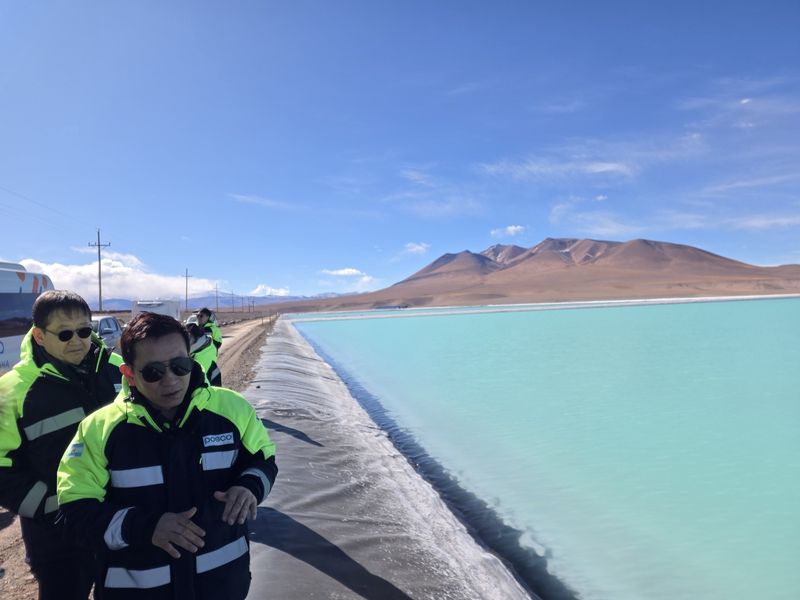
【Financial News, Salta, Argentina=Kim Hak-jae】 POSCO Holdings Inc. is delivering solid results in its lithium business in Argentina, a sector often called 'white gold.'
The company produces lithium phosphate in the upstream process from brine extracted at a high-altitude salt lake in Salta Province, northern Argentina, then transports it to a site at 800 meters above sea level for refining into lithium hydroxide in the downstream process. It is producing more than 70 tons a day and generating sales of at least 2 billion won.
As a result, POSCO Holdings Inc. has turned its Argentine brine lithium business profitable on a quarterly basis. It is being credited with strengthening the global lithium supply chain while improving profitability, and with emerging as a key national supplier of strategic resources.
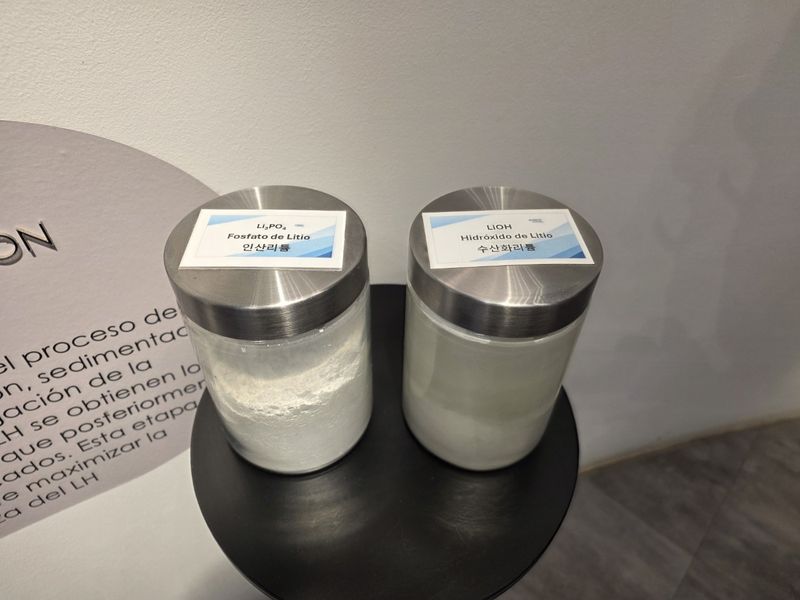
On the 18th and 19th (local time), refined lithium was waiting to be shipped at the first brine lithium plant of POSCO Argentina S.A.U. in Güemes, Salta Province, and at Plants 1 and 2 near Salar de Hombre Muerto, where the upstream process is carried out.
POSCO Holdings Inc. completed construction of its first 25,000-ton brine lithium plant in 2024, and POSCO Argentina S.A.U. turned profitable on a quarterly basis this year. It plans to produce 17,000 tons of lithium this year, begin trial operations at the second brine lithium plant, and complete construction in October to establish an annual production base of 50,000 tons.
According to POSCO Argentina S.A.U., the first brine lithium plant alone can produce 75 tons of lithium a day. Based on recent lithium prices of around $18,500 per ton, it is generating sales of more than 2 billion won a day. In addition to securing new customers, the company expects its operating margin to reach 34% next year, helped by cost savings from approval of the Argentine government's Large Investment Incentive Scheme (RIGI).
Park Hyun, head of POSCO Argentina S.A.U., said, "The most important thing is output at each unit process. We can typically produce 25,000 tons per plant." He added, "We are no longer buying concentrate and running the business that way. We are now operating directly with brine, so the burden of manufacturing costs is lighter. I believe POSCO Argentina S.A.U. has clear potential."
In February, POSCO Argentina S.A.U. secured a stable customer base by signing a lithium supply contract with SK On for up to 25,000 tons through 2028. More than half of its output is under fixed contracts, and negotiations are reportedly under way with several other buyers.
The company plans to build a portfolio that can respond flexibly to changes in the lithium market, including emerging markets, by securing additional customers such as global automakers and Energy Storage System (ESS) operators.
After completing Plant 1 and now trialing Plant 2, POSCO Holdings Inc. plans to move early on investments in Plants 3 and 4, each with a capacity of 25,000 tons, and complete a 100,000-ton brine lithium production system by 2033.
POSCO Holdings Inc.'s local brine lithium reserves also expanded to a total of 15 million tons after it acquired additional mining rights to Salar de Hombre Muerto Norte in April. The total area of the salt lakes secured in Salta is 287 square kilometers, or 86.81 million pyeong, about half the size of Seoul and 99 times the size of Yeouido. Based on the reserves secured so far, the company could produce 100,000 tons of lithium a year for about 30 years.
[email protected] Kim Hak-jae Reporter