Outline for Second Round of Public Institution Relocation Expected in October-November... Land Minister Says "350 Institutions Targeted"
- Input
- 2026-08-25 18:31:34
- Updated
- 2026-08-25 18:31:34
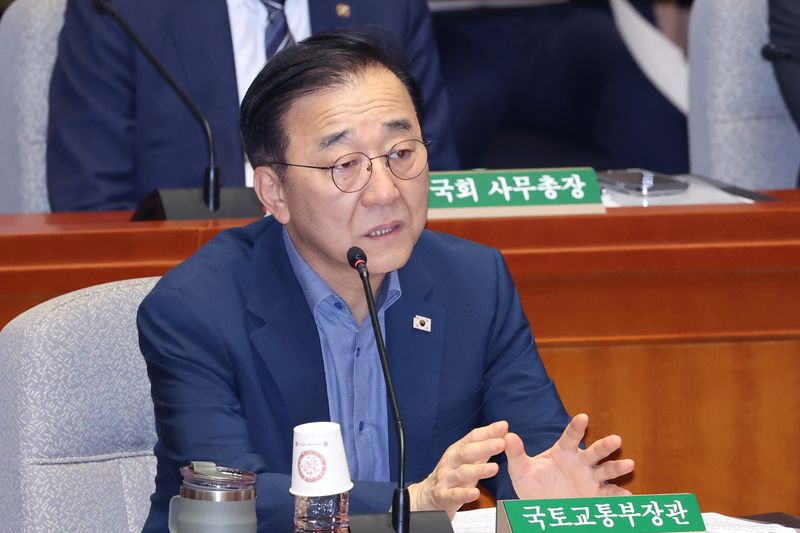
According to political circles and the Ministry of Land, Infrastructure and Transport on the 25th, Kim Yun-duk, the minister, said at the previous day's plenary session of the Special Committee on Budget and Accounts at the National Assembly that the timing of the relocation plan would be decided after a public discussion process. "We are in the preparation stage, and because we need to go through a process of public discussion, we expect it to be around October or November," he said. That suggests the schedule may be delayed from the September announcement he had outlined in June.
"Since the heads of local governments have all changed after this local election, we are listening to opinions mainly from the newly elected officials," Kim said. "We also need to hear from labor unions," he added. "After going through those steps, we plan to wrap it up through an official public hearing."
On the scale of the relocation review, Kim said, "We are preparing with about 350 institutions in mind," but added, "For various reasons, not all of them can move." The 350-plus institutions are not a finalized relocation list, but a pool of candidates. The ministry plans to review each institution's function, relocation necessity, and local capacity, then select the actual relocation targets and destination regions before finalizing the plan after deliberation by the Presidential Committee for the Era of Local Autonomy.
The main axis of the relocation plan will be the existing Innovation Cities. Kim emphasized, "The discussion on the second relocation of public institutions is being prepared on the principle of Innovation Cities, with concentration and clustering as the guiding principles." Unless there are special exceptions, the plan is to move institutions to Innovation Cities and avoid scattering them one by one across different regions, so that they can create stronger synergies.
Competition among local governments to attract institutions is expected to intensify. Existing Innovation Cities are calling for additional relocations to strengthen their functions, while regions that were excluded from the first round or received fewer institutions are demanding priority placement. Balancing industrial clustering effects with regional fairness is emerging as a key issue in the placement process.
In the first round of relocation, 153 public institutions based in the Capital Region moved to Innovation Cities and other regions nationwide. This time, the government aims to minimize the number of institutions that remain in Seoul, draw up the relocation plan within the year, and begin moving leading institutions from 2027 by using leased office buildings and other facilities.
However, revisions to the founding laws of each institution, consultations with labor unions, and securing office sites and housing in Innovation Cities remain major variables. Improving living conditions such as education and healthcare, and creating practical links between relocating institutions and local industries, are also seen as critical factors that will determine the success of the second round.
[email protected] Jang In-seo Reporter