Germanium Supply Shortage to Last 2-3 Years... KEMCO Speeds Up Localization
- Input
- 2026-09-01 15:07:34
- Updated
- 2026-09-01 15:07:34
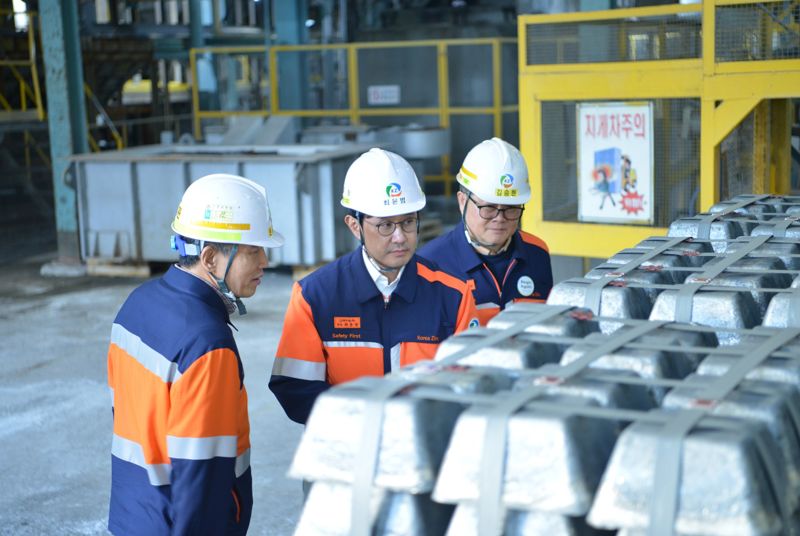
[Financial News] As the global shortage of germanium is expected to continue for the next two to three years, KEMCO's role in the supply chain is drawing attention as the company moves to localize production. Demand is rising in advanced industries such as space and defense, but China’s export controls remain in place, and expanding new supply outside China will take time. In particular, with forecasts that the global shortage could reach as much as 70 tons next year, KEMCO plans to begin germanium production in 2028.
According to the Korea Resources Information Service (KOMIS) on the 1st, the share of China in South Korea's germanium imports plunged from 59.3% in 2023 to 14.8% last year. By contrast, Canada's share rose to 70.7% over the same period, making it the largest supplier. Since China introduced an export licensing system for gallium and germanium in August 2023, South Korea's import sources for germanium have diversified from China to Canada and other countries.
However, diversification of import sources does not immediately lead to supply stability. As China's export restrictions coincide with limited supply conditions and industrial demand, germanium prices continue to rise.
Germanium prices have climbed about 110% over the past two years. In the past, policy factors such as China's export controls were the main drivers of price increases. More recently, analysts say limited supply, growing industrial demand, and major countries' efforts to secure strategic minerals have all contributed.
Germanium is a key material used in infrared optics, fiber-optic communications, solar cells for space use, and semiconductors. With the recent expansion of Artificial Intelligence (AI) data centers boosting demand for high-speed optical communications, and investment in the space and defense industries increasing, germanium demand in related sectors is also expected to rise.
The problem is the pace of supply expansion. Industry forecasts suggest the global germanium shortage will widen from 40 to 50 tons a year this year to 50 to 70 tons next year. Meanwhile, additional supply from new projects outside China before 2029 is expected to remain limited. Since new production facilities take time to come online, analysts say it will not be easy to resolve the short-term supply-demand imbalance.
As uncertainty in the supply chain from China continues, the importance of securing a domestic germanium production base is also growing. In response, KEMCO decided in August last year to invest 140 billion won in building a germanium production facility at the Onsan Refinery of Korea Zinc Company Ltd. in Ulsan.
KEMCO plans to produce high-purity germanium by using byproducts generated during the smelting process at the Onsan Refinery. The initial target output is about 10 tons a year, converted into germanium metal, and the company plans to increase production in line with market conditions. Deliveries will first go to major customers, including Lockheed Martin, which signed an MOU with KEMCO on germanium supply. Some of the additional output is also expected to be supplied domestically. If production proceeds as planned, South Korea will be able to source part of the germanium it has relied on imports from China, Canada, and other countries to supply.
[email protected] Lee Dong-hyeok, Kim Mi-hee Reporter