‘Possible Love’ Began with Mass Layoffs at a Conglomerate... Director Lee Chang-dong Says, "In the End, It Is a Film About Love" [Director's Note]
- Input
- 2026-08-25 18:03:16
- Updated
- 2026-08-25 18:03:16
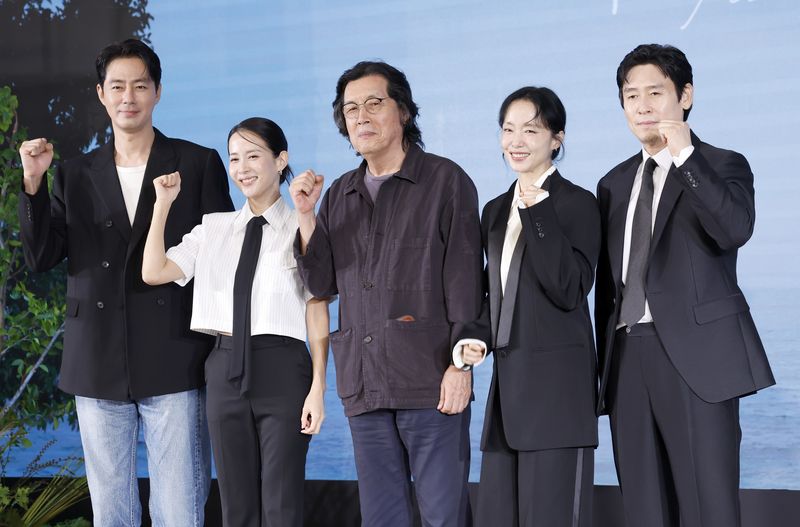
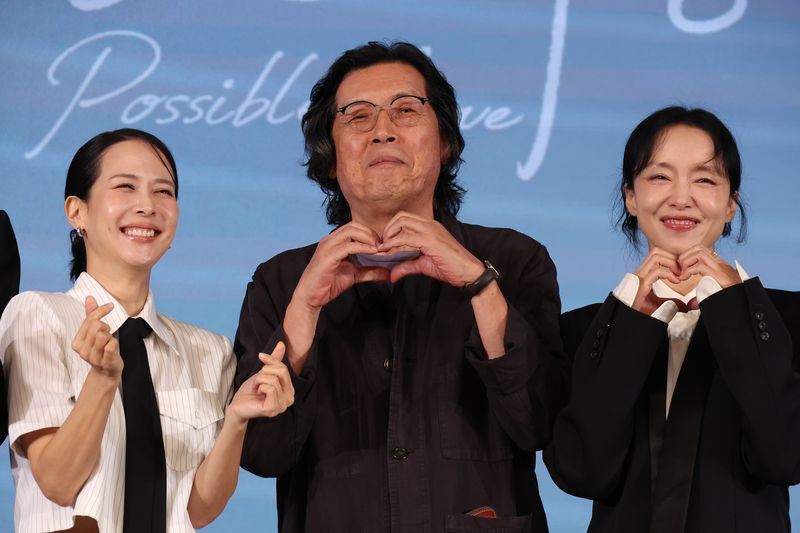
[Financial News] Director Lee Chang-dong explores how changes in labor affect the lives of ordinary people, and what love means as the force that sustains life, through the Netflix film "Possible Love."
At the press conference for "Possible Love" held on the 25th at Hotel Naru Seoul MGallery in Mapo District, Seoul, Lee said, "I thought mass layoffs at a conglomerate were an event that could change not only the economy but the lives of ordinary people themselves."
Starring Jeon Do-yeon, Sul Kyung-gu, Zo In-sung, and Cho Yeo-jeong, "Possible Love" tells the story of two couples who have lived very different lives — a laid-off worker and his wife, and a documentary filmmaker and her husband — who meet through the making of a documentary and confront the desires hidden within themselves. It is Lee's first new film in eight years, following "Green Fish," "Peppermint Candy," "Oasis," "Miryang," "Poetry," and "Burning."
"Changes in labor will even change human identity"
When asked whether the story of the laid-off worker in the film evoked the mass layoff crises at Ssangyong Motor or Daewoo Motor, Lee asked people not to see it as a work about a specific company incident.
He recalled, "The mass layoffs at a conglomerate left deep scars on individuals' lives and had a major social impact. At the time, I thought this event would change not only our economy but the lives of ordinary people themselves."
He continued, "We are all workers, and it is becoming increasingly difficult to avoid the reality that workers can become targets of restructuring. Since a person's identity also changes depending on the work they do, I believed that changes in labor could alter human identity itself."
As time passed, the need to address this issue in a film only grew stronger. With robots now threatening even human jobs, the subject has become more urgent.
Lee said, "We have now reached an era in which labor itself may disappear. The necessity of talking about this issue has become even stronger than when I first conceived the film."
A story revived after more than 10 years... "The force that carries life forward is love"
"Possible Love" took more than a decade to reach the screen.
Lee said, "Before starting a film, I constantly ask myself whether I really need to make it, and what meaning it has for me, for the audience, and for the film itself. I have a kind of stubbornness that makes it hard for me to push ahead unless I am convinced."
The project was originally conceived around the life of a worker who had been laid off in a large-scale restructuring. Jeon Do-yeon, who had worked with Lee on "Miryang," and Sul Kyung-gu, from "Oasis," were initially chosen for the lead roles.
But Lee eventually halted production, saying he was not sure whether there was any reason to turn it into a fictional film when a documentary already existed that honestly captured the life of a laid-off worker. He recalled feeling sorry to the two actors for shelving the project at the last moment.
He later tried several times to adapt it into a different form, but each attempt fell through. During the height of the COVID-19 pandemic, he tried to wrap up the story as the short film "Heartbeat" (2022), which also starred Jeon Do-yeon and Sul Kyung-gu.
Then, early last year, the project was revived through a suggestion from writer Oh Jung Mi, who co-wrote the screenplay.
Lee explained, "Writer Oh suggested layering another couple's story over the story of the laid-off worker and his wife. I thought that when the two stories came together, the laid-off worker's story would gain a new texture and the film could become much richer." That is how Zo In-sung and Cho Yeo-jeong joined the cast.
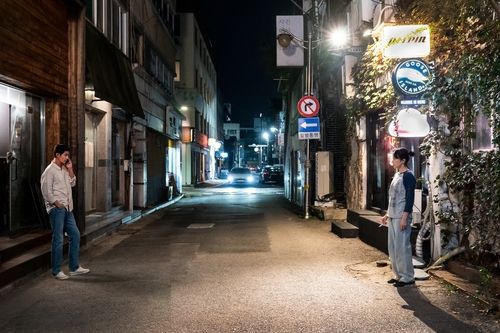
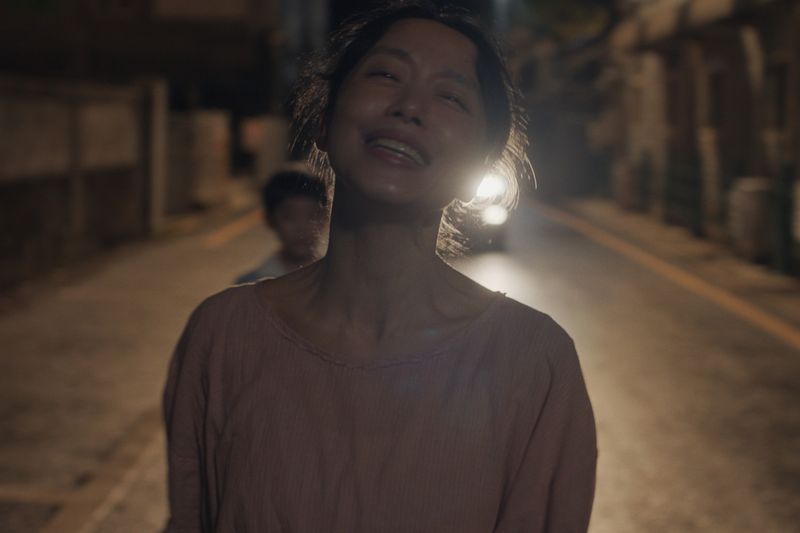
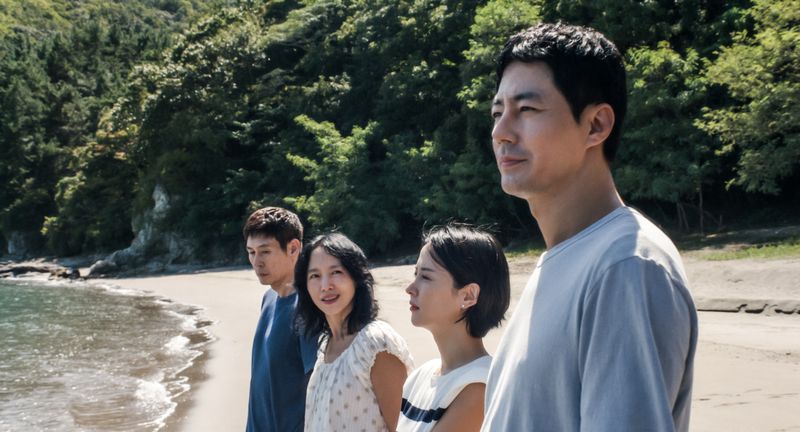
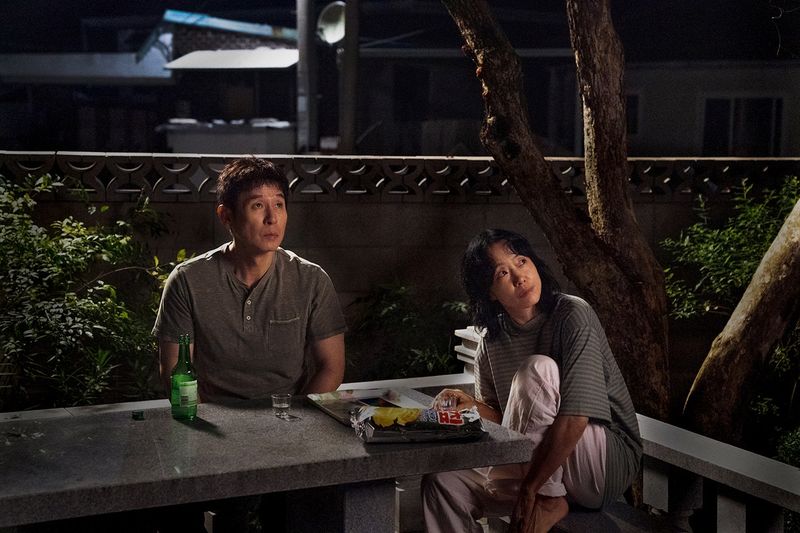
Cho Yeo-jeong as a documentary director... representing the director's perspective and position
The casting of Jeon Do-yeon and Sul Kyung-gu was a natural choice, as the film's development process shows. Sul had difficulty making time because his schedule overlapped with filming the Netflix series "Mousetrap," but he decided to join because he did not want to miss the chance to work with Lee again.
Zo In-sung was also physically and mentally exhausted after back-to-back shoots for the films "Humint" and "Hope," but he gathered his strength again so he would not miss the opportunity to work with the master director.
Lee said of Zo In-sung's casting, "He plays a character who stands in a position that controls the invisible structure within the film. I could only think of Zo In-sung as an actor who is powerful, handsome, charming, and capable at everything, yet does not easily reveal himself." He added, "I was worried he might refuse, but director Ryoo Seung-wan helped bridge the gap very well."
The documentary director played by Cho Yeo-jeong largely represents Lee's perspective and position. He said, "I had never worked with Cho Yeo-jeong before, but I thought she was an actress with delicate sensibility and strong empathy. I felt she was close to the inner world of a documentary director." He also praised her for trying constantly to remain in character on set.
"In the end, it is a film about love"
When asked what kind of film "Possible Love" is, Lee answered, "As the title suggests, it is a film about love."
He explained, "Love takes many forms, not just between men and women. This is a film that asks what kinds of love are possible in our lives, and how we can protect that love — from the love that goes into making a film to the love we feel for other people."
He added, "Love that comes easily does not become a film. The title also carries the meaning of impossible love, or love that cannot be realized. Through this film, I ask what kind of love is possible and how we can make love possible."
He also said, "Not only in love between men and women, but at the core of every relationship between people, there is love. I believe the force that keeps our lives moving forward without change is the relationship of love."
Full director's note
Before starting a film, I constantly ask myself what meaning this film has for me, for the audience, and for the film itself. It takes me a long time to reach that kind of conviction. That is why it took so long for
More than 10 years ago, a large-scale layoff at one of Korea's major conglomerates, and the violent suppression of the workers' strike that followed, shook Korean society deeply. I decided that I had to make a film about it, and I prepared that film for a while. But in the end, I had to stop. I felt I was not yet ready to turn it into a fictional film. I promised myself that I would return to this story someday, but even I could not easily believe I would truly keep that promise.
Over the years that followed, the meaning and form of labor changed dramatically in our lives. Labor was no longer just an issue confined to a particular workplace; it became a reality that runs through our entire daily lives. And when that change met the story of a filmmaker,
I believe that no matter how labor, capital, or any other enormous force tries to define our lives, human beings never lose the desire to move toward freedom. I wanted to make a film about that desire, which may be another name for love. More than that, I wanted to make a film about the love we encounter in life, and ultimately the love we must offer to someone else.
Director Lee Chang-dong
[email protected] Shin Jin-a Reporter