Semiconductor, AI, and Regional Medical School Projects Exempted from Preliminary Feasibility Reviews as Lee Administration Accelerates Key Initiatives
- Input
- 2026-08-25 15:52:22
- Updated
- 2026-08-25 15:52:22
[Financial News] The government will speed up major state projects, including the Southwest Semiconductor Cluster, an Artificial Intelligence (AI) Data Center (AIDC), and new regional medical schools, by exempting them from preliminary feasibility reviews. In particular, the Southwest Semiconductor Cluster will receive a total of 6 trillion won in funding from 2027 to 2030 to support infrastructure development and the creation of an industrial ecosystem.
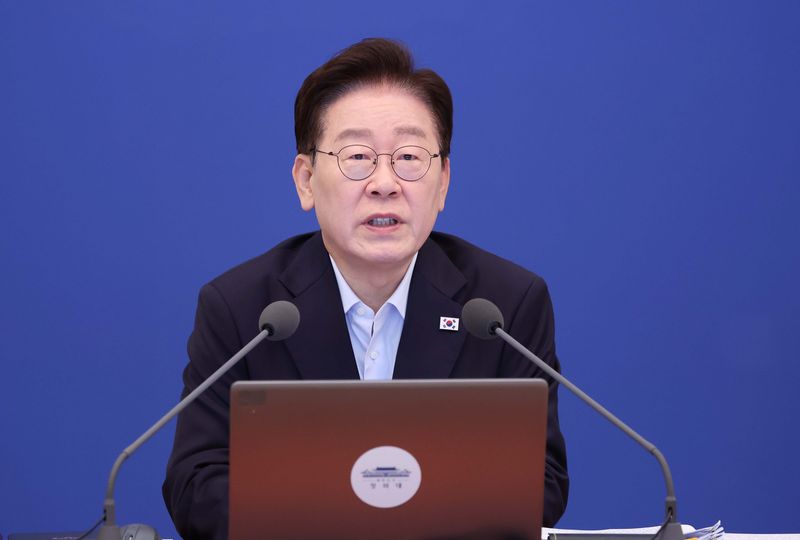
President Lee Jae-myung chaired the 37th State Council meeting at Cheong Wa Dae on the 25th and reviewed and approved four bills, 15 presidential decrees, 38 general agenda items, and one report item.
At the meeting, a number of projects tied to the government's previously announced "Three Major Mega Projects for a Great Leap Forward in Korea" were added to the list of items exempted from preliminary feasibility reviews. The infrastructure project for the three mega projects, designed to quickly build power and water systems for semiconductor industrial complexes, will be exempted from the review, and the separate feasibility study will also be skipped.
The development of the Southwest Semiconductor Cluster will also move ahead more quickly. To link large-scale private fab investment with public infrastructure construction, the government plans to launch a 600 billion won grant program from 2027 to 2030 for infrastructure expansion, the development of upstream and downstream industrial ecosystems, and workforce training. However, the exemption will be conditional on revisions to the related special law.
Investment in AI will also clear the feasibility-review hurdle. The projects include building an AIDC cluster to demonstrate domestic AIDC solutions on a large scale and nurture related companies, as well as the K-AI semiconductor full-stack project, which will support the commercialization of domestic AI semiconductors in line with actual market demand. The government will also move quickly on the National Manufacturing Data Library for collecting and using manufacturing and Physical AI data, along with the M.AX Autonomous Manufacturing Ecosystem project to drive AI transformation in manufacturing.
Exemptions were also extended to projects aimed at balanced regional development and healthcare. These include the establishment of regional medical schools in medically underserved areas, as well as the region-led medical gap resolution support project, under which local governments will directly design initiatives to fill essential healthcare shortages in each region.
Projects related to low birth rates and childcare were also included. The government will promote an integrated childcare support benefit program that combines the First Encounter Voucher, Parental Allowance, and Child Allowance into a Birth Grant and a Child Basic Allowance. It also plans to replace the existing marriage tax credit with a provisional "Marriage Support Grant" to reduce disparities in support depending on income. A childcare allowance program for self-employed workers, special-category workers, and freelancers who are not covered by employment insurance will also be exempted from the review.
In addition, the government decided to accelerate AI transformation across industries through feasibility-review exemptions for projects such as Physical AI demonstrations in agriculture, a smart agricultural produce fulfillment center, care robots based on Physical AI, AI transformation in the construction industry, and Physical AI demonstrations for small and medium-sized manufacturing firms.
[email protected] Sung Seok-woo Reporter