University of Seoul and Seoul St. Mary's Hospital Take on a New Frontier in Quantum Medicine
- Input
- 2026-08-25 15:19:03
- Updated
- 2026-08-25 15:19:03
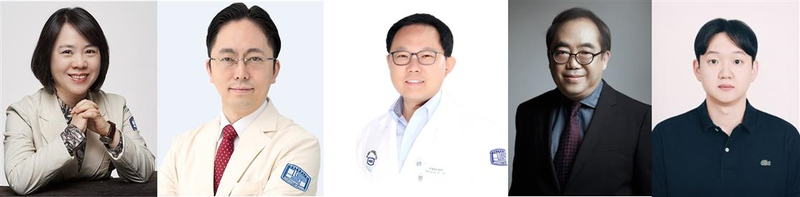
[Financial News] A domestic industry-academia-research consortium is launching a project to develop technology that can precisely diagnose cardiovascular disease using quantum computers, often described as a dream technology. The effort is expected to mark an important first step toward securing a share of the global cardiovascular medical technology market, which is projected to reach 140 trillion won, and toward reshaping the paradigm of precision medicine.
On the 25th, University of Seoul (UOS) said that its joint research team, formed with The Catholic University of Korea, Seoul St. Mary's Hospital and medical software company Flonics, had been selected for a new project under the Ministry of Science and ICT's 2026 quantum-computing-based quantum advantage challenge research program. The project will receive a total of 2.5 billion won in state research funding over two years and six months, from 2026 to 2028.
At the heart of the study is the use of quantum computers to quickly and accurately calculate hemodynamics, or blood flow inside blood vessels. In current clinical settings, doctors can determine how much a vessel has narrowed through CT scans or MRI, but it remains difficult to assess blood flow speed, pressure, or the frictional force on vessel walls in real time. To address this, computational fluid dynamics analysis using conventional supercomputers has been attempted, but it has faced a critical limitation: the calculations are too complex and take too long.
The team plans to overcome this bottleneck by using the superposition principle of quantum computers, which can represent multiple states at once. Its goal is to explore vast numbers of possibilities simultaneously and raise accuracy to more than 95 percent compared with conventional classical computers. The research will first be applied to patients with atrial fibrillation (AFib), the most common arrhythmia affecting 2 to 3 percent of the population, before being expanded to other heart diseases.
If the technology is successfully adopted in clinical practice, it is expected to generate significant economic ripple effects. The global cardiovascular medical technology market is projected to grow to about 140 trillion won, or $97.4 billion, by 2032, meaning that securing quantum-based medical technology could directly translate into future industrial competitiveness.
To that end, the three institutions will maximize their respective strengths. The Catholic University of Korea, Seoul St. Mary's Hospital, led by principal investigator Professor Yoon Jong-chan, will oversee the collection of patient clinical data and the validation of final results through four-dimensional flow MRI. UOS, led by Emeritus Chair Professor Ahn Do-yeol, will focus on developing hybrid quantum algorithms that reduce computational errors and improve efficiency. Flonics, led by CEO Ha Ho-jin, will verify the accuracy of the quantum computation results derived through its in-house automated blood-flow analysis platform.
The team's technological capabilities have already been proven on the global stage. After being selected for the Quantum Computing Challenge under the U.S. National Institutes of Health in 2025, it was also chosen in 2026 as the only Korean team to be consecutively selected for Cleveland Clinic's Quantum Innovation Catalyzer Program, securing international credibility.
Professor Yoon Jong-chan said, "We will apply quantum algorithms to the stage in clinical practice that is both the biggest bottleneck and the most computationally expensive, and show with our own eyes the benefits that quantum computers can deliver in medical settings." Professor Ahn Do-yeol also emphasized, "The computational fluid dynamics model built this time has great potential to expand beyond the diagnosis of cerebrovascular diseases into key Fourth Industrial Revolution fields such as high-speed aerodynamic analysis and climate forecasting."
[email protected] Kim Man-gi Reporter