Freezer warehouse sprinkler pipes to be made detachable as pre-freezing inspections are strengthened
- Input
- 2026-08-25 14:54:49
- Updated
- 2026-08-25 14:54:49
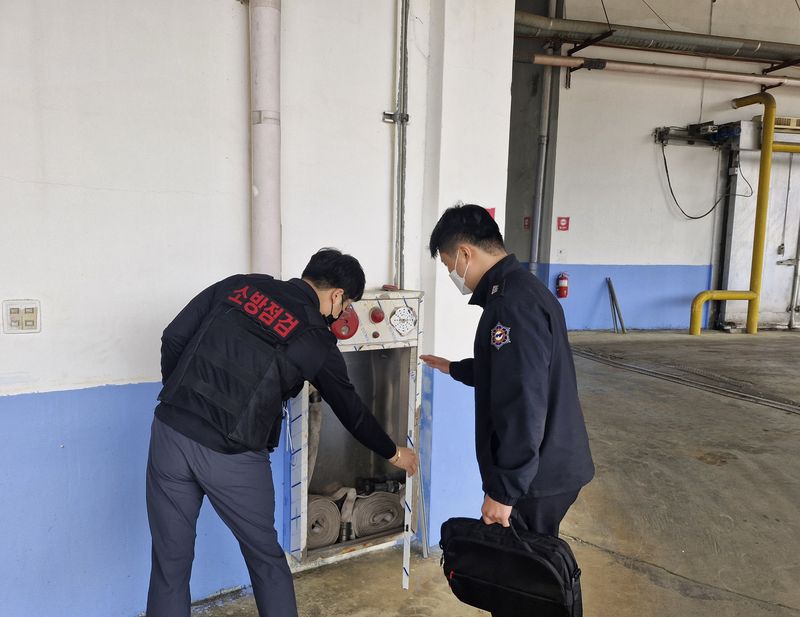
[Financial News] The fire safety technical standards are expected to be revised so that sprinkler pipes passing through freezer warehouse walls can be separated for inspections of internal freezing or corrosion. The move is intended to address a long-standing problem in which condensation inside the pipes, caused by the large temperature gap between the inside and outside, was difficult to detect and to improve the reliability of sprinkler operation.
The National Fire Research Institute of Korea said on the 25th that it completed final review of the partial amendments to the 2026 Fire Safety Technical Standards (NFTC) at the first subcommittee of the Central Fire Technical Review Committee on the 24th.
A total of 13 items were reviewed. They included two technical standards related to sprinkler systems, which are water-based fire suppression systems, under Fire Safety Technical Standards for Sprinkler Systems (NFTC 103) and NFTC 103B, one standard related to warehouse facilities under National Fire Safety Code for Warehouse Facilities (NFTC 609), and 10 other items to refine wording in certain technical standards.
The key point is the improvement of management standards for sprinkler pipes in freezer warehouses. Because freezer warehouses maintain subzero temperatures inside while the outside remains above freezing, condensation can form inside sprinkler pipes that pass through the walls. If condensation accumulates, it can lead to pipe corrosion or freezing, but under the existing structure it was not easy to inspect the inside of the pipes or replace only the damaged sections.
The revised proposal requires detachable pipes that can be inspected at wall penetration points in freezer warehouses. The idea is to separate the pipes so that freezing and internal conditions can be checked in advance, and to allow replacement of any section where corrosion or damage is found.
The first subcommittee of the Central Fire Technical Review Committee reviews fire safety technical standards that define detailed specifications, numerical requirements, and testing methods for fire protection systems. During this review, experts from industry and academia examined whether the revisions conflict with laws or regulations, whether they amount to new regulation, their technical necessity and safety, and their impact on the fire protection industry.
Based on the review results, the National Fire Research Institute of Korea plans to move forward with the revision of the fire safety technical standards through follow-up public comment procedures, including advance administrative notice.
Kim Yeon-sang, head of the National Fire Research Institute, said, "This review is an important process for the final check of fire safety technical standards developed based on the opinions of the public and those in the field." He added, "We will work to ensure that the standards are established through sufficient consultation and objective administrative procedures so that they are both safe and practical for field application."
[email protected] Lee Bo-mi Reporter