The Dream of 'White Gold' Becomes Reality... POSCO Extracts Lithium at a Plant Built on a Salt Lake Half the Size of Seoul [Report]
- Input
- 2026-08-25 15:00:00
- Updated
- 2026-08-25 15:00:00
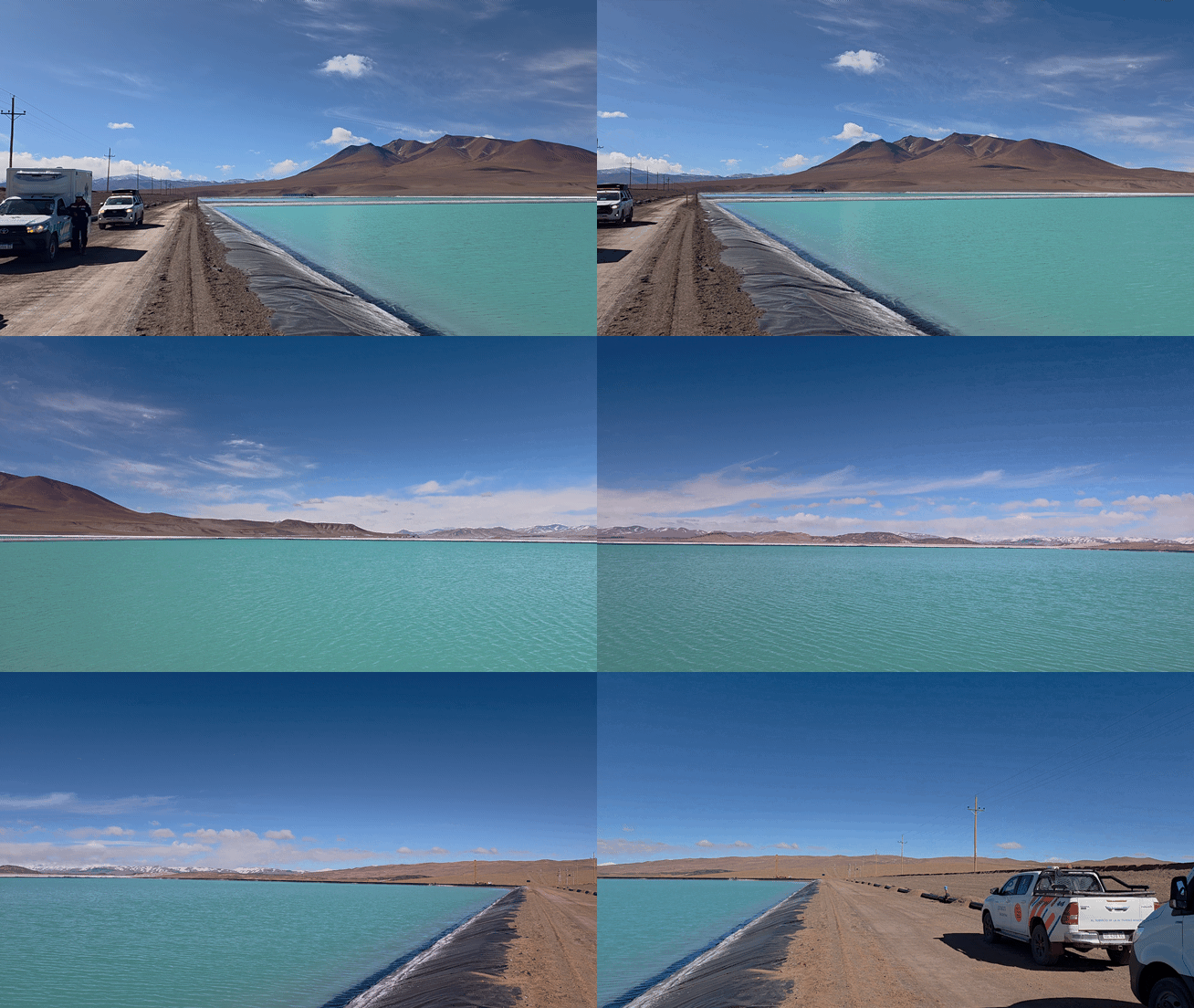
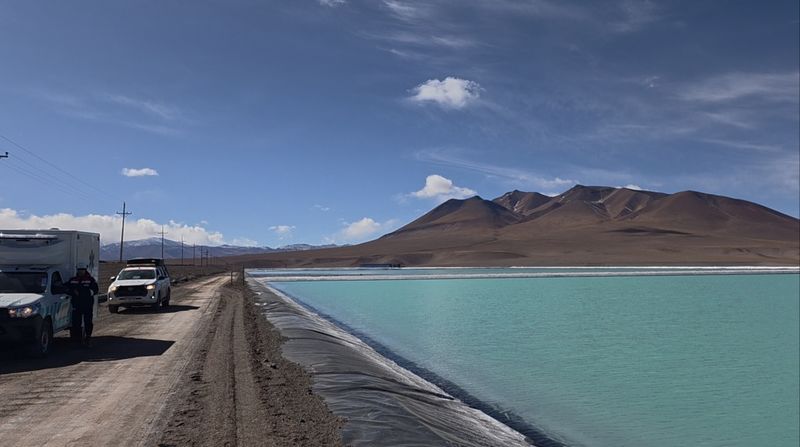
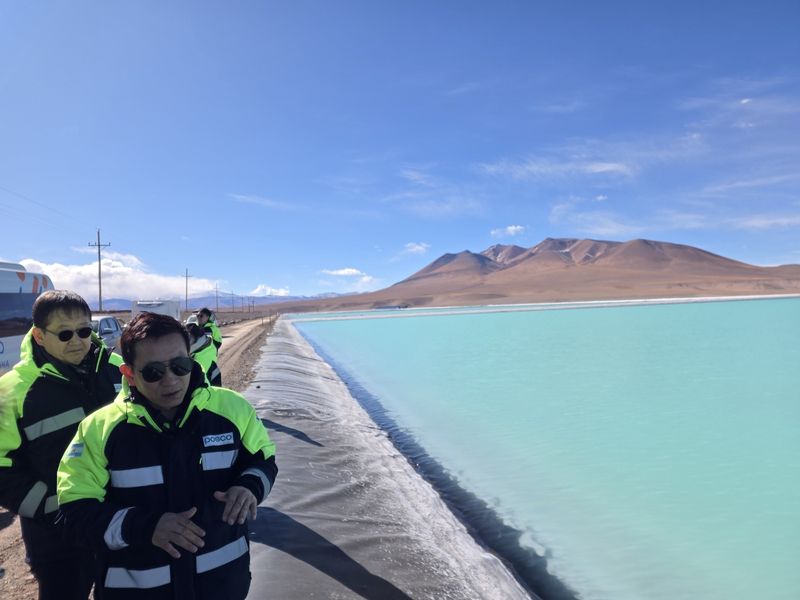
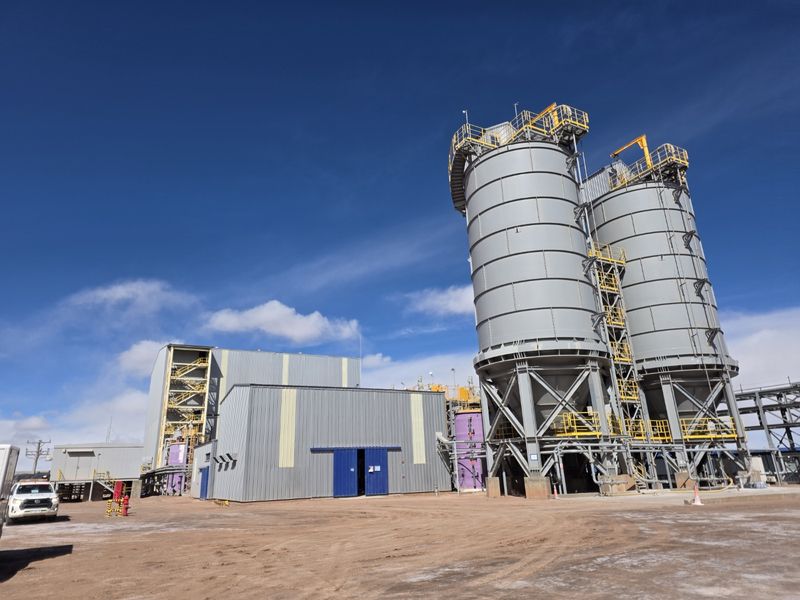
Even in these harsh conditions, POSCO Argentina, a unit of POSCO Holdings Inc., was continuously producing lithium, a key battery material, through its existing first lithium-brine plant and a second plant nearing completion. POSCO has now gone beyond simply mining lithium at 4,000 meters above sea level. By securing mining rights directly and building up extraction and refining technology, it has established competitiveness that can withstand price risks.
■ Lithium extracted from a vast salt lake half the size of Seoul
When POSCO Holdings Inc. acquired the mining rights to the Salar de Hombre Muerto in Salta Province in 2018 for about $280 million, the site was still a "land of possibility." There were ponds and pilot production facilities to pump up underground brine and raise the lithium concentration, but it remained unproven whether large-scale commercial production would succeed.That has now changed. After completing the first plant, which handles only the upstream process at 4,000 meters above sea level, the company has established a stable production system and is preparing to complete the second plant in October. It has created an optimal process that delivers high purity and high recovery rates at low manufacturing costs, even with brine containing many impurities.
In April, POSCO Holdings Inc. additionally acquired the Hombre Muerto North brine concession held by Lithium South (LIS) in Canada, expanding its local lithium-brine resource holdings to 15 million tons. The total area secured now stands at 287 square kilometers, or 86.81 million pyeong. That is about half the size of the Seoul Metropolitan Government area and 99 times the size of Yeouido. The ponds alone cover 8.92 square kilometers, or 2.7 million pyeong, roughly three times the size of Yeouido and equivalent to 1,250 soccer fields.
As a result, POSCO Holdings Inc. has secured an additional 1.5 million tons of lithium and space to expand future production capacity. Based on the resources it has secured so far, it can produce 100,000 tons of lithium a year for at least about 30 years.
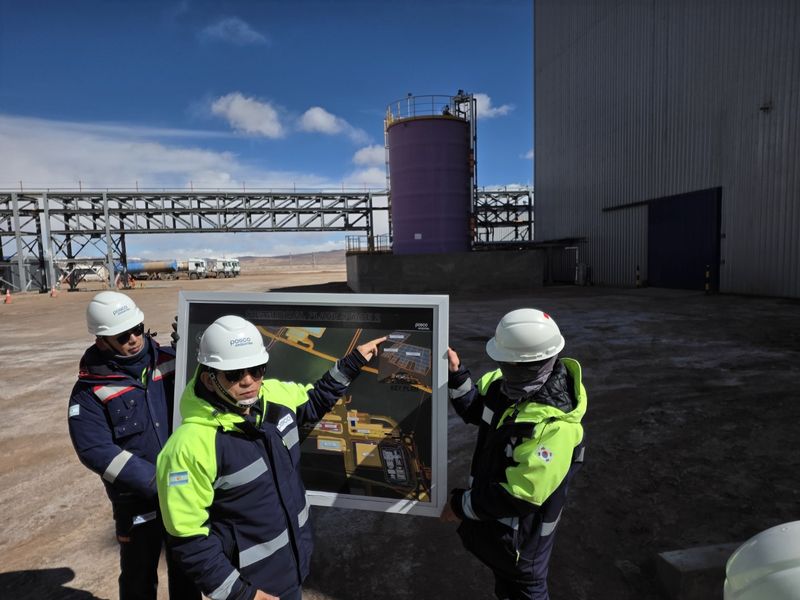
Park Hyun, head of POSCO Argentina, said, "A major advantage is that several facilities, including POSCO Argentina's first plant, are located near the acquired mining area." He added, "Beyond acquiring land where basic exploration had already been completed and securing additional lithium, it is also meaningful that we can secure more pond and plant sites in the future."
This kind of resource acquisition is unfolding in what is often described as a silent war, but in Argentina, POSCO is the only Korean company competing with China, the United States and Canada in resource development. As a result, calls are growing for active government support rather than leaving resource development and exploration to companies alone.
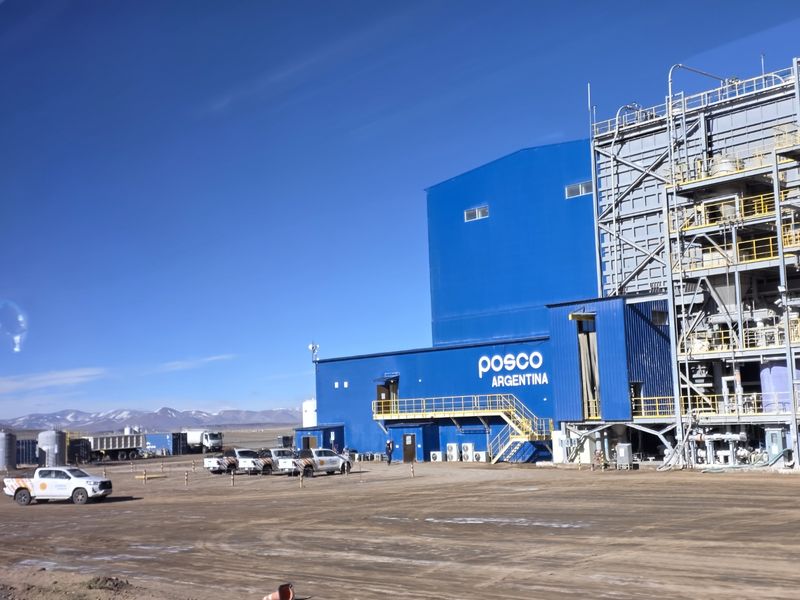
■ "Higher efficiency than rivals, and a shorter stabilization period"
The process of pumping lithium-rich brine from underground, storing it in ponds, drying it, and then refining the lithium through extraction may seem simple, but it requires advanced technology that allows no impurities.POSCO Argentina is regarded as having stronger local production stability than its Chinese rivals, and the upstream process, in which concentrated brine moves through plant piping and is converted into lithium phosphate, was running stably at the first plant. At the second plant, which is nearing completion, lithium carbonate trial production was in its final stage. During the trial run, lithium carbonate "wet powder," a stage before being refined into powder, was being produced.
Seo Seok-jong, head of POSCO Argentina's construction and infrastructure division, said, "A typical steel mill or general production plant stabilizes within six months to a year, but in the lithium business it often takes more than a year." He added, "We are applying the know-how gained from operating the first plant through all four seasons to the subsequent plants, so the process will continue to improve."
A short 10-minute drive from the plant revealed the massive ponds. They are a kind of salt field that concentrates brine rich in lithium from underground, and each unit covers an area equivalent to hundreds of soccer fields.
Seo said, "At present, there is absolutely no problem with supply. Our efficiency in this environment is relatively better than that of other competitors." He added, "We have learned a great deal about pond operations and other know-how, so the stabilization period will become shorter as we move from the second plant to the future third and fourth plants."
[email protected] Kim Hak-jae Reporter