Japan to Raise Permanent Residency Permit Fee from 90,000 Won to 1.74 Million Won, Tighten Income Standards
- Input
- 2026-08-25 14:28:47
- Updated
- 2026-08-25 14:28:47
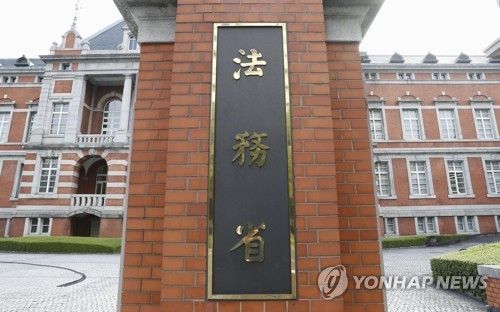
[Financial News, Tokyo = Correspondent Seo Hye-jin] The Japanese government will sharply raise fees for foreigners to renew or change their residency status, as well as for permanent residency permits, starting in October. The permanent residency permit fee will jump 20-fold, from 10,000 yen (about 86,800 won) to 200,000 yen (about 1.74 million won).
According to NHK on the 25th, the Japanese government approved a revised enforcement decree of the Immigration Control Act at a Cabinet meeting that day. The new fees will take effect on Oct. 1.
At present, the fee for renewing or changing residency status is 6,000 yen (about 52,000 won) when applied for at an Immigration Services Agency of Japan counter, regardless of the length of stay, and 5,500 yen (about 48,000 won) for online applications.
Going forward, the fee will vary depending on the length of stay, with longer stays charged more. If the stay is three months or less, applicants will have to pay 10,000 yen (about 86,800 won) regardless of how they apply. For a one-year residency status, the fee will rise to 33,000 yen (about 286,000 won) for in-person applications and 27,000 yen (about 234,000 won) for online applications.
For stays of five years or more, the fee will increase to 75,000 yen (about 651,000 won) at the counter and 65,000 yen (about 564,000 won) online. The lower online fee appears intended to encourage electronic applications.
The steepest increase will be for permanent residency permits. The fee, which can only be paid through in-person applications, will rise from 10,000 yen to 200,000 yen. That is 190,000 yen (about 1.65 million won) more than the current amount. However, part of the fee will be waived for recognized refugees and others facing financial hardship.
Justice Minister Hiroshi Hiraguchi said, "The fee increase is a necessary step to firmly implement policies for a well-ordered society of coexistence with foreign residents," adding, "We will operate it appropriately."
The fee hike is tied to Japan's push to tighten permanent residency screening. The Immigration Services Agency of Japan is separately seeking to revise its permanent residency permit guidelines, which would require applicants to have income above the average for Japanese households and a certain level of expected future pension benefits.
As of 2024, the average household income in Japan stood at 5.752 million yen (about 49.93 million won). It has not yet been decided whether the government will apply that figure directly as an actual screening standard. Authorities are also considering whether applicants whose expected pension benefits fall short of the benchmark should be required to show financial assets, such as savings, to cover the gap.
Japanese-language ability and understanding of Japan's systems and daily rules are also expected to be included in the review. Another proposal under consideration would treat it negatively if parents fail to send school-age children to school. The government is also weighing stricter rules on marriage and residency exceptions for spouses of Japanese citizens or permanent residents.
Under Japan's current Immigration Control Act, permanent residency requires good conduct, independent means of livelihood, and consistency with Japan's national interests. The government believes it needs to clarify the standard for independent livelihood after cases emerged in which people applied for Public Assistance after receiving permanent residency.
The rise in the number of foreign residents is also cited as a reason for the tougher policy. At the end of last year, the number of foreign residents in Japan reached 4.12 million, about 1.5 times higher than at the end of 2021. Of that total, 947,125 were permanent residents.
The Japanese government is also considering setting a cap target for the share of foreign residents and plans to draw up a basic policy by March next year.
[email protected] Seo Hye-jin Reporter