"If You Can Refuse a Blood Test, You Must Be Told" in Drunk-Driving Check — Supreme Court Says "It Cannot Be Used as Evidence of Guilt"
- Input
- 2026-08-25 13:46:47
- Updated
- 2026-08-25 13:46:47
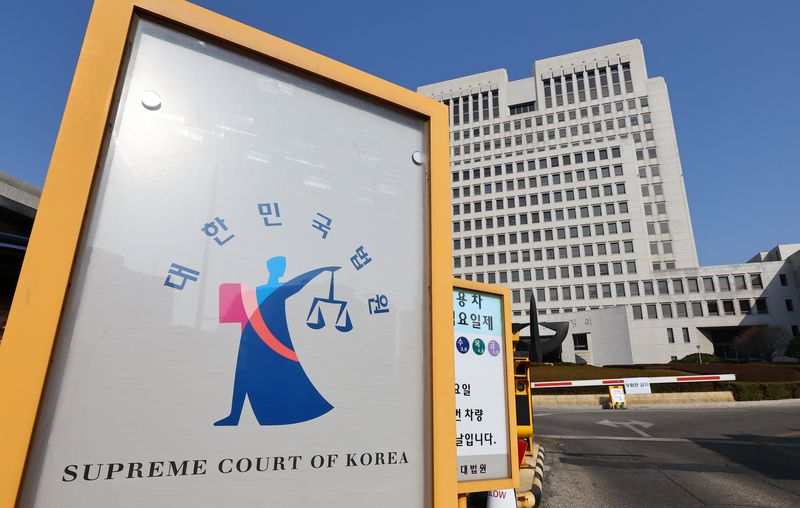
[Financial News] The Supreme Court of Korea has ruled that if police fail to properly inform a driver about blood collection during a drunk-driving check, the resulting evidence is unlawfully obtained and cannot be used to convict the driver.
According to the legal community on the 25th, the Supreme Court Third Division, presided over by Justice Lee Sook-yun, recently upheld the lower court's acquittal in the retrial appeal of A, who had been indicted on drunk-driving charges under the Road Traffic Act.
A was sent to trial for allegedly driving a passenger car about 250 meters on a road in Yuseong District, Daejeon, on the night of February 23, 2022, with a blood alcohol concentration of 0.129%. That was far above the license revocation threshold of 0.08%.
The key issue was how that reading was obtained. At the time, A underwent more than 10 breath tests over 30 to 40 minutes in the cold, but no result was produced. Police officers then requested a blood test, telling A that he had to comply with either a breath test or a blood draw, and A signed a consent form before providing blood.
Article 44, Paragraph 2 of the Road Traffic Act requires drivers to comply with breath-based alcohol testing. By contrast, Paragraph 3 of the same article states that a retest through blood collection must be conducted "with the driver's consent." A's side argued that police described the blood draw as mandatory without telling him that he could refuse it, so the blood analysis was unlawfully obtained evidence.
The trial court accepted that argument and acquitted him. The panel noted the long, repeated breath tests and found it difficult to conclude that the blood draw was carried out with A's voluntary consent. However, the appellate court reversed the ruling, citing the fact that A had signed the consent form and expressed willingness to comply with police, and sentenced him to one year in prison, suspended for three years.
That ruling was overturned by the Supreme Court of Korea in February 2024. A had received a summary order in June 2022 imposing a fine of 5 million won and requested a formal trial. Article 457-2, Paragraph 1 of the Criminal Procedure Act of the Republic of Korea prohibits a court from imposing a sentence of a more severe "type" than the one in the summary order in cases where only the defendant seeks a formal trial. The Supreme Court said the appellate court violated that principle by imposing a prison sentence, even if suspended, which is heavier than a fine.
The court therefore concluded that the blood obtained as a voluntary submission was evidence collected without lawful procedure, and that the forensic report based on it could not be used as derivative evidence either.
Although the prosecutor challenged the decision again, the Supreme Court dismissed the appeal, saying there was no error in its interpretation of the exclusionary rule for illegally obtained evidence and related legal principles.
[email protected] Lee Hwan-ju Reporter