U.S. Announces Third Mineral Investment Call, Covering Indium, Manganese, Magnesium and Titanium
- Input
- 2026-08-25 13:22:07
- Updated
- 2026-08-25 13:22:07
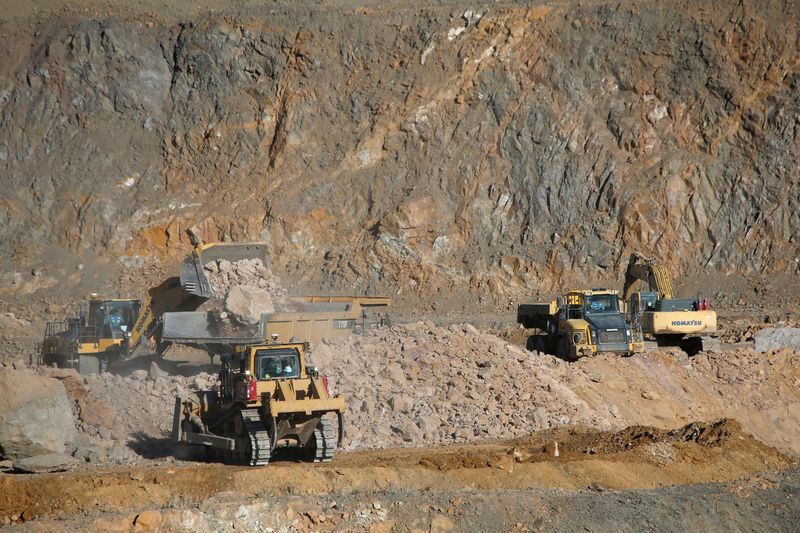
[Financial News] The second Trump administration in the United States, which is pushing to localize critical mineral production, said it will seek investment proposals to build a U.S. production base for four key minerals used in military equipment. This is the third such critical minerals investment solicitation since the administration took office last year.
According to Seeking Alpha on the 24th local time, the Defense Industrial Base Consortium (DIBC) under the United States Department of Defense (DoD) announced on the 21st that it would accept investment proposals related to four critical minerals, including indium, manganese, magnesium and titanium. The deadline for submissions is next month on the 17th. These minerals are used in fighter jets, night-vision goggles and tank armor.
Only U.S. companies, or firms with production subsidiaries or affiliates in the United States, may participate in this solicitation. DIBC said companies involved in any stage of the supply chain, from mining and processing to refining, alloy production and recycling, could be eligible.
Previously, DIBC issued investment calls for gallium in June last year and for about 10 minerals, including arsenic, germanium, nickel, tungsten and graphite, in February this year.
The announcement did not disclose the amount of potential investment. Trip Honic, a government financing expert at consulting firm Queen Street Strategy, said the scale would become clearer once the U.S. defense budget for fiscal 2027, covering October 2026 to September 2027, is finalized.
These four metals are classified by the United States Geological Survey (USGS) as critical minerals essential to the economy and national security, with vulnerable supply chains. Since issuing an executive order in March last year to expand domestic production of critical minerals, the Trump administration has rolled out a range of support measures. In particular, it is seeking to curb China's influence over the production, refining and processing of rare earths and critical minerals, and to place critical mineral supply chains under the influence of the United States or its allies.
Among South Korean companies, Korea Zinc is currently pursuing a 'U.S. smelter' project in Tennessee, investing $740 million (about 1.02 trillion won) to produce 12 nonferrous metals, including 11 critical minerals such as gallium, germanium, indium and antimony.
[email protected] Park Jong-won Reporter