"They Probably Ran Away" — But 1,500 Adult Missing Persons a Year Expose a Blind Spot in Public Safety
- Input
- 2026-08-25 15:58:26
- Updated
- 2026-08-25 15:58:26
According to a Financial News review on the 25th, the police manual for missing-person investigations makes it a rule to confirm a missing person's safety through direct face-to-face contact. However, because field resources are limited, it is difficult to interview every adult missing person in person, including those who are only temporarily out of contact or have run away. In practice, many cases are closed based on "contact equivalent to a face-to-face check," such as video calls or confirmation through family members.
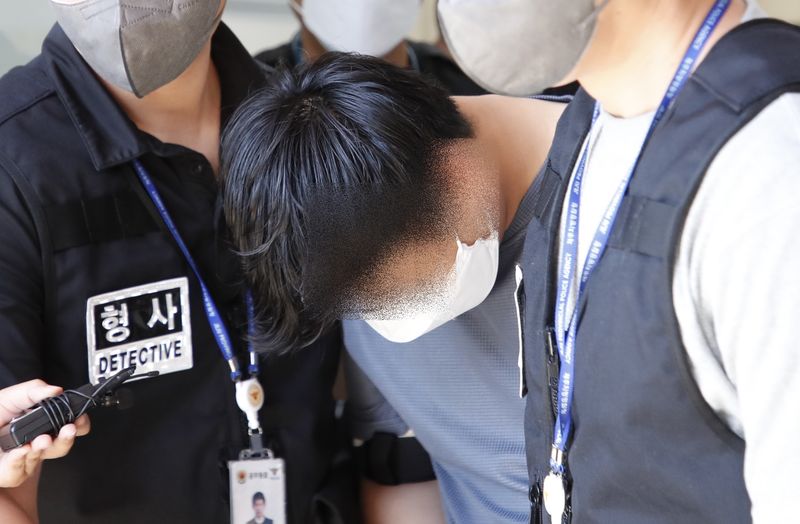
The problem is that even registering objective evidence to prove contact is not mandatory. That means an officer can manipulate and close a case without actually making contact if they choose to do so. In fact, a senior patrol officer at the Jeju Western Police Station is accused of concealing and closing the cases after falsely reporting that he had "made contact with the missing persons" when he received reports in May and July about the disappearances of Jang Mi-ran, 37, and a man in his 60s identified as A. He faces charges including dereliction of duty, forgery and use of forged public electronic records, and obstruction of official duties by deception. The body believed to be Jang was found 104 days after her disappearance, while A's body was discovered 55 days later.
The incident starkly shows how weak the police internal control system was. Internal guidelines for reviewing the progress of missing-person investigations existed on paper, but there was no double-check procedure to verify what field investigators reported. Even when an officer submitted false reports, there was no oversight body to compare and verify call records or investigative logs. As a result, one frontline officer's unilateral handling of a case went unchecked and even led to unauthorized deletion from the computer system. Police are expanding the investigation to all 298 cases handled by the senior patrol officer assigned to the missing-person team in March last year, and are checking whether there are additional victims of false case closures.
Another major factor hampering frontline response is the "legal and institutional vacuum" surrounding adult missing persons. Under the Act on the Protection and Support of Missing Children, police can immediately begin location tracking or forced searches only for children under 18, people with intellectual disabilities, and dementia patients. Adults are pushed down the priority list for legal action, on grounds such as privacy protection, freedom of private life, and the possibility that they may have disappeared voluntarily, and are classified as simple runaway cases. Although bills on adult missing persons have been introduced repeatedly, they have all failed to pass the National Assembly, leaving frontline officers without a legal basis to launch aggressive early-stage forced investigations.
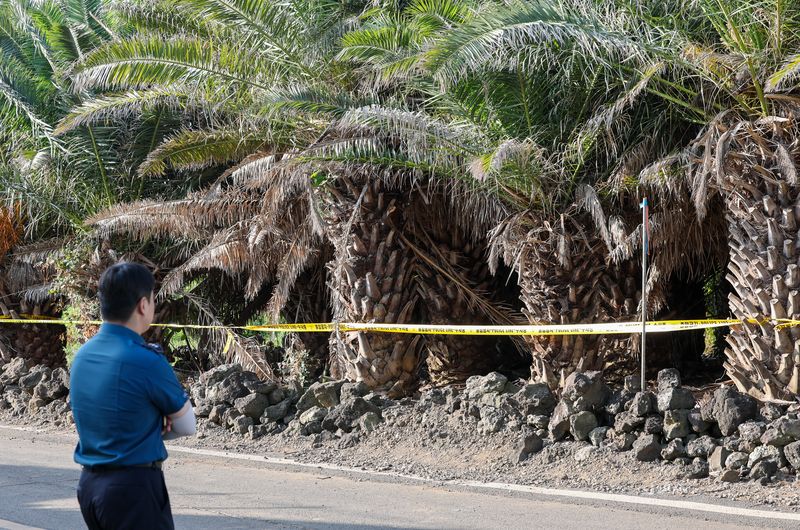
The police's passive response and investigative gaps have had devastating consequences, causing them to miss the golden time for solving cases and lose key clues. According to materials submitted by Jeju Island to independent lawmaker Han Dong-hoon regarding Jang's case, footage from 118 closed-circuit television cameras near the disappearance site had already been automatically destroyed by mid-June, making it impossible to secure her early movements. While the police response lagged, the body believed to be Jang was found in a severely decomposed state at a palm tree farm just a five-minute walk from her lodging. Critics say the police's inept response prolonged the disappearance, deepened the mystery, and inflicted even greater pain on the bereaved family.
Experts stress the need to introduce oversight mechanisms and related legislation to curb the arbitrary judgment of individual investigators at the frontline. Lee Yoon-ho, honorary professor at Dongguk University's Department of Police Administration, said, "A system that allows one police officer to close a matter involving a person's life or death based on his own judgment is an excessive abuse of discretion." He added, "We need to introduce cross-check procedures to filter out individual misconduct, and revise the relevant laws so that emergency measures can be taken immediately when urgency is confirmed, even in adult missing-person cases."
[email protected] Seo Ji-yoon Reporter