Government to Buy 400,000 Tons of Rice This Year for Public Stockpiles
- Input
- 2026-08-25 14:00:23
- Updated
- 2026-08-25 14:00:23
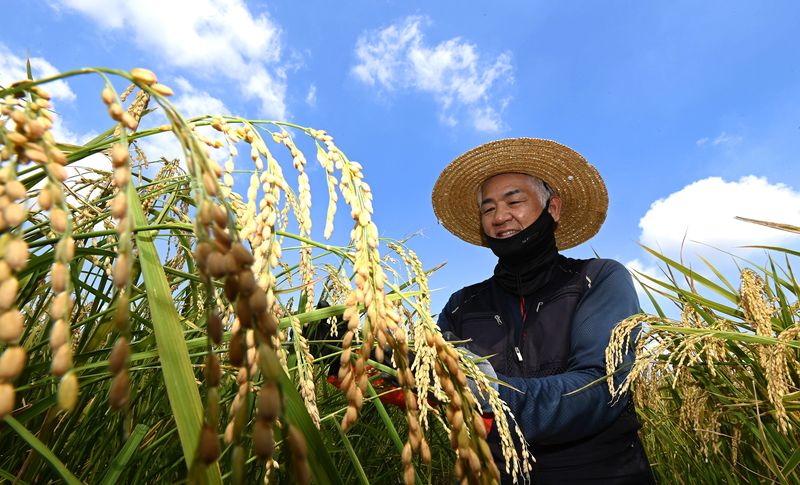
[Financial News] The Ministry of Agriculture, Food and Rural Affairs (MAFRA) said it will buy 400,000 tons of rice during this year’s harvest season and store it as part of the Public Food Grain Stockholding Program. The move is intended to secure emergency food supplies and stabilize market prices and supply if rice shortages occur. The amount is about 30,000 tons lower than last year’s 430,000 tons, as the government began a rice program for supply-demand adjustment this year.
On the 25th, MAFRA said it had finalized the '2026 Public Stockpiling Implementation Plan and 2027 Government Grain Supply Plan' after approval at a State Council of South Korea meeting. The plan includes this year’s outlook for government grain supply and demand, as well as public stockpiling purchase volumes and prices. The government operates the public stockpiling system to prepare for food shortages caused by climate change or natural disasters by stockpiling key staples such as rice, soybeans and wheat. It was introduced in 2005 to replace the old rice procurement program, which had been subject to reduction commitments under the World Trade Organization (WTO) system.
The rice stockpile volume approved at the State Council of South Korea meeting was 400,000 tons. Of that, 35,000 tons will be floury rice, a variety used exclusively for processing. Floury rice can be dry-milled like wheat flour, making processing simpler. Public stockpile purchases were 450,000 tons in 2022, 400,000 tons in 2023, 450,000 tons in 2024 and 430,000 tons in 2025. The purchase volume had remained at around 350,000 tons, but it was expanded from 2022 to strengthen food security and support the floury rice industry.
MAFRA said the stockpile volume fell from the previous year because it launched a new rice program for supply-demand adjustment this year. Under the program, rice is designated for processing from the production stage in normal times, separating the acreage from the table-rice market. In an emergency such as a poor harvest, it can be diverted to table rice to stabilize supply. Farmers participating in the program will receive a strategic crop direct payment of 5 million won per hectare. Instead of government-managed grain from old stocks, private-sector new rice from the supply-demand adjustment program can be supplied to rice processors as raw grain, improving product quality.
The purchase price for public stockpiled rice will be determined at the end of the year by converting the average farm-gate rice price from October to December, the harvest season, into rough rice prices. Purchases will run from September through the end of the year, and farmers will receive an interim payment of 60,000 won per 40-kilogram bag of rough rice immediately after purchase. To help stabilize farm management, the government raised the interim payment from a flat 30,000 won, which had been in place since 2017, to 40,000 won in 2024 and 60,000 won this year. The increase reflects recent rice price trends and feedback from the field.
This year, the government plans to pilot preferential support for low-protein eco-friendly rice. It will test the protein content of eco-friendly rice and provide an additional premium equal to 5 percentage points of the purchase price to the top 30% of farms with the lowest protein levels. The goal is to expand high-quality rice production and encourage better soil management through appropriate fertilizer use. Heavy use of chemical fertilizer raises the protein content of rice. The low-protein eco-friendly rice purchased will be supplied to vulnerable groups, including senior centers and free meal organizations.
At the end of October, the final month of the current grain year, government-managed rice stocks are projected to stand at 713,000 tons. Taking into account public stockpile purchases and sales, as well as the return of borrowed grain, the government plans to manage end-of-2027 grain-year stocks at around 840,000 tons. Jeong Hye-ryeon, director of food policy at MAFRA, said, "This year, we expect the higher interim payment for public stockpiled rice to help farmers secure liquidity during the harvest season," adding, "We also plan to strengthen the system for producing high-quality rice by piloting preferential purchases of low-protein rice."
Meanwhile, the retail price of 20-kilogram bags of rice stood at 61,427 won in August. That was down 2.5% from 63,034 won in January this year. It was 59,090 won in August last year, while the five-year average for the same month was 54,827 won. Those figures represent increases of 4.0% and 12.0%, respectively. However, MAFRA said the year-on-year increase this year is not large. In fact, the price in October last year, the harvest season, was 66,127 won, up 25.0% from 52,889 won a year earlier.
[email protected] Agriculture Reporter Choi Yong-jun Reporter