FDI Firms Account for 80% of Vietnam's Total Exports; "Local Companies Must Strengthen Their Capabilities Quickly"
- Input
- 2026-08-25 12:29:34
- Updated
- 2026-08-25 12:29:34
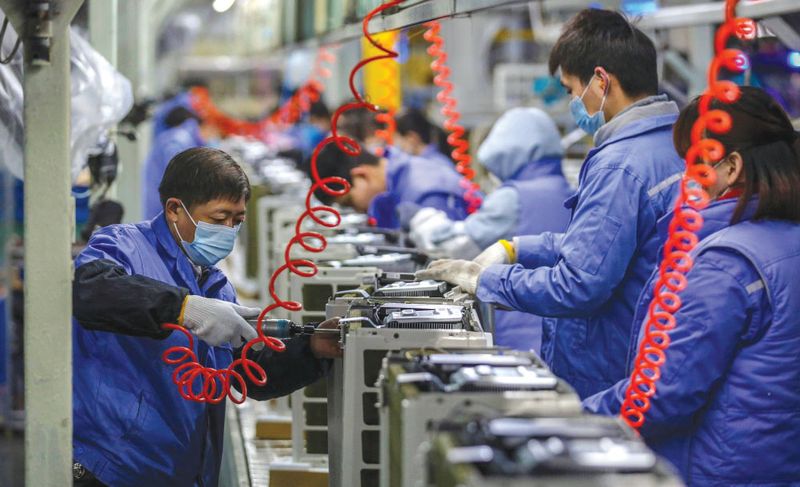
[Hanoi, Vietnam = Correspondent Kim Jun-seok] As exports by Foreign Direct Investment (FDI) firms account for more than 80% of Vietnam's total exports, concerns are growing that local companies are not participating enough in global supply chains. As a result, calls are mounting to strengthen the capabilities of domestic firms.
According to local media on the 25th, Vietnam's cumulative exports from January through July this year reached $319.53 billion. Of that, FDI-sector exports rose 26.4% from a year earlier to $255.89 billion, accounting for 80.1% of total exports. By contrast, exports by local Vietnamese companies came to $63.64 billion, or just 19.9%. The trade balance also showed a sharp contrast, with the FDI sector posting a surplus of about $8 billion, while the local corporate sector recorded a deficit of $28.5 billion.
World Bank (WB) statistics show that the share of Vietnamese companies participating in global value chains fell from 35% in 2009 to 18% in 2023. The gap is believed to have widened as global conglomerates have raised the standards for selecting component suppliers.
Local experts said, "Vietnam has succeeded in establishing itself as a major production and export base for global conglomerates, but in terms of contribution, the actual share held by Vietnamese companies remains very small." They added that to enter the supply chains of global firms amid restructuring, companies must meet demanding requirements, including stable quality control, on-time delivery, raw material procurement, and production data management, as well as origin tracing, carbon emissions, and environmental standards.
The Vietnamese government has set a goal of bringing about 10,000 local companies into the value chains and supply chains of FDI firms by 2030, while nurturing 500 to 1,000 of them into first-tier suppliers. It also plans to raise the average localization rate in key industries to 45% to 50%. Its FDI attraction policy is also shifting beyond simply bringing in factories, toward favoring investors that create higher added value through R&D investment, technology transfer, local sourcing of components, and cluster formation.
To achieve these goals, the key task is not merely connecting companies, but upgrading the production management capabilities of Vietnamese firms to global standards. Because many local companies fail to meet the evaluation criteria of global firms due to limitations in quality and data management, as well as stable production and delivery capabilities, recent support programs have evolved into hands-on initiatives that send experts directly to production sites to identify weaknesses and improve them individually.
A representative example is the Smart Factory support program jointly promoted by Samsung Group and the Ministry of Industry and Trade of Vietnam (MOIT). The program provides consulting and process improvement support to Vietnamese companies with a production base and growth potential. Samsung Group has also signed an agreement with Bac Ninh Province to support corporate innovation, technology development consulting, Smart Factory construction, and advanced workforce training from 2026 to 2030.
Another example is Ho Chi Minh City's "VSM 70 pilot programme," which supports capability building for 70 local companies over 90 days. It targets five priority industries: electronics and mechatronics, food and beverage, machinery and supporting industries, textiles and footwear, and plastics, chemicals and packaging. Rather than requiring companies to purchase technology, the programme diagnoses their current condition, identifies weaknesses, and then has specialists draw up customized improvement roadmaps and provide direct support. It also allows key supply-chain companies and FDI firms to recommend local partners that need stronger competitiveness, making it possible to link support for Vietnamese companies more closely to real supply-chain demand.
[email protected] Kim Jun-seok Reporter