At 50% tariffs and even over the French language, Canada grows more united as Trump escalates pressure
- Input
- 2026-08-25 11:13:04
- Updated
- 2026-08-25 11:13:04
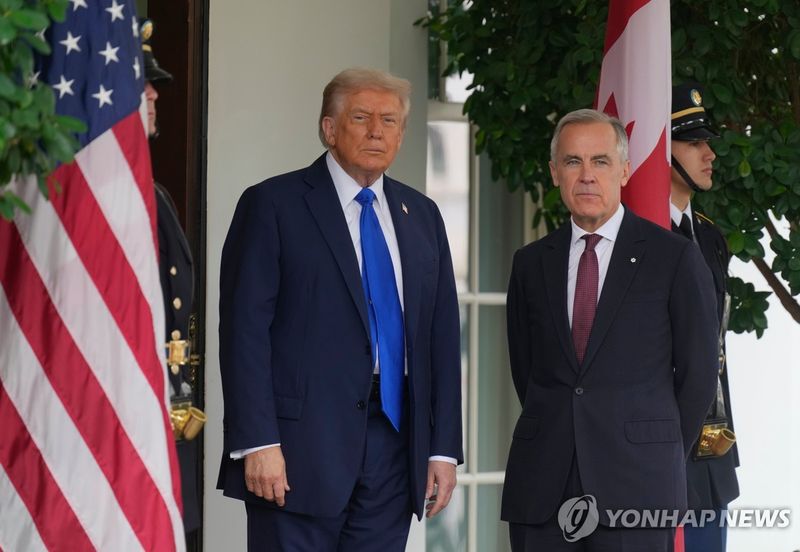
[Financial News] The trade war between the United States and Canada is spilling beyond cars and steel into language and culture. After Donald Trump said he would impose 50% tariffs on Canadian cars and auto parts, Canada pushed back, saying the United States was even targeting policies that protect the French language. What began as a tariff dispute is now striking at Canada’s identity, worsening relations between the two countries to the point that talk of them being close allies sounds hollow.
A 50% tariff counterpunch... "A foolish trade war"
On the 24th, Trump wrote on Truth Social that "tariffs on cars, small and large trucks, auto parts and steel will rise to 50% starting Jan. 1, 2027."
It was a retaliatory move against Canada’s plan for counter-tariffs. Trump argued that "Canada needs the United States, not the other way around." He also called Canadian Prime Minister Mark Carney and Ontario Premier Doug Ford "clowns" and hinted at further pressure in the energy sector.
Canada did not back down. Carney said that while negotiating with the United States, he learned that the Trump administration was trying to destroy Canada’s key industries. He described Washington’s terms as a "bad deal."
Public opinion is also reinforcing the hard line. In a recent poll, 76% of Canadians said suspending trade talks with the United States was the right decision. As resentment over Trump’s remarks about Canada becoming the "51st state" has grown, so has the view that Canada should not make excessive concessions to Washington.
Concerns are also emerging in the United States. The Wall Street Journal (WSJ) criticized the dispute as "the dumbest trade war." Because the two countries’ auto and steel supply chains are tightly intertwined, tariffs on Canadian goods could also raise costs for U.S. companies.
The dispute spreads to French, and Canada rallies
The trade war has also spread to the issue of the French language, which is closely tied to Canada’s identity. Speaking in French-speaking Quebec on the same day, Carney said the U.S. trade team viewed Canada’s French-language protection policies as a nuisance and stressed that "in Quebec, French is a right."
In Canada, where English and French are both official languages, language is more than a simple trade regulation. Quebec, in particular, sees French as central to its identity and requires French labeling on products while also applying rules to foreign media services to protect French language and Canadian content.
The United States denied the claim. Jamieson Greer, the U.S. Trade Representative, called it "ridiculous fake news" and said the issue was a rule requiring part of the revenue from U.S. streaming companies to be used to support Canadian content.
Trump’s pressure is uniting Canada from within. Paul St-Pierre Plamondon, leader of the Quebec separatist party, the Parti Québécois, announced that he would postpone any independence referendum until Trump’s term ends. Under U.S. pressure, even separatist forces are putting internal unity first.
[email protected] Kim Kyung-min Reporter