Despite a wave of store closures, Japan's three major department stores are investing 1 trillion won in this place
- Input
- 2026-08-25 11:27:32
- Updated
- 2026-08-25 11:27:32
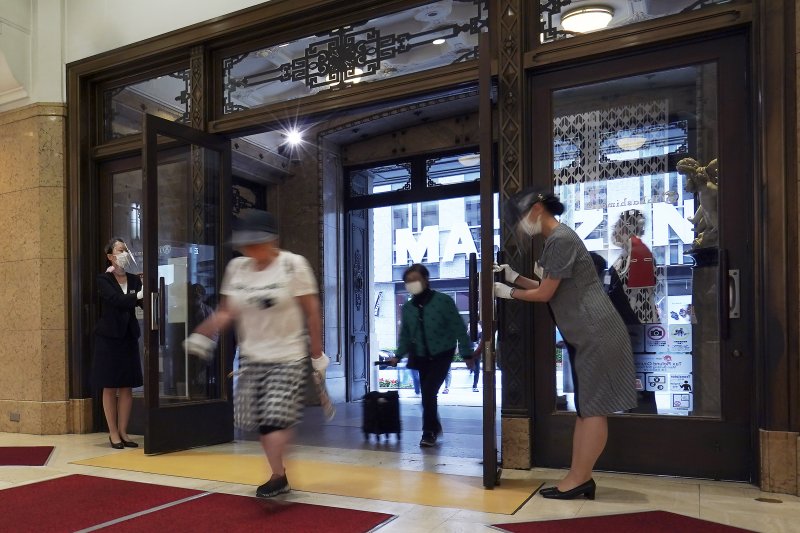
[Financial News, Tokyo = Correspondent Seo Hye-jin] Japan's three major department store operators will invest more than 120 billion yen, or about 104.4 billion won, in capital spending this year. It is the first time in seven years that their combined investment has exceeded 100 billion yen. Instead of maintaining low-profit stores, they plan to develop new large-scale commercial facilities and renovate luxury and food sections at flagship stores to attract high-end spending from wealthy customers and tourists visiting Japan.
According to Nihon Keizai Shimbun, or The Nikkei, on the 25th, the 2026 fiscal year capital spending of Isetan Mitsukoshi, Takashimaya, and J. Front Retailing will total 121.2 billion yen, or about 105.44 billion won. That would be the second-highest level in the past 10 years, after fiscal 2018 before the COVID-19 pandemic.
■ High-end spending is shifting in.. luxury halls expand, food halls consolidate
Japan's department store industry has recently faced falling sales and a string of store closures. Nationwide department store sales fell about 23% from 7.4 trillion yen in 2008 to 5.7 trillion yen, or about 495.9 billion won, last year. Over the same period, the number of stores dropped from 280 to 176. The decline reflects the spread of online shopping, weaker spending power among the middle class, and population decline.
Closures are spreading beyond regional areas into major cities. Takashimaya closed its Rakusai store in Kyoto this month, and J. Front will shut down Daimaru Shimonoseki in August next year. Seibu Department Store's Shibuya store, which has operated in Shibuya, Tokyo for 58 years, will also close next month.
Department stores are fixed-cost businesses that operate large stores with substantial staffing. Even when sales fall, it is difficult to quickly reduce rent and labor costs. That is why Japanese department stores are closing underperforming outlets and concentrating investment on large flagship stores that attract luxury shoppers and tourists visiting Japan.
Takashimaya will spend about 50 billion yen, or about 43.5 billion won, to renovate its luxury sections at the Nihombashi Store in Tokyo and at Yokohama Takashimaya. It will expand the luxury area at Yokohama Takashimaya by about 20%, and at Tamagawa Takashimaya Shopping Center it will merge food sections that had been separately operated by the department store and specialty shops.
J. Front Retailing will invest 42 billion yen, or about 36.54 billion won. In June, it opened HAERA, an upscale shopping mall in Nagoya where Louis Vuitton, Cartier, Chanel, and Hermès launched flagship stores. It will also renovate Matsuzakaya Nagoya and Daimaru Kobe.
Isetan Mitsukoshi will spend 28.7 billion yen, or about 24.97 billion won, to renovate three key stores in the Tokyo metropolitan area, including Ginza Mitsukoshi. At the Isetan Shinjuku main store, it will refresh the confectionery and cosmetics sections.
In Japan, sales of luxury and other high-priced goods are growing faster than overall sales. In June, nationwide department store sales at existing stores rose just 2.3% year on year to 468.7 billion yen, or about 407.77 billion won. By contrast, miscellaneous goods, including luxury items, jumped 7.4%, while art, jewelry, and precious metals surged 22.3%.
The stock market rally is also boosting the spending power of wealthy households. Kohei Okazaki, chief market economist at Nomura Securities, estimated that as of the end of last month, the value of stocks and mutual funds held by Japanese households had increased by 70 trillion to 80 trillion yen, or about 60.9 trillion to 69.6 trillion won, from the end of last year. He said that if 3% of that asset gain is spent, private consumption could rise by about 2.2 trillion yen, or about 1.914 trillion won.
The Nikkei noted that "as regional stores stagnate, renovating large city-center stores that can attract wealthy shoppers and tourists visiting Japan has become an essential factor in department store growth."
■ South Korea also invests in flagship stores and trims low-efficiency businesses
South Korea's department store industry is also pushing ahead with investment in flagship stores while restructuring low-efficiency businesses. According to the Ministry of Trade and Industry, which counted existing-store sales for Lotte Department Store, Hyundai Department Store, and Shinsegae Department Store excluding new stores, sales in the first half of this year rose 20.1% from a year earlier. The increase was just 0.5% in the same period last year.
Monthly growth rates were 21.7% in April, 24.5% in May, and 22.2% in June, staying above 20% for three straight months. Sales of overseas premium brands also rose 30.8% in the first half.
Shinyoung Securities said sales of ultra-high-end jewelry, watches, and fashion items drove growth in department store revenue and profits. Foreign customer sales accounted for 7% to 8% of domestic department store sales in the first half and were estimated to have contributed about 2 percentage points to growth in existing-store sales.
Hana Securities forecast that the combined operating profit of Lotte Department Store, Shinsegae Department Store, and Hyundai Department Store this year will rise 39% from a year earlier, with about 10 percentage points of that coming from business restructuring such as closing underperforming stores and exiting duty-free shops. Shinyoung Securities researcher Jang Eun-byeol said, "If department stores can steadily absorb foreign demand, their long-term growth potential, centered on domestic demand, could also expand."
[email protected] Seo Hye-jin Reporter