"Just ramen and kimbap?" A meal for four can top 50,000 won as dining prices surge in the heat
- Input
- 2026-08-25 10:06:42
- Updated
- 2026-08-25 10:06:42
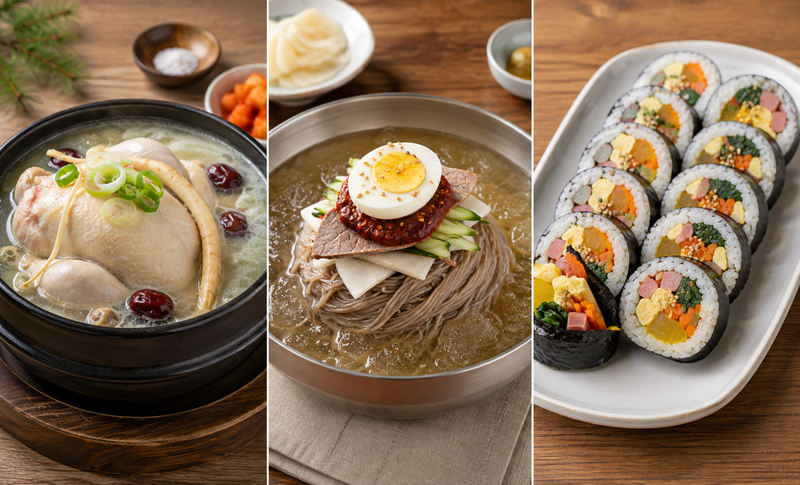
[Financial News] Prices of major restaurant menu items continued to rise in the second half of the year, adding to the burden on ordinary households.
Chicken consumption rises during the World Cup, pushing samgyetang prices higher in July
According to the price information portal Chamgagyeok run by the Korea Consumer Agency (KCA), the average price of samgyetang in Seoul rose from 18,154 won in June to 18,192 won in July.
Naengmyeon also climbed from 12,615 won to 12,692 won, while the price of a single roll of kimbap increased from 3,838 won to 3,869 won.
The average price of samgyetang, a popular summer health food, had already risen from 18,000 won in December last year to 18,154 won in January this year, and then increased again after six months.
The rise reflects stronger demand for summer health foods and a surge in chicken consumption tied to the 2026 FIFA World Cup. Higher production costs, including feed and logistics expenses, also pushed prices up.
Ginseng, a key ingredient in samgyetang, also rose sharply as supply fell and production capacity weakened. As of the 21st, the average price of fresh ginseng, sold in bundles of 12 to 14 roots, stood at 38,750 won, up 56% from 24,800 won a year earlier.
A bowl of naengmyeon costs 12,692 won... average price has risen three times this year
In particular, the average price of naengmyeon in Seoul rose three times this year, from 12,500 won in December last year to 12,538 won in January, 12,615 won in April, and 12,692 won in July.
The increase was driven by stronger summer demand, higher prices for broth ingredients such as Korean beef brisket, and rising operating costs including labor, rent, and gas.
Kimbap also saw three price hikes this year alone in Seoul, with the average price per roll rising from 3,723 won in December last year to 3,800 won in January, then to 3,838 won in June and 3,869 won in July.
Along with higher labor costs, the recent heat wave sent up the prices of key ingredients such as seaweed and spinach, dealing a direct blow to so-called heatflation, or inflation driven by extreme temperatures.
[email protected] Ahn Ga-eul Reporter