Gyeongsangbuk-do Leads FoodTech Industrialization, Establishes Dedicated Food Industry Bureau
- Input
- 2026-08-25 10:12:22
- Updated
- 2026-08-25 10:12:22
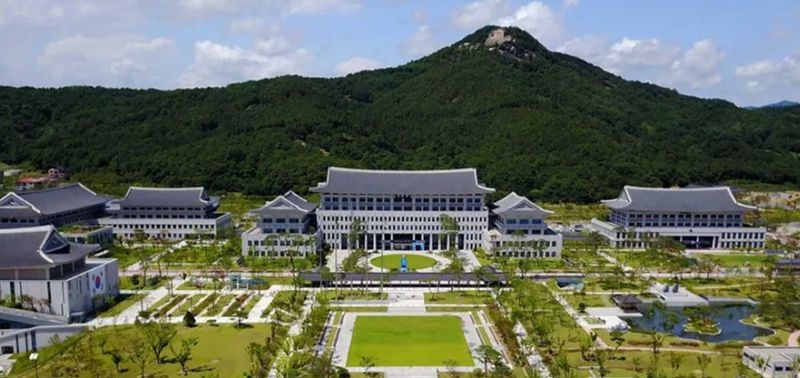
【Financial News, Andong = Kim Jang-wook】Gyeongsangbuk-do Provincial Government is taking the lead in FoodTech industrialization. To support that effort, it has established the nation's first dedicated food industry bureau.
On the 25th, Gyeongsangbuk-do Provincial Government held the "Gyeongbuk FoodTech Policy and Technology Exchange Meeting" in a conference room at the provincial government office, with about 40 participants from the province, city and county governments, related organizations, and academic experts.
In particular, the province launched the "Food Hallyu Industry Bureau," the country's first bureau dedicated to the food industry, and is accelerating efforts to foster the sector under the slogan, "Food, completed as an industry beyond the Korean Wave."
The exchange meeting was organized to identify region-specific FoodTech projects by bringing together agri-food resources from cities and counties, as well as the capabilities of companies and research institutions.
Governor Lee Cheol-woo said, "With the launch of the nation's first dedicated food industry bureau, now is the time to take Gyeongbuk's FoodTech industry to the next level." He added, "We will go beyond technology development and infrastructure building to create tangible industrial results that lead to corporate investment, production, and exports."
The province has steadily expanded the foundation for fostering the FoodTech industry, becoming the only region in the country to be selected for the FoodTech Research Support Center project for three consecutive years and securing three of the seven centers nationwide.
It has also broadened its scope from food robots in Pohang in 2024 to cell-cultured food in Uiseong County in 2025 and smart food manufacturing in Gumi in 2026. Backed by the Cell-Cultured Food Regulatory Free Zone and Asia's first NSF International Testing and Certification Body for Food Equipment, the province has built an industrialization system that connects R&D, regulatory verification, and global certification.
At the meeting, participants shared major FoodTech projects and policy and technology trends being pursued by cities, counties, related organizations, and universities. They also discussed the direction of the regional innovation cluster, the discovery of new projects that reflect local agri-food resources and industrial conditions, and ways to strengthen cooperation among institutions.
They also exchanged views on new policy tasks, including building a foundation to support the verification and commercialization of health functional foods and improving regulations at food industry sites.
Koo Kwang-mo, head of the Food Hallyu Industry Bureau, said, "We will reflect the opinions and new tasks raised at this exchange meeting in the master plan, and work with cities, counties, and related organizations to turn them into specialized local projects and corporate support policies."
[email protected] Kim Jang-wook Reporter