What the Title of Ryu Seung-ryong and Ha Ji-won's Film 'Portrait of a Family' Means... Seen Up Close [This Movie]
- Input
- 2026-08-25 09:49:16
- Updated
- 2026-08-25 09:49:16
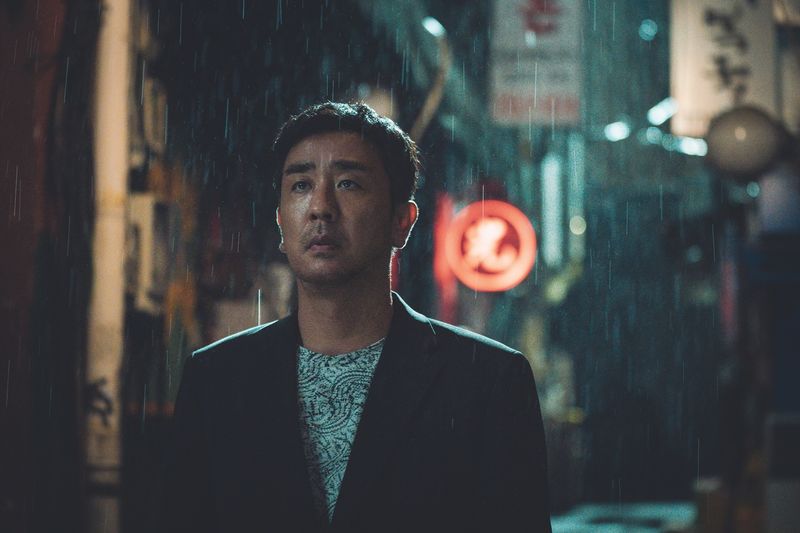

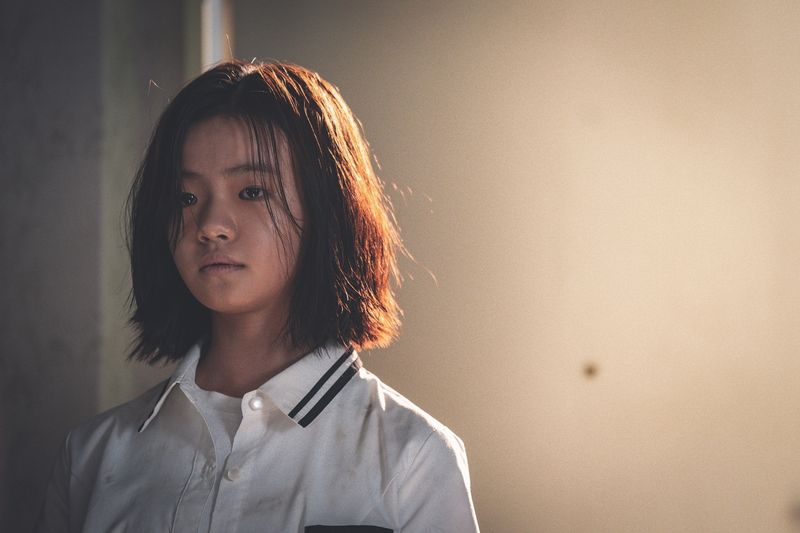
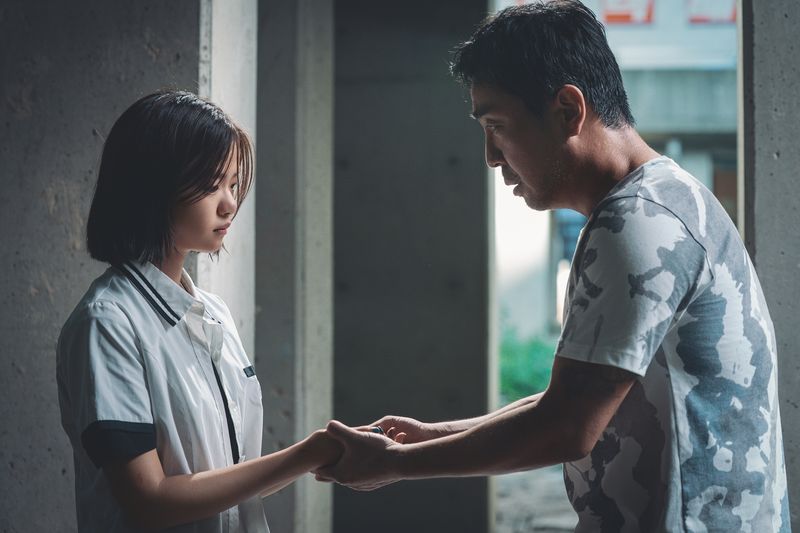
[Financial News] The film Portrait of a Family, starring Ryu Seung-ryong, Ha Ji-won, and Kim Si-a, is a noir-like family drama that begins with relentless misfortune and ends with a quiet warmth. It is a drama of loyalty in which a family pushed to the brink by an unexpected tragedy ultimately stands on one another's side, and a story of solidarity in which adults join forces to protect a child in trouble.
Family solidarity created by imperfect people
It is the second feature film by director Lee Ji-won, who won the Best New Director award in the film category at the 55th Baeksang Arts Awards for Miss Baek (2018), a film about child abuse, female solidarity, and redemption.
Portrait of a Family also continues the concerns of that earlier work by centering on a child cast out into the world and the adults who cannot ignore that child. However, while Miss Baek focused on the solidarity between two women, this film broadens its gaze to the family as a whole.
Jung-gu (Ryu Seung-ryong), once a star player in Korean baseball, and top star Nam-mi (Ha Ji-won) were a glamorous couple living a life more dazzling than anyone else's. Then, one day, Jung-gu's daughter Dong-ju (Kim Si-a) suddenly appears, throwing both of their lives into chaos. Eight years after their divorce, when Dong-ju is named a suspect in a shocking case surrounding the death of a friend, Jung-gu, Nam-mi, and Jung-gu's family reunite to save the child.
The film's message is fully captured in its title, Portrait of a Family. The director said she came up with the title after seeing a family gathered around a Go-Stop game.
In Korean Hwatu, Bikwang refers to the rain card's light, which symbolizes December and depicts a figure holding an umbrella, a frog, and a willow tree. The image is said to have originated from an anecdote about a calligrapher in Japan's Heian period who realized the importance of perseverance and effort after watching a frog repeatedly leap toward a willow branch. In Go-Stop, Bikwang is neither a regular card nor a full light card. The three light cards other than Bikwang are worth three points, but if Bikwang is included, they are worth only two. Yet Bikwang is essential if one wants to complete the five-light hand. Just as five adults came together for Dong-ju.
At the beginning of the film, the director also conveys this meaning through Nam-mi's narration. She tells the story of a frog that never gives up and eventually clings to the willow tree to survive, hinting that the characters in the film will rise again despite adversity.
From a fallen star couple to the family in Portrait of a Family that embraces Dong-ju
Strictly speaking, the characters in the film are less like shining lights in their own right and more like Bikwang, marked by wounds and lack. But the moment they hold on to one another, these imperfect people finally become a family. At the center of that is Jung-gu, who suddenly becomes a father one day.
Ryu Seung-ryong shows a side different from the warm, daughter-obsessed father he played in Miracle in Cell No. 7 and the Disney+ series Moving. He portrays, with both steadiness and detail, a man who falls from the peak of life to rock bottom and rises again for his daughter.
Nam-mi, played by Ha Ji-won, is the most dynamic character in the film. She is a struggling entertainer who keeps going with fierce determination after her fall. She wants to turn away from Dong-ju, who reminds her of her own childhood, but in the end she cannot ignore her. Nam-mi evokes Baek Sang-ah, played by Han Ji-min in Miss Baek, while also serving as a model for Chu Sang-ah in the drama Climax, starring Ju Ji-hoon and Ha Ji-won.
It is also meaningful that Kim Si-a appears again in this director's work after Miss Baek. In that earlier film, she played an abused child; now she has become a teenage girl carrying deep wounds and guilt on her own. As she said, she tried to express "a gaze that seems to know the world already, as if she has lived many lives." Dong-ju rarely reveals what she feels inside, but she leaves a strong impression.
Kim Hae-sook, Kim Sun-young, and Kim Young-min, who play Jung-gu's mother, older sister, and brother-in-law, are both one of the film's charms and its ideal. They embrace Dong-ju, who suddenly becomes their granddaughter and niece, without any conditions. In a way, she is a troublesome child who has dragged their son and brother into ruin. They also warmly accept Nam-mi, who was once their daughter-in-law. It is unrealistic, but the director's wish is clear: if a family like this existed, the world would be a much better place. Through them, the film says that family is not a relationship completed by blood, but one in which people willingly stand on each other's side in times of crisis.
Between solidarity and redemption, power and desire
The film's weakness is that it feels somewhat scattered. It begins as a documentary about Jung-gu's youth, then seems to become a love story, a comeback story, or a revenge drama. But as the background to their downfall is revealed to involve political power, and as Jung-gu's daughter becomes entangled in school violence and faces a real crisis, everything converges into a story about saving the daughter.
The succession of misfortune and violent situations along the way creates fatigue, and the process of driving the plot forward can feel contrived. The fact that the film takes on so many issues at once, including political power, the entertainment industry, school violence, and domestic violence, also makes the narrative feel scattered. Fortunately, as the film moves into its latter half, its sincerity becomes clearer.
It conveys the courage of a man who can set everything aside to protect something precious, the resolve of a woman who strengthens that sincerity, and the family members who quietly help, always in the same steady way. This extraordinary family, after enduring every kind of hardship, extends its warmth to those connected to them by fate beyond blood ties.
In terms of production order, Portrait of a Family was made between Miss Baek and the drama Climax. Although Climax was released first, the director has said she conceived Climax after drawing inspiration from Nam-mi's story in Portrait of a Family. Climax is a drama of desire, collapse, and a desperate counterattack for survival, following a prosecutor from a poor background and a top star with a troubled family history as they enter a power cartel entangled in politics, business, and entertainment in their struggle to reach the top.
Portrait of a Family is a bridge between Miss Baek and Climax, in that it uncovers the naked face of violence and power surrounding a child before ultimately arriving at family solidarity. It opens on September 2.
[email protected] Shin Jin-a Reporter