A Robot Can Predict in Advance Why Your Voice Won't Shake After Thyroid Removal [Health Check]
- Input
- 2026-08-25 08:53:54
- Updated
- 2026-08-25 08:53:54
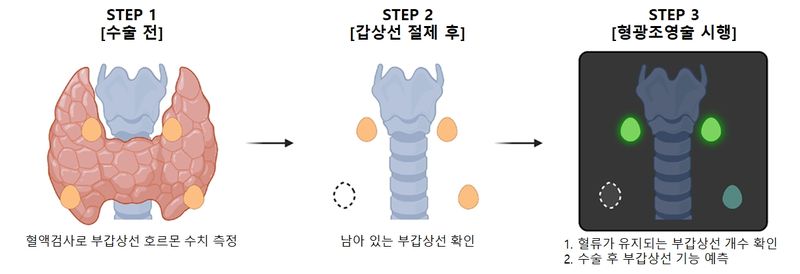
[Financial News] Until now, whether parathyroid function declines after total thyroidectomy could only be confirmed through repeated blood tests after surgery. A research team led by surgeons Jun-young Choi and Ja-kyung Lee at Seoul National University Bundang Hospital has developed a method to predict this early during surgery. The team expects the approach could be used in the future to assess the risk of postoperative parathyroid dysfunction at an early stage and to optimize supplementation and testing plans for each patient.
The research team said on the 25th that it had developed a method to estimate postoperative parathyroid hormone levels early during BABA, or bilateral axillo-breast approach robotic thyroidectomy.
The parathyroid glands are small organs located behind the thyroid that secrete hormones regulating blood calcium levels. There are usually four of them. They are extremely small, vary in position from person to person, and are difficult to distinguish from fat or lymph nodes. For that reason, they can easily be removed or damaged during thyroid surgery. If that happens, hormone secretion drops and symptoms of hypocalcemia, such as tingling in the hands and feet or muscle cramps, may appear.
Medical staff try to locate and preserve the parathyroid glands as much as possible during surgery, but simply leaving them in place does not necessarily mean their function will be maintained. Even if they appear intact, damage to the tiny surrounding blood vessels can prevent them from secreting enough hormone.
At present, doctors assess the risk of dysfunction through follow-up observation after thyroidectomy by repeatedly measuring parathyroid hormone and calcium levels. The research team sought to develop a way to predict parathyroid hormone levels early, starting during the operation itself.
The key is to administer the fluorescent dye indocyanine green during surgery and use the robotic camera to directly confirm how many parathyroid glands have blood flow. The method goes beyond simply preserving the glands by sight. It evaluates how many parathyroid glands are actually well supplied by the surrounding blood vessels, then combines that with the preoperative parathyroid hormone level to calculate the expected value.
The results showed a significant correlation between the values predicted by the fluorescence imaging-based method developed by the team and the actual postoperative blood test results. In 73% of all patients, the difference between the predicted and actual values was within ±5 pg/mL, indicating high accuracy.
This study is meaningful in that it suggests the possibility of estimating each patient's risk of postoperative parathyroid dysfunction early, using blood flow information confirmed during surgery before observing changes in parathyroid function through blood tests after total thyroidectomy.
Professor Choi explained, "With future validation, it could be used as a supplementary indicator to intensify calcium and vitamin D supplementation and monitoring for high-risk patients," adding, "It could also be helpful in various medical settings where repeated blood tests are difficult or test results are delayed."
The findings were published in the international surgical journal Surgical Endoscopy.
[email protected] Medical Reporter Reporter