[fn This Person] "Global autonomous driving competition is shifting from a speed race to proving safety"
- Input
- 2026-08-24 18:55:20
- Updated
- 2026-08-24 18:55:20
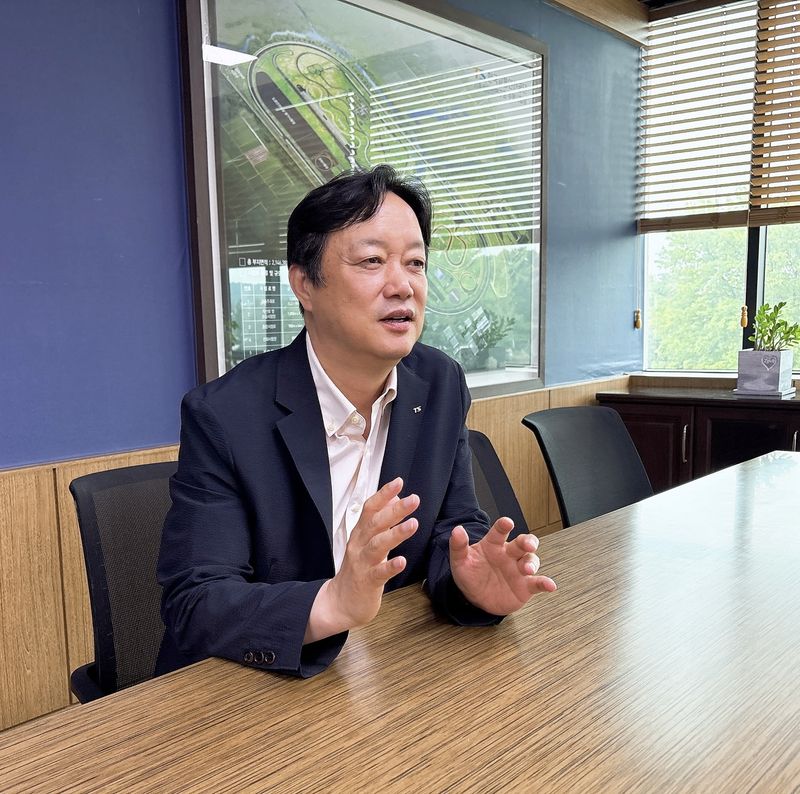
On the 24th, Kim Si-woo, head of the autonomous driving division at the Korea Transportation Safety Authority (TS), said the focus of autonomous driving policy is shifting from technology development to safe commercialization.
As an example, Kim pointed to the international standards for autonomous driving systems (ADS) adopted in June by the World Forum for Harmonization of Vehicle Regulations (WP.29) under the United Nations Economic Commission for Europe (UNECE). He said the key elements are a Safety Management System (SMS), which manages risks across the entire lifecycle from design and development to post-launch management, and a Safety Case, which combines virtual simulation, test-track trials and on-road evaluations.
The autonomous driving division at the New Car Assessment Program of the Korea Automobile Testing & Research Institute (KATRI) is responsible for setting safety standards across the full lifecycle of autonomous vehicles, researching and developing core safety technologies, evaluating cybersecurity and software updates (OTA), and reviewing temporary operation permits. It verifies technical performance in detail at K-City, an autonomous driving test city in Hwaseong City, and checks safety on real roads across Jeonnam-Gwangju Integrated Metropolitan City.
The Gwangju Special City demonstration project is the country's first large-scale Level 4 autonomous driving pilot to span an entire city. It is designed to create a national data flywheel, where accumulated data leads to better performance and, in turn, more data.
The government is providing about 60 billion won this year to prepare 200 dedicated vehicles and a 24-hour monitoring and operations system. From March to May, it selected manufacturers, insurers and transport platform operators, then signed agreements with development companies to launch Team Korea Autonomous Driving. Six vehicles for pre-verification have been supplied, and performance development has begun.
The operating area will expand in three stages as safety is confirmed. This year, a safety manager will ride in the driver's seat and the vehicles will operate in parts of Gwangsan District, Buk District and Seo District. In 2027, the safety manager will move to the passenger seat, and the service will expand to all of Nam District, Dong District and Seo District, as well as university hospitals and old downtown areas. In 2028, unmanned operation will begin, with coverage planned to reach about 90% of Gwangju Special City.
Kim explained that "the key to demonstration is not mileage, but how many different situations have been experienced." He said autonomous vehicles must be trained on hundreds or thousands of variations of real-world hazards in a virtual city, such as pedestrians jaywalking, electric scooters darting out from behind illegally parked cars, sudden lane changes in construction zones, and heavy rain or snow, before being verified at K-City and on public roads.
The data gap with global companies is another challenge. As of this year, Waymo and Baidu are said to have accumulated 320 million km and 190 million km of driving, respectively. In Korea, data collected by more than 130 vehicles in national pilot operation zones totals only 14 million km.
He proposed creating a shared repository for company data, a compensation system for rare and high-risk data, and standardized recording methods. He also said demonstration results should be turned into internationally recognized safety evidence, and that data collection, monitoring, insurance and safety guidelines should be bundled together for export.
Kim added, "We will work closely with the government, related agencies and private companies to open a safe and sustainable future mobility era and grow into a global leading institution in future mobility safety."
[email protected] Jang In-seo Reporter