Hot-rolled steel prices find a floor as China cuts output, raising hopes for relief in the steel industry
- Input
- 2026-08-25 06:59:00
- Updated
- 2026-08-25 06:59:00
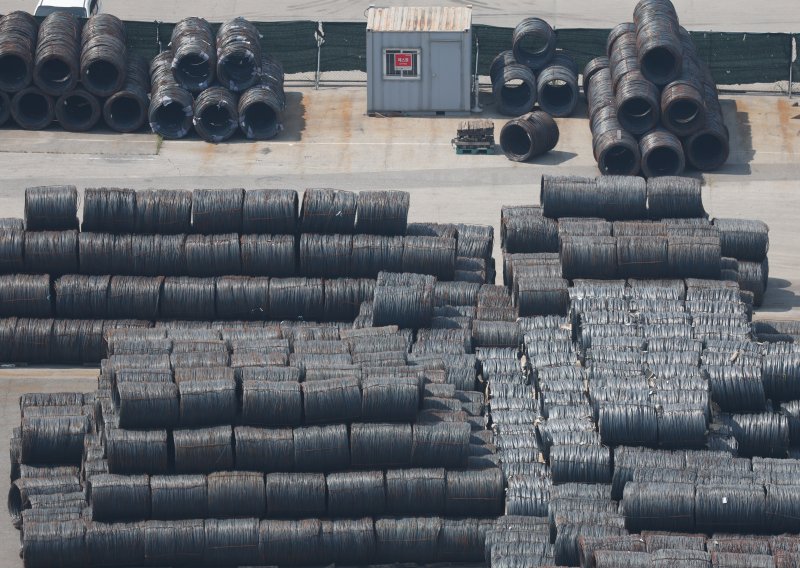
[Financial News] South Korea's steel industry is watching closely to see whether it can break free from the long-running pressure of low-priced Chinese products, as signs emerge that oversupply is easing with a decline in China's crude steel output. As Asian hot-rolled steel prices, which had been stuck at low levels, begin to stabilize, a full-scale cut in Chinese production could also strengthen domestic steelmakers' ability to defend prices and improve profitability.
According to the steel industry on the 25th, hot-rolled steel prices in the United States and Europe have continued to rise, while prices in Asia have remained in the low $500s per ton, widening the gap between regions.
Hot-rolled steel prices in the United States have climbed to as much as $1,300 per ton, more than 42% higher than a year earlier. In Europe, quoted prices for hot-rolled steel from mills in Northern Europe have risen to 740-750 euros per ton. In Asia, however, prices remain the lowest among major regions. Even after Indonesian and Indian suppliers recently raised hot-rolled steel prices for shipments to Vietnam by $3 to $5 per ton, they are still hovering around $510.
Industry observers say Asian hot-rolled steel prices have fallen for so long that the market is now entering a phase of bottoming out rather than further decline. In fact, a major Taiwanese export steelmaker has reportedly seen improved order sentiment as inquiries from overseas customers have recently increased.
The key variable for any future price rebound is whether China's oversupply eases. So far, large volumes of low-priced Chinese steel have flooded into the Asian market, limiting price increases across the region.
Recently, production cuts have also emerged as Chinese steelmakers struggle with weaker profitability. China's crude steel output in July came to 76.93 million tons, down 3.6% from a year earlier. It was the lowest monthly output this year and the weakest July level since 2017. If production cuts in China accelerate, analysts say oversupply in Asia could ease and steel prices, which have remained at the bottom, may rebound.
That would also be positive for South Korea's steelmakers, who have struggled to raise prices under pressure from cheap Chinese products. If low-priced Chinese supply declines and Asian steel prices recover, domestic steelmakers would gain stronger pricing power, which could lead to better profitability.
There are also expectations that domestic hot-rolled steel prices are finding a floor. Steel price information provider Steelware projected POSCO's hot-rolled coil price at 960,000 to 990,000 won per ton in the second half of this year. That is well above 810,000 won per ton in January. After the off-season ends in September, supply could tighten further as POSCO carries out maintenance on its facilities in the fourth quarter, raising the possibility that prices will establish a floor around 960,000 won per ton before rebounding.
POSCO also expects steel prices to gradually normalize in the second half. In its second-quarter earnings conference call last month, POSCO Holdings said it would push for additional price increases for automakers and shipbuilders. The company plans to negotiate sequential pass-through of higher raw material costs into product prices in the second half, aiming to improve profitability.
Meanwhile, expectations for a normalization in hot-rolled steel prices are also being reflected in earnings forecasts. According to FnGuide, POSCO Holdings is projected to post revenue of 73.5681 trillion won and operating profit of 3.0976 trillion won this year. That would represent increases of 6.5% and 69.5%, respectively, from a year earlier.
[email protected] Lee Dong-hyeok Reporter