Lee appoints Choi Gil-soo as special inspector after 10-year vacancy, choosing Democratic Party recommendation
- Input
- 2026-08-24 16:57:07
- Updated
- 2026-08-24 16:57:07
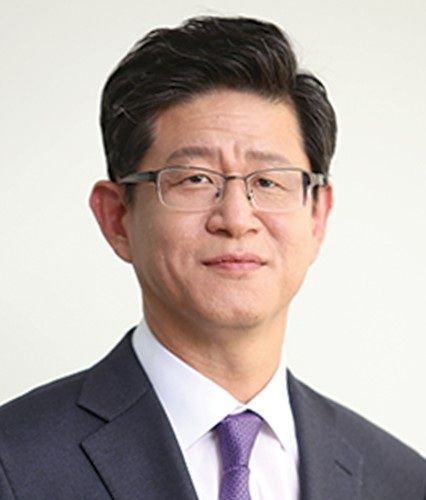
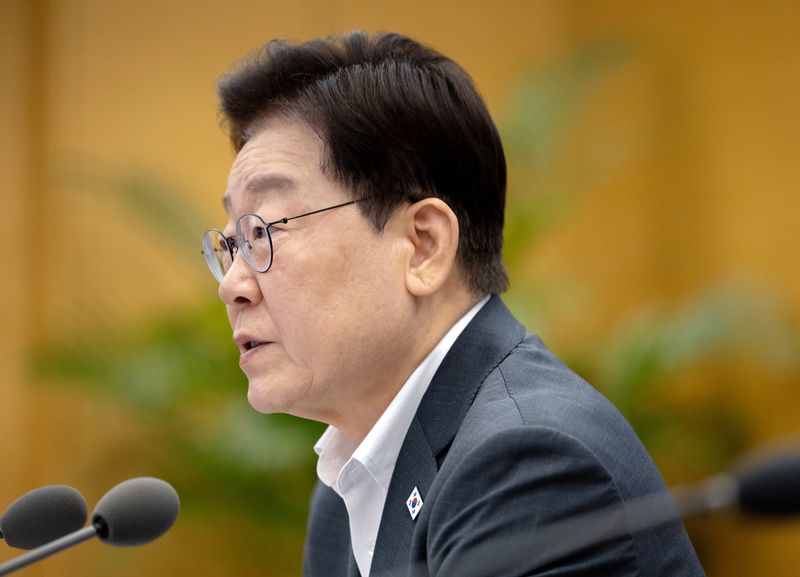
[Financial News] President Lee Jae Myung on the 24th nominated lawyer Choi Gil-soo, a candidate recommended by the Democratic Party of Korea, for the special inspector post, which had been vacant for about 10 years. With no successor appointed after the first special inspector resigned during the Park Geun-hye administration, the system for regular oversight of the president’s inner circle is now moving toward restoration, after remaining vacant under the Moon Jae-in and Yoon Suk Yeol administrations as well.
Cheong Wa Dae senior spokesperson Kang Yoo-jung said at a briefing that day that President Lee had nominated Choi as a candidate for special inspector. On the 20th, the National Assembly recommended three candidates: Choi Gil-soo, recommended by the Democratic Party of Korea; Kang Ji-sik, recommended by the People Power Party; and lawyer Choi Yong-hoon, recommended by the Korean Bar Association (KBA). Choi will be appointed after a confirmation hearing in the National Assembly.
Choi previously served as chief prosecutor at the special crimes division of the Gwangju District Prosecutors' Office, inspection prosecutor at the Seoul High Prosecutors’ Office, and chief prosecutor at the major economic crimes investigation unit of the Seoul Southern District Prosecutors' Office. Kang said, "Based on his thorough principled approach and inspection capabilities, he is considered the right person to independently carry out the role, block corruption involving the president's relatives and key aides, and restore discipline in public service."
On concerns over independence arising from the nomination of a candidate recommended by the Democratic Party of Korea, Cheong Wa Dae emphasized Choi's past recommendation by an opposition party. Kang said, "Under the Special Inspector Act, full independence in performing duties is guaranteed," adding, "The president also appointed the special inspector with the understanding that all power needs institutional oversight." Choi was also recommended as a special inspector candidate by the Bareunmirae Party, which was then in the opposition during the Moon Jae-in administration.
The People Power Party had earlier pushed back, citing Choi's background. When the Democratic Party of Korea recommended Choi, senior spokesperson Park Chung-kwon criticized the move, saying, "The Democratic Party, which has criticized the overexpansion of prosecutorial power and the promotion of special prosecutors, is trying to place a special prosecutor insider at the head of an oversight body," and added, "Prosecutorial reform is a rubber-band standard." He also pointed out Choi's recommendation by the Bareunmirae Party, saying it was "a centrist third party unrelated to the People Power Party."
The special inspector investigates misconduct by the president's spouse, relatives within the fourth degree, and senior aides at the level of senior presidential secretary or above. If criminal suspicion is found in the inspection results, the case is referred to the head of the Serious Crimes Investigation Agency or a request is made for an investigation. Previously, the prosecutor general was the target of referrals and investigation requests, but the law was revised as the prosecution was split into the Public Prosecution Office and the Serious Crimes Investigation Agency.
The special inspector system was introduced during the Park Geun-hye administration, but it effectively came to a halt after the first special inspector, Lee Seok-soo, resigned in 2016 following a clash with Cheong Wa Dae during an inspection into then Senior Presidential Secretary for Civil Affairs Woo Byung-woo. During the Moon Jae-in administration, no appointment was made due to concerns over overlapping functions with the Corruption Investigation Office for High-ranking Officials, and under the Yoon Suk Yeol administration, the post remained vacant because of negotiations between the ruling and opposition parties and internal disagreements within the presidential office and the ruling party.
President Lee had pledged to appoint a special inspector during last year's presidential campaign. After taking office, he ordered the appointment process to move forward in July last year, and in April this year he asked the National Assembly to begin the candidate recommendation process.
However, it is expected that the special inspector's office, which has effectively been dormant for about 10 years, will need to be reorganized before it can operate normally. Following the nomination, the office plans to form a team to prepare for the confirmation hearing, but only two staff members are reportedly still in place. Under the Special Inspector Act, the office may request up to 20 civil servants from relevant agencies, including the Board of Audit and Inspection (BAI), the Supreme Prosecutors' Office of the Republic of Korea (SPO), the National Police Agency, and the National Tax Service (NTS).
Meanwhile, President Lee accepted the resignation of Minister of Justice Jeong Seong-ho, who had expressed his intention to step down due to worsening health. Kang said, "We plan to move quickly with follow-up appointments so there is no disruption to state affairs." Possible successors to Jeong include Democratic Party of Korea lawmakers Park Gyu-taek and Lee Geon-tae, both former prosecutors, as well as lawmaker Park Joo-min, a former lawyer. With Han Seong-sook also appointed as Prime Minister, the Ministry of SMEs and Startups is vacant as well, raising the possibility of a Cabinet reshuffle that could include replacement appointments. However, Cheong Wa Dae drew a line on the timing and scope of any reshuffle, saying, "There is nothing specific we can tell you yet."
[email protected] Sung Seok-woo Choi Jong-geun Reporter