Will Fed Chair Warsh Calm Market Fears Over a 'Fiscal Crisis Within Three Years'?
- Input
- 2026-08-24 16:32:13
- Updated
- 2026-08-24 16:32:13
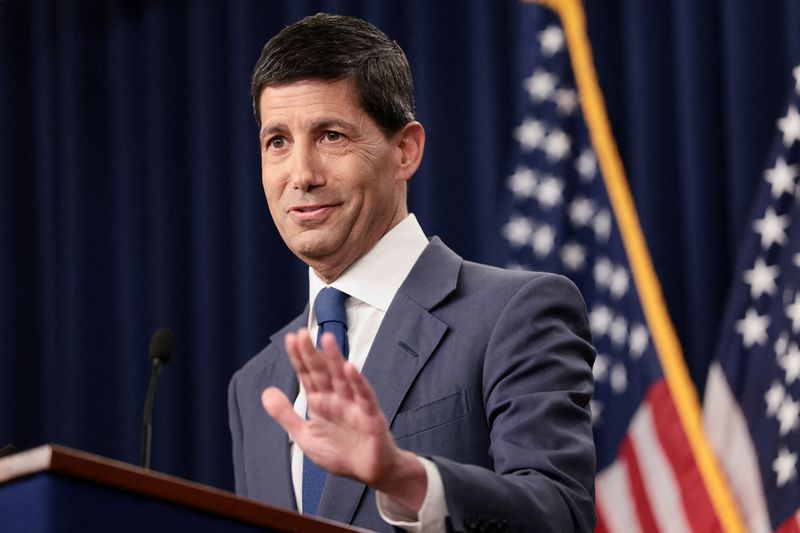
Department of the Treasury. The Financial Times (FT) reported on the 23rd that Kevin Warsh, who took office as chair of the U. S. Federal Reserve in May, is expected to try to reassure investors in a speech on the 28th. The Federal Reserve Bank of Kansas City will host the annual Jackson Hole Economic Policy Symposium in Jackson Hole, Wyoming, from the 27th to the 29th. Warsh, attending the event for the first time as chair, will deliver his first keynote speech at 11 p. m.
on the 28th, Korea time. Warsh is set to take the stage amid harsh criticism that the U. S. government has failed to communicate effectively under record debt pressure. The U. S. Department of the Treasury said on the 19th that total U.
S. 047 trillion as of the previous day, surpassing $40 trillion for the first time ever. As of the 18th, prices of 30-year U. S. Treasury bonds had fallen to their lowest level in 19 years, and the Treasury Department said the same day that it would more than double the scale of its buybacks of long-term bonds. U. S.
Treasury Secretary Scott Bessent said on the 20th that the buyback program could be expanded further. Even so, 30-year Treasury prices resumed their decline after a brief rebound on the 19th. In a related post on LinkedIn on the 21st, Bridgewater Associates founder Ray Dalio predicted that the U. S. government would face a fiscal crisis within three years. He said that if the government faces both rising debt-servicing costs and weakening demand from Treasury investors, it will ultimately have no choice but to accept falling bond prices.
Dalio explained that the Fed could prop up Treasury prices by printing dollars to buy bonds, but that would inevitably weaken the dollar and push up inflation. He stressed that the U. S. government faces about $1 trillion in interest payments this year and roughly $10 trillion in maturing principal. In effect, Dalio said, the government must repay about $11 trillion in principal and interest, or roughly twice its annual revenue. He predicted that U.
S. 5 trillion, resulting in a fiscal deficit of $2 trillion. Ultimately, the U. S. government will need to seek cooperation from the Fed to address the current situation. According to the FT, some investors said Bessent's sudden announcement this month of expanded Treasury buybacks had undermined confidence in the Treasury Department's policy guidance.
The Fed's credibility is also declining, according to an academic survey conducted by the FT in partnership with the University of Chicago Booth School of Business. About 60% of respondents said the time Warsh needs to bring inflation back to the Fed's 2% target has become longer than academics expected when he was confirmed by the Senate in May. In addition, more than 60% said concerns about the Fed's credibility were behind the decline in long-term U. S. Treasury prices since Warsh was nominated in January. Christiane Baumeister, a professor at the University of Notre Dame, said, "The worrying thing is that Warsh does not seem willing to offer a clear and public assessment of the current state and outlook of the U.
S. economy. " She added, "That could fuel unnecessary speculation, threaten market stability, and heighten concerns about the Fed's credibility. " The FT noted that U. S. inflation has remained above 2% for more than five years.
At the same time, it said inflationary pressure has intensified further because of the prolonged Iran War, the U. S. -Canada tariff war, and additional U. S. economic sanctions targeting Iran. Meanwhile, Dalio wrote on the 21st that investors should diversify into countries and asset classes with sound finances and limited geopolitical conflict.
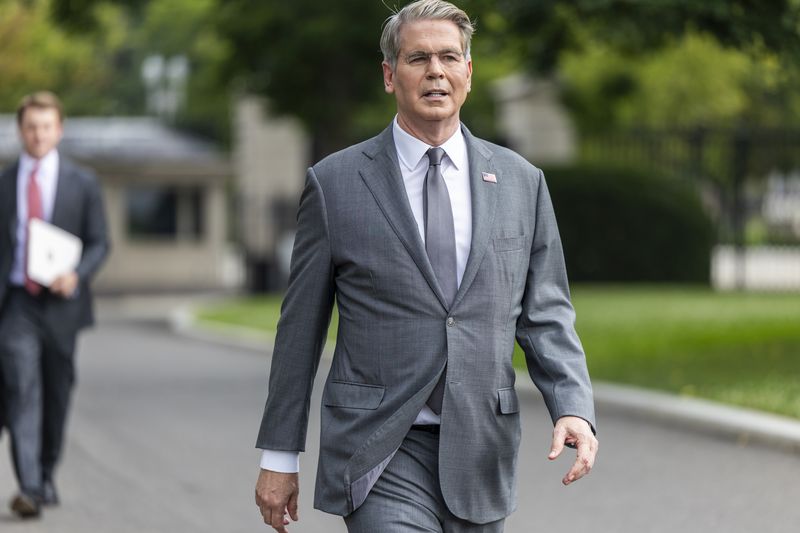
He advised, "It is better to reduce exposure to debt-based assets such as bonds and increase holdings of gold and a small amount of Bitcoin. " Scott Bessent, U. S. Secretary of the Treasury, walks toward reporters in front of The White House in Washington, D. C. , on the 20th.
C. , on July 29 last month. Reuters-Yonhap News [Financial News] As U. S. Treasury prices continue to fall and debt levels show no sign of easing, warnings have emerged that the United States could face a debt crisis within three years. Investors are waiting for a response from the Federal Reserve System (FRS) after Treasury prices failed to rebound even following intervention by the U. S.
C. , on July 29 last month. Reuters-Yonhap News [Financial News] As U. S. Treasury prices continue to fall and debt levels show no sign of easing, warnings have emerged that the United States could face a debt crisis within three years. Investors are waiting for a response from the Federal Reserve System (FRS) after Treasury prices failed to rebound even following intervention by the U. S.
C. , on July 29 last month. Reuters-Yonhap News [Financial News] As U. S. Treasury prices continue to fall and debt levels show no sign of easing, warnings have emerged that the United States could face a debt crisis within three years. Investors are waiting for a response from the Federal Reserve System (FRS) after Treasury prices failed to rebound even following intervention by the U. S.
C. , on July 29 last month. Reuters-Yonhap News [Financial News] As U. S. Treasury prices continue to fall and debt levels show no sign of easing, warnings have emerged that the United States could face a debt crisis within three years. Investors are waiting for a response from the Federal Reserve System (FRS) after Treasury prices failed to rebound even following intervention by the U. S.
[email protected] Park Jong-won Reporter