Seoul Metropolitan Government's GTSN Index hits all-time high of 150.7, with all six areas rising together for the first time
- Input
- 2026-08-24 14:00:00
- Updated
- 2026-08-24 14:00:00
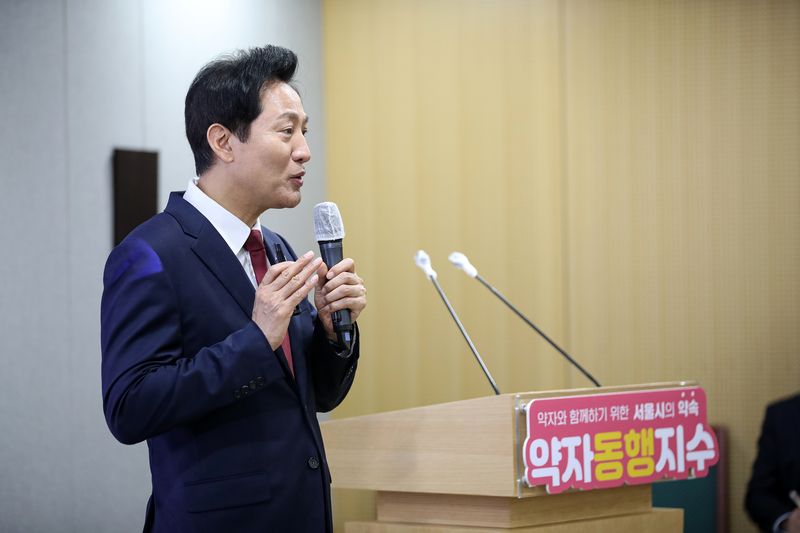
[Financial News] According to the 2025 GTSN Index announced by the Seoul Metropolitan Government on the 24th, all six major areas — livelihood and care, housing, medical care and health, education and culture, safety, and social integration — improved from the previous year for the first time since the index was introduced.
The GTSN Index is a measure that comprehensively evaluates policy performance and the degree of improvement, using 100 as the baseline for 2022, the year the Seoul Metropolitan Government declared its commitment to "walking together with the vulnerable." The index rose for three consecutive years, reaching 111.0 in 2023, 130.6 in 2024, and 150.7 in 2025. Last year, it posted a sharp increase of 20.1 points, or 15.4%, from the previous year.
By area, safety led the overall improvement with a gain of 49.3 points, or 33.1%, followed by livelihood and care, which rose 31.4 points, or 24.6%. Education and culture also increased by 11.4 points, or 10.2%. Social integration, which had fallen for two straight years, rebounded from 95.6 in 2024 to 99.5 in 2025, helped by greater citizen participation in volunteering and donations.
In the livelihood and care area, nine of the 12 detailed indicators improved. The number of vulnerable small business owners identified and supported more than doubled, rising from 1,346 in 2024 to 3,037 last year. The increase came as the city combined proactive identification using financial big data with open recruitment to expand the pool of recipients.
Youth employment and startup rates also rose from 60.48% to 62.40% through the Seoul Youth Job Academy, which has campuses in all 25 districts. The number of institutions providing gap childcare for newlyweds and dual-income couples expanded from 508 to 541, lifting the rate of gap childcare services for infants and toddlers from 12.06% to 13.49%.
The housing area also turned upward last year, showing results from expanded supply and stronger tailored support. The number of housing support cases for vulnerable groups increased from 1,105 to 1,189. The cumulative stock of public rental housing rose by 12,371 units. By the end of last year, the city had also supplied a total of 4,543 homes through Mireinaejip, a housing program for newlyweds.
By contrast, support for moving vulnerable households into better housing fell 0.9%, mainly because it was difficult to link rental housing within residents' daily living areas. The city plans to strengthen coordination with SH and LH to better match rental housing with demand.
The medical care and health area continued its overall improvement trend. Support for home-based health management for vulnerable groups increased by 3,253 people. Support for mental health among children, adolescents, and young adults also rose 16.3%.
In education and culture, the city is expanding education and career support, as well as digital skills training, while continuing to build a barrier-free cultural environment. Tailored support for educationally underserved groups increased by 34,251 people. The city also added three Lifelong Education Support Centers for People with Borderline Intellectual Functioning in Guro District, Jungnang-gu, and Seocho District, while expanding language education support for children from multicultural families to close gaps in education.
With the expanded push for Seoul Learn, the learning capacity score of children from vulnerable groups improved from 82 to 84. Under Seoul Learn 3.0 this year, the city will further relax eligibility requirements and provide AI-based career planning, learning support, and emotional support.
The safety area recorded the largest increase among the six categories. The number of isolated and reclusive young people identified and supported more than doubled, rising from 891 to 1,882. Monitoring to prevent lonely deaths also expanded by more than 4,000 households. The 1,200-member Our Neighborhood Care Team regularly checks on households at risk of lonely death and connects them with needed welfare services.
The installation rate of crime prevention CCTV cameras also rose from 103.94 to 113.64 per 10,000 residents. By expanding intelligent CCTV systems that automatically detect dangerous situations and AI-based selective monitoring, the city strengthened its ability to respond more quickly to crime and emergencies.
The social integration area has still not returned to the 2022 baseline. Even so, public awareness of social vulnerability improved last year, pushing the index up to 99.5. According to the Seoul Survey, the volunteer participation rate among Seoul residents rose 0.42 percentage points from the previous year to 6.78% last year. The rate of donation experience among Seoul residents also increased by 2.43 percentage points.
Acting Director Lee Dong-ryul of the Seoul Metropolitan Government's Planning and Coordination Office said, "Walking together with the vulnerable is a core principle that runs through all areas of Seoul administration," adding, "The fact that all six areas rose reflects our continued efforts to identify blind spots and strengthen the support needed."
[email protected] Lee Chang-hoon Reporter